Consider Centre’s Negative Perception A Certificate Of Independence: Justice Akil Kureshi
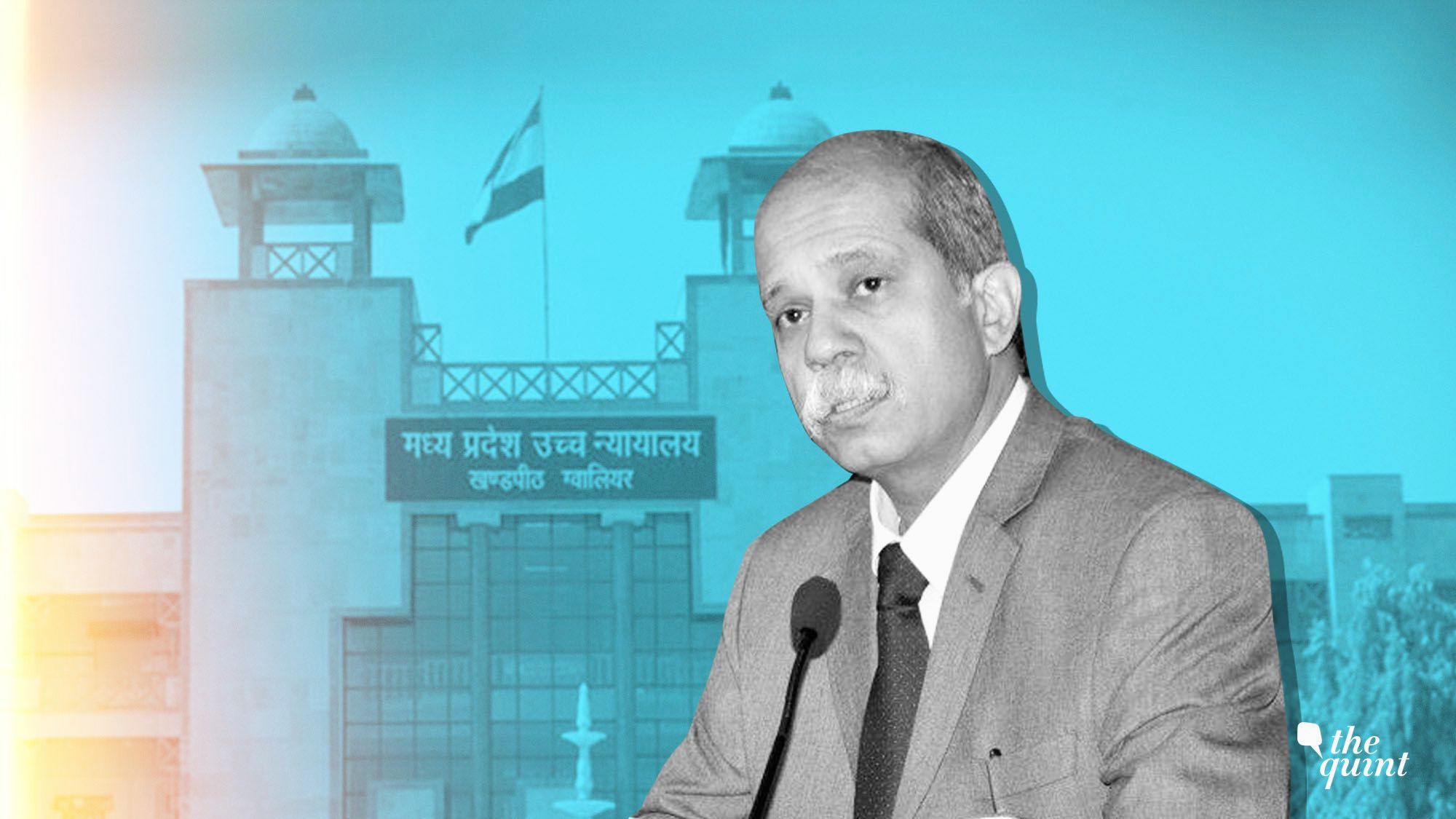
Justice Akil Kureshi, the outgoing Chief Justice of the Rajasthan High Court, expressed surprise at the Supreme Court pruning lists of advocates recommended for appointment to high courts.
“Whatever be the reason for this difference in perception between high courts and the Supreme Court, it must be quickly resolved or else it would be increasingly difficult to convince good advocates to join the bench,” Justice Kureshi said in his farewell address on Saturday.
Over the past 18 years, Justice Kureshi has disposed of more than 47,000 cases, and was part of four different high courts.
He was appointed as a judge of the Gujarat High Court in March 2004. During his stint, Justice Kureshi had in 2010 remanded Amit Shah, the present Union Minister of Home Affairs, to CBI custody in a case pertaining to the death of Sohrabuddin Sheikh. Later, he ruled against the Narendra Modi-led Gujarat government in the Lokayukta appointment case.
In 2018, when he was about to become the acting chief justice of the Gujarat High Court (basis his seniority), he was transferred to the Bombay High Court as a much junior judge. In 2019, the Supreme Court collegium recommended Justice Kureshi as the Chief Justice of the Tripura High Court, modifying its earlier decision of elevating him to the Chief Justice of Madhya Pradesh High Court after the central government expressed certain reservations.
In 2021, he was transferred to Rajasthan High Court. The same year, despite being the second most senior judge in India, Justice Kureshi's name was left out from the nine names recommended by the Supreme Court collegium for appointment as judges to the apex court.
Citing Former Chief Justice of India Ranjan Gogoi's autobiography, Justice Kureshi said the centre had objected to his elevation to the Supreme Court due to the “negative perception” based on his judicial opinions. “What is of greater significance to me is what is the perception of the judiciary, which I have not been officially communicated,” he said in his response.
As a judge of constitutional court, whose most primary duty is protecting rights of citizens, I consider it as a certificate of independence.Justice Akil Kureshi
“So far, there have been 48 CJIs. But when we talk of courage and sacrifice to uphold the rights of the citizens, we remember the one who should have but never did become the Chief Justice of India, Justice HR Khanna, who was the shining dissenting voice in the ADM Jabalpur case,” Justice Kureshi said.
“The very reason for existence of courts is to protect rights of citizens. Far more than any direct affronts, it is the stealthy encroachment on democratic values and rights of the citizens which should worry us.” To combat this, he said the bar and bench must work in tandem. “There cannot be a strong judiciary with a weak bar and so, the bar should take up issues of principles.”
Justice Kureshi said he was leaving the bench with “his pride intact” since he made all judicial decisions basis his legal beliefs and without being swayed by its consequences. “Some believe that I should have made further progress. But it depends on what you consider to be progress.” He said he “wouldn't barter” the love and support received from lawyers and colleagues for anything.

-
Signature Play: The Classic Cocktail Is Dead. Or Is It?

Classic cocktails are disappearing from India's cocktail menus. But they're still being ordered, taught to bartenders and borrowed from. So, who's really having the last drink?
-
A New Samvat Wishlist: Inclusive Prosperity And Human Development
India has strengthened its economic foundations through infrastructure, digital access and enterprise. Its next growth chapter must deepen productivity, create better livelihoods and widen participation in prosperity.
-
Love, Sex Aur Dhokha: The Audacious Plot To Spy On Jensen Huang
A Taipei dinner, a Singapore chip buyer and a suspected Chinese asset: inside the alleged spy operation that got close to NVIDIA's Jensen Huang.
-
Ten Things I Learnt This Samvat
Patience can be a trap. Cheap stocks can stay cheap. Leverage can wipe you out. What did Samvat 2082 teach us? Niraj Shah writes on 10 lessons from the year gone by.
-
Talking Points This Week: Tech Nerves, FII Buying, And A Faraway Banking Shock
The global markets are not shining this Diwali. The exception in the large markets is, India.
-
Midterm Rally Lasted A Day. The Hard Reality Of A Divided US May Last Two Years | Opinion
Between a contested AI boom, a debt ceiling that arrives in 2027 and a president with every incentive to act alone, the next two years may prove more volatile than the first day's rally suggests.
-
Blue Wave Will Derail the AI Trade but Won't Dismantle the AI Era | Unhedged Position
The Democrats' sweep of the US Congress will see politics collide with economic forces both over the long and short term.
-
It's Time To Take The GST Council's Bet On Trust Global
Payment records can prove India's services exports, and clear, proportionate rules can bring foreign digital sellers into the tax net.
-
Opinion | India at 38: From Innovation Overperformer to Innovation Powerhouse
India now has 453 VC-backed deep science startups, 18 of them late-stage, after 117 percent growth since 2020. Laurus Labs, at USD 9.3 billion, is the most valuable deep science company in any middle-income economy outside China.









