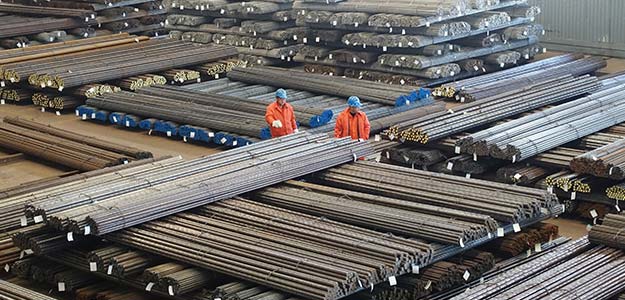
Brussels/Beijing: Under pressure to curb steel output and relieve a global glut, China said on Tuesday its production actually hit a record high last month as rising prices, and profits, encouraged mills that had been shut or suspended to resume production.
The China Iron & Steel Association (CISA) said March steel production hit 70.65 million tonnes, amounting to 834 million tonnes on an annualised basis. Traders and analysts predicted more increases in April and May.

-
 Indian Markets Turning Corner After Two Tough Years, Says Sandeep Tandon
-
 NDTV Profit Ignite 2026: Experts See Opportunity In Equities, Stay Bullish For Long-Term
-
 Buy Right, Sit Tight Does Not Work for Individual Stocks, Says Dinshaw Irani
-
 'Worst Is Behind': Quant MF Sees Market Bottom, Flags 'Extreme Euphoria' In Midcaps
-
 India's Mutual Fund Industry Could Become A $1 Trillion Opportunity, Say Fund Managers
-
 'Foreign Investors Are Baraatis': Raamdeo Agrawal's Take On LTCG Tax
-
 Stay Invested Through Market Cycles: Raamdeo Agrawal at NDTV Profit Ignite
-
 Ramesh Damani Remains Bullish On India For Next 20-30 Years, Sees Bargains Amid Market Weakness
-
 CAS Came After A Long Consultation Process: SEBI Chairman Tuhin Kanta Pandey AT NDTV PROFIT IGNITE
-
 Aim To Cut FPI Onboarding Time From Mth To Five Days: SEBI Chairman Tuhin Kanta Pandey AT NDTV PROFI
The data comes as major steel producing countries failed to agree measures to tackle an industry crisis, with differing views over the causes of overcapacity. A meeting of ministers and trade officials from over 30 countries, hosted by Belgium and the OECD on Monday, concluded only that overcapacity had to be dealt with in a swift and structural way.
Also Read | Layoffs Are Rising In Tech, But These Skills Are Helping People Unlock Better Pay
Washington pointed the finger at China, saying Beijing needed to cut overcapacity or face possible trade action from other countries.
"Unless China starts to take timely and concrete actions to reduce its excess production and capacity ... the fundamental structural problems in the industry will remain and affected governments - including the United States - will have no alternatives other than trade action to avoid harm to their domestic industries and workers," U.S. Secretary of Commerce Penny Pritzker and U.S. Trade Representative Michael Froman said in a statement.
Asked what steps the Chinese government would take following the unsuccessful talks, Commerce Ministry spokesman Shen Danyang told reporters on Tuesday: "China has already done more than enough. What more do you want us to do?"
"Steel is the food of industry, the food of economic development. At present, the major problem is that countries that need food have a poor appetite so it looks like there's too much food."
In a monthly report, the CISA said a recent rally in steel prices in China - up 42 per cent so far this year - was unsustainable given the rising production, and it warned that increased protectionism in Southeast Asia and Europe would make steel exports more difficult.
"The big rise in steel prices has led to a rapid reopening of capacity that had been shut or suspended ... a large rise in output will not be good for the gap between market demand and supply," the CISA said.
The OECD says global steelmaking capacity was 2.37 billion tonnes in 2015, but declining production meant only 67.5 per cent of that was being used, down from 70.9 per cent in 2014.
Britain in particular has felt the squeeze as its largest producer Tata Steel has announced plans to pull out of the country, threatening 15,000 jobs. Last week, more than 40,000 German steel workers took to the streets to protest against dumping from China.
China, the world's top steel producer, has ramped up exports of steel in recent years, as it steers its economy into services-led growth and away from traditional manufacturing, while avoiding mass job losses. China's steel exports jumped 30 percent to 9.98 million tonnes in March from a year ago despite a slew of anti-dumping measures globally.
Blaming China for the global steel industry crisis is simply a lazy excuse for protectionism and will be counter-productive, China's official Xinhua news agency said.
"It's more been their competitive advantage into Asian countries which has really driven that rise in exports," said Daniel Hynes, commodity strategist at ANZ Bank. "I think that will continue and will keep those export levels relatively high despite the pressures we're seeing now."
Deep Divisions
The deep divisions between China and rival producers were clear at a news conference following Monday's meeting.
Cecelia Malmstrom, the EU's trade commissioner, insisted governments should not grant subsidies that keep unviable plants running and should subject state-controlled firms to the same rules as the private sector.
China's assistant commerce minister, Zhang Ji, said China had cut 90 million tonnes of capacity, with plans to reduce it by a further 100-150 million tonnes. "That is only 10 million tonnes less than the capacity in Europe," he said, although critics say China would still have a capacity of around 1 billion tonnes, far in excess of its needs.
The CISA has previously acknowledged that the flood of Chinese steel product exports is damaging to Beijing's to gain market economy status from the European Union - an important goal as its domestic economy slows.
Tensions have erupted between other producers, too, with Japan leading criticism of Indian minimum prices for imported steel at a recent World Trade Organisation meeting. Japan and South Korea have also come under fire for exporting steel products cheaper than they sell them at home.
In a step to reduce trade frictions with Washington, Beijing agreed to scrap some export subsidies on products including steel, the United States said last week.
On Monday, the United Steelworkers union (USW) said it filed a case with U.S. regulators seeking to stem a "flood" of aluminum imports which it says damage U.S. producers and threatens jobs.
The case is the latest move by the U.S. aluminum industry to prod the authorities to investigate the impact of rising imports, particularly from China.
Essential Business Intelligence, Sharp Market Insights, Practical Personal Finance Advice, Daily Fuel, Gold and Silver Prices and Latest Stories — On NDTV Profit.