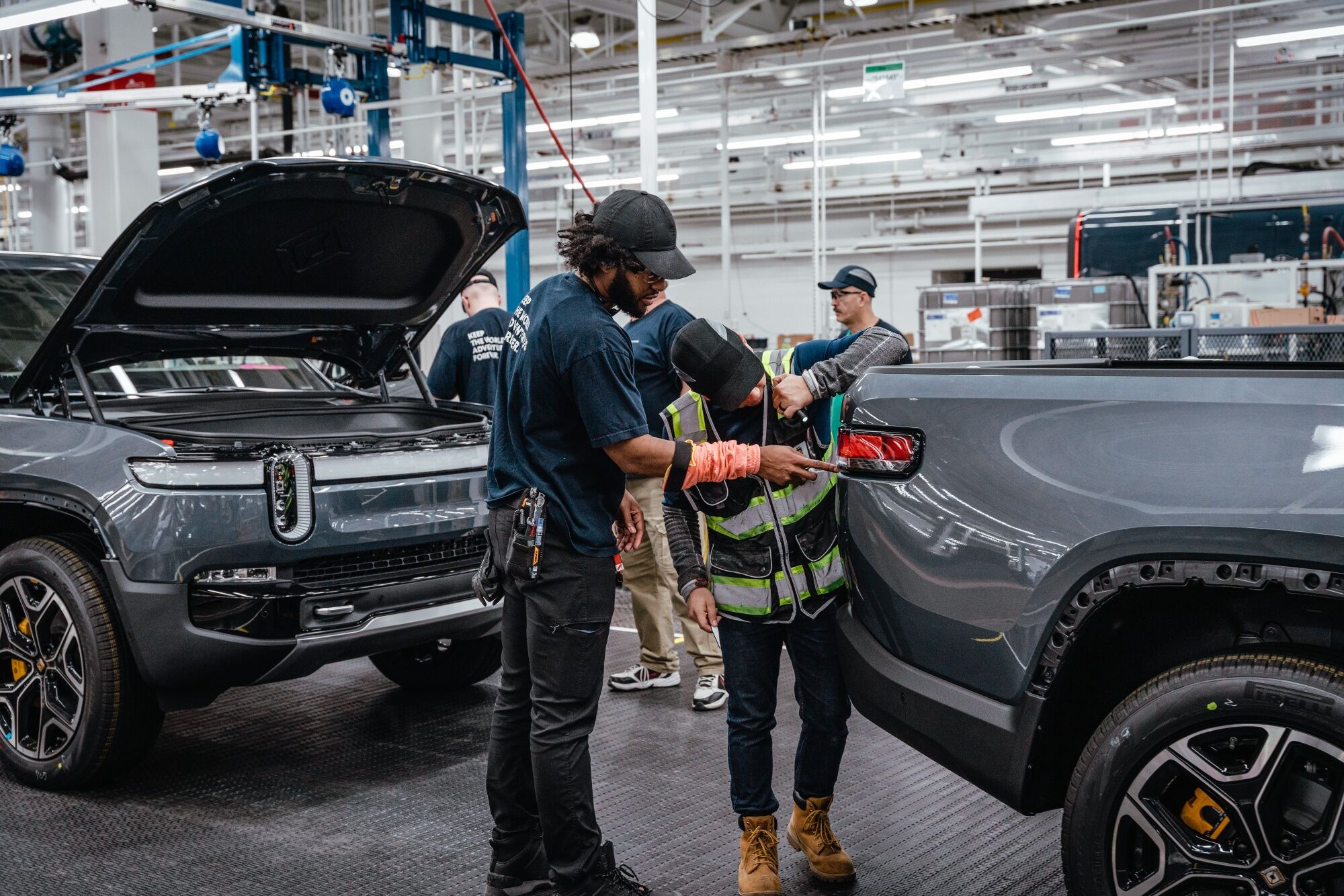
(Bloomberg) -- US factory production rebounded in November, reflecting a pickup in activity at carmakers and parts suppliers following the end of the United Auto Workers' strike.
Output increased a less-than-expected 0.3% last month, driven by a 7.1% surge in motor-vehicle production, Federal Reserve data showed. The figures followed a 0.8% decline in factory production in October.
Excluding autos, however, manufacturing fell 0.2% — the second monthly decline in a row. Total industrial production, which includes mining and utilities, rose 0.2%.
The resolution of the United Auto Workers' strike against the Big Three Detroit automakers was a boon to November factory activity, retracing a slump in production at the companies and their suppliers in October. That said, the manufacturing sector as a whole continues to struggle under the weight of high borrowing costs.
Compared to November 2022, manufacturing output is down 0.8%.
Capacity utilization at factories, a measure of potential output being used, edged higher from the prior month but remained subdued. The annualized rate of car assemblies rebounded to 10.25 million, but remains below pre-strike levels.
Outside of autos, the report showed weakness. Factories producing apparel, paper and textiles all saw output declines. Some categories, like machinery as well as computers and electronic products, increased.
What Bloomberg Economics Says...
“Excluding motor vehicles and parts, manufacturing production declined as the effects of tighter monetary policy weighed on some segments like furniture. The bright spot in an otherwise underwhelming report continued to be high-technology equipment, bolstered by the CHIPS act and likely by investment in AI.”
— Eliza Winger, economist
To read the full report, click here
Recent factory surveys have also underscored headwinds for the sector. The Institute for Supply Management's manufacturing gauge indicated contraction for a 13th straight month in November. New orders have now shrank for 15 months, the longest such stretch since the early 1980s.
Separate data out Friday showed a measure of manufacturing activity in New York state slid nearly 24 points to minus 14.5 in December, the lowest reading since August. Shipments declined and new orders shrank for a third-straight month. The figures are quite volatile from month-to-month.
The New York Fed's survey showed factories expect some modest pickup in new orders and employment in the months ahead. The capital spending index remained subdued.
--With assistance from Kristy Scheuble and Katia Dmitrieva.
(Adds comment from Bloomberg Economics.)
More stories like this are available on bloomberg.com
©2023 Bloomberg L.P.
Essential Business Intelligence, Continuous LIVE TV, Sharp Market Insights, Practical Personal Finance Advice and Latest Stories — On NDTV Profit.