Hey readers,
I read a research paper on how Americans have started working less in the last few years. The main reason, according to that paper, was Medicaid. So I thought about when Indians will start working less. But the more I wrote, the more I realised this week's stories were quietly saying the same thing: having something - a tool, an account, a law - doesn't always mean it works for you. Let me explain.
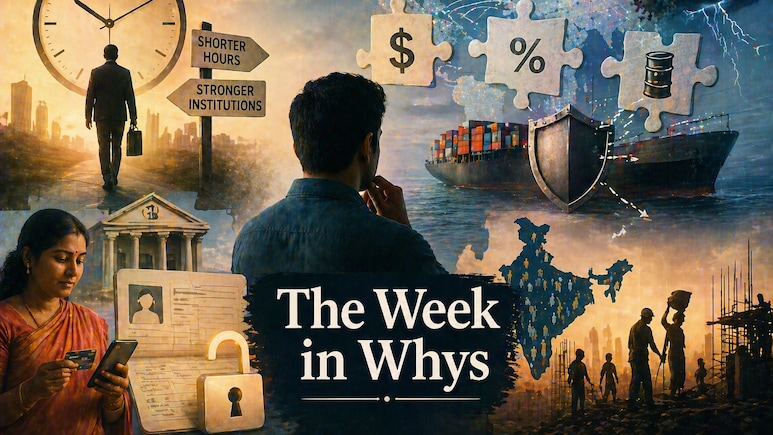
Narayana Murthy's 70-hour week comment still echoes with everyone. I don't want to say he is right. But here's what nobody is saying clearly: India can't just choose shorter hours. It does not yet have the institutions to support that choice. No strong unions, limited social security, and 85% of the workforce without a formal contract. Maybe some people at a startup or MNC may have a wonderful work-life balance, but a lot needs to be done to see that difference pan-India. And that's the uncomfortable truth: India Needs To Work More To Reduce Working Hours.
Also Read | Layoffs Are Rising In Tech, But These Skills Are Helping People Unlock Better Pay
There's a tool for currency risk. One for interest rate risk. One for commodity prices. They work - right until something shows up that wasn't on anyone's list. A pandemic. A war. The closure of key sea routes. No derivative was written for that. So what actually protects you? Not more complexity, but simpler strategies: more suppliers, more cash buffers, lower debt. The same "don't put all your eggs in one basket" advice from personal finance. Somewhere along the way, we forgot to apply it to global supply chains. Read more: Financial Hedging Falls Short For Longer Horizons.
There's a version of progress that looks complete from the outside but isn't, quite yet. Most women in India now have a bank account. But access doesn't mean they have full ownership of money. That distinction is necessary. This story became: She Has A Bank Account, But Not Enough Control.
A shorter workweek requires institutions, not just intent. A hedging strategy needs adaptability, not just financial instruments. A bank account needs agency, not just activation. In each case, we've built the first layer. The harder work is everything that comes after.
That's the week.
If you made it this far, I'd love to hear from you.
Which of these stories stayed with you? What stories can you share around these topics?
And more importantly, what should I dig into next?
An everyday object, a policy, a price that suddenly changed, a trend that's growing around ... send it my way. Just hit reply. I read everything.
See you next Saturday.
Cheers,
Swapnil
(Disclaimer: The views expressed in this article are solely those of the author and do not necessarily reflect the opinion of NDTV Profit or its affiliates. Readers are advised to conduct their own research or consult a qualified professional before making any investment or business decisions. NDTV Profit does not guarantee the accuracy, completeness, or reliability of the information presented in this article.)
Essential Business Intelligence, Sharp Market Insights, Practical Personal Finance Advice, Daily Fuel, Gold and Silver Prices and Latest Stories — On NDTV Profit.