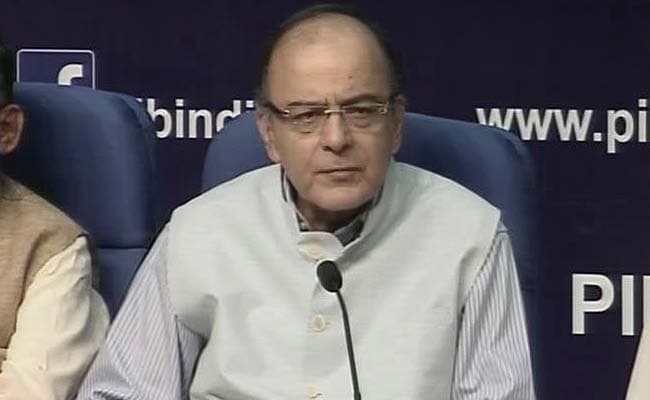
Arun Jaitley said that he would need more money in the current FY to cover big pay rises.
New Delhi: Finance Minister Arun Jaitley told lawmakers on Friday that he would need more money in the current fiscal year to cover the cost of big pay rises for 10 million state workers and pensioners.
The government will require "some enhancement" for spending on salaries and pensions in 2016/17 to absorb the off-cycle pay hikes announced in June on the recommendation of the 7th Pay Commission.
The government faces a challenge to achieve its fiscal deficit target of 3.5 percent of GDP in the current fiscal year, but is "quite optimistic" of fully achieving the target of 3 percent in 2017/18, the finance ministry said in the Medium-Term Expenditure report tabled in parliament's lower house.
Rating agencies such as Moody's have said that the increase in wages would boost consumer demand, leading to inflationary pressures and making it difficult for the next governor of the Reserve Bank of India to achieve its inflation target.
Prime Minister Narendra Modi's government has just confirmed a central inflation target of 4 percent, plus or minus 2 percentage points, that was agreed with departing governor Raghuram Rajan for the next five years.
Total federal spending on salaries and pensions is estimated to rise about 10 percent in the next fiscal year to Rs 2,58,000 crore ($38.6 billion) compared with budget estimates for the current fiscal year.
($1 = 66.8200 Indian rupees)
(This story has not been edited by NDTV staff and is auto-generated from a syndicated feed.)
The government will require "some enhancement" for spending on salaries and pensions in 2016/17 to absorb the off-cycle pay hikes announced in June on the recommendation of the 7th Pay Commission.
The government faces a challenge to achieve its fiscal deficit target of 3.5 percent of GDP in the current fiscal year, but is "quite optimistic" of fully achieving the target of 3 percent in 2017/18, the finance ministry said in the Medium-Term Expenditure report tabled in parliament's lower house.
Rating agencies such as Moody's have said that the increase in wages would boost consumer demand, leading to inflationary pressures and making it difficult for the next governor of the Reserve Bank of India to achieve its inflation target.
Prime Minister Narendra Modi's government has just confirmed a central inflation target of 4 percent, plus or minus 2 percentage points, that was agreed with departing governor Raghuram Rajan for the next five years.
Total federal spending on salaries and pensions is estimated to rise about 10 percent in the next fiscal year to Rs 2,58,000 crore ($38.6 billion) compared with budget estimates for the current fiscal year.
($1 = 66.8200 Indian rupees)
© Thomson Reuters 2016
(This story has not been edited by NDTV staff and is auto-generated from a syndicated feed.)
Essential Business Intelligence, Sharp Market Insights, Practical Personal Finance Advice, Daily Fuel, Gold and Silver Prices and Latest Stories — On NDTV Profit.