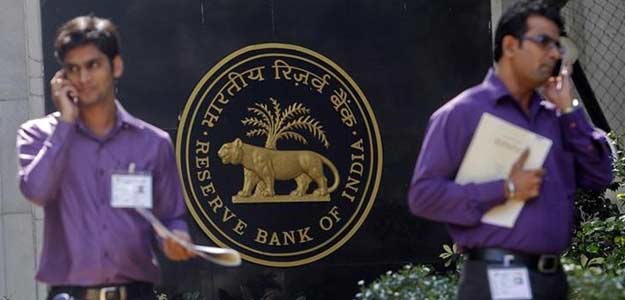
New Delhi: On a day when the Reserve Bank left its key policy rates unchanged, Moody's Investors Service has said the transmission of interest rate cuts will influence India's economic development and credit profile.
Saying that status quo on monetary policy was broadly in line with market expectations, Moody's said there could be some short-lived spikes in inflation, driven by food prices.
"Looking forward, we do not expect a significant change in the monetary policy stance. Rather, the transmission of monetary policy will influence India's economic development and credit profile," Moody's Investors Service SVP (Sovereign Risk Group) Marie Diron said.
In its second bi-monthly policy review for the fiscal, RBI on Tuesday maintained status quo on interest rate, while pegging economic growth at 7.6 per cent and retail inflation target at 5 per cent for January 2017.
While the central bank has cut interest rates by a total 1.50 per cent since January last year, but the banks have passed on only about half of the benefit to borrowers.
Moody's said transmission of monetary policy will depend on progress in the clean-up of banks' balance sheets.
"While the process has started, we do not expect rapid progress and a significant change in the ability and willingness of banks to increase lending or in corporates' appetite for borrowing," Diron said.
It said RBI's accommodative monetary policy stance is unlikely to translate into a rapid expansion of credit and markedly higher growth in the near-term.
"Medium term, the bankruptcy law, if effectively implemented, is credit positive for banks and will contribute to ease monetary policy transmission to the real economy," Moody's added.
In its policy statement, the RBI said there is an upward bias on inflation projection on account of firming of global oil prices and implementation of the recommendations of the 7th Pay Commission.
"Overall, we expect inflation to remain broadly stable at moderate levels, notwithstanding potential short-lived spikes driven by food inflation or external factors," Diron said.
Moody's said transmission of monetary policy will depend on the effectiveness of the monetary policy framework in maintaining inflation at moderate levels.
If denied an extension, he will be the first RBI Governor since 1992 to not have a five-year term. His predecessors -- D Subbarao (2008-2013), Y V Reddy (2003-2008), Bimal Jalan (1997-2003) and C Rangarajan (1992-1997) -- had five-year terms.
Mr Rajan, who after taking over in September 2013 raised the short-term lending rate from 7.25 per cent to 8 per cent and retained the high rates throughout 2014, began the process of lowering the rates in January 2015. He has since then cut them by 1.50 per cent to 6.50 per cent.
(This story has not been edited by NDTV staff and is auto-generated from a syndicated feed.)
Saying that status quo on monetary policy was broadly in line with market expectations, Moody's said there could be some short-lived spikes in inflation, driven by food prices.
"Looking forward, we do not expect a significant change in the monetary policy stance. Rather, the transmission of monetary policy will influence India's economic development and credit profile," Moody's Investors Service SVP (Sovereign Risk Group) Marie Diron said.
In its second bi-monthly policy review for the fiscal, RBI on Tuesday maintained status quo on interest rate, while pegging economic growth at 7.6 per cent and retail inflation target at 5 per cent for January 2017.
While the central bank has cut interest rates by a total 1.50 per cent since January last year, but the banks have passed on only about half of the benefit to borrowers.
Moody's said transmission of monetary policy will depend on progress in the clean-up of banks' balance sheets.
"While the process has started, we do not expect rapid progress and a significant change in the ability and willingness of banks to increase lending or in corporates' appetite for borrowing," Diron said.
It said RBI's accommodative monetary policy stance is unlikely to translate into a rapid expansion of credit and markedly higher growth in the near-term.
"Medium term, the bankruptcy law, if effectively implemented, is credit positive for banks and will contribute to ease monetary policy transmission to the real economy," Moody's added.
In its policy statement, the RBI said there is an upward bias on inflation projection on account of firming of global oil prices and implementation of the recommendations of the 7th Pay Commission.
"Overall, we expect inflation to remain broadly stable at moderate levels, notwithstanding potential short-lived spikes driven by food inflation or external factors," Diron said.
Moody's said transmission of monetary policy will depend on the effectiveness of the monetary policy framework in maintaining inflation at moderate levels.
If denied an extension, he will be the first RBI Governor since 1992 to not have a five-year term. His predecessors -- D Subbarao (2008-2013), Y V Reddy (2003-2008), Bimal Jalan (1997-2003) and C Rangarajan (1992-1997) -- had five-year terms.
Mr Rajan, who after taking over in September 2013 raised the short-term lending rate from 7.25 per cent to 8 per cent and retained the high rates throughout 2014, began the process of lowering the rates in January 2015. He has since then cut them by 1.50 per cent to 6.50 per cent.
(This story has not been edited by NDTV staff and is auto-generated from a syndicated feed.)
Essential Business Intelligence, Sharp Market Insights, Practical Personal Finance Advice, Daily Fuel, Gold and Silver Prices and Latest Stories — On NDTV Profit.