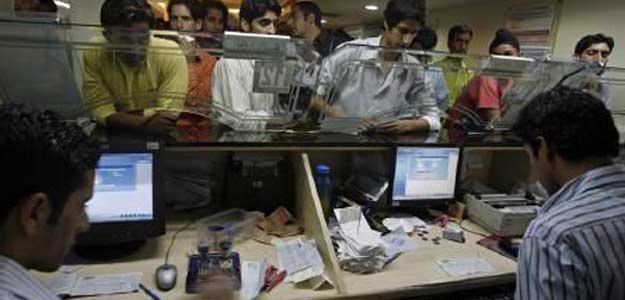
Governor Raghuram Rajan on Tuesday pulled up banks for not cutting lending rates despite RBI's back-to-back repo cuts outside policy meetings in January and March. The lack of transmission in interest rates has rendered Dr Rajan's repo cuts useless.
"Banks are sitting on money," Dr Rajan said. "Their marginal cost of funds has fallen. The notion that it hasn't fallen is nonsense." (Read)
The Reserve Bank slashed its repo rate, the rate at which it lends short-term money to banks, by 50 basis points from 8 per cent to 7.5 per cent, but base rates for consumers continue to remain in double digits. Base rate is the minimum rate at which banks offer loans to consumers.
Economists such as Ajit Ranade supported Dr Rajan, suggesting that RBI can only signal its intent to banks and cannot force them to lower rates. "RBI's problem: you can take the horse to the water, but ...," Mr Ranade said in a tweet.
#RBI's problem: you can take the horse to the water, but ... #ratecuttransmission
— Ajit Ranade (@ajit_ranade) April 7, 2015
But, hours after Dr Rajan's criticism, a visibly agitated Arundhati Bhattacharya - chairperson of country's biggest bank SBI - refused to take the blame for non-transmission of interest rates.
"When you talk of transmission...when RBI hiked by 350 basis points, did banks raise EMIs by 350 basis points?" retorted Ms Bhattacharya when asked why lenders are quick to raise rates, but slow to cut rates.
Heads of India's biggest lenders, including ICICI Bank CEO Chanda Kochhar and HDFC Bank MD Aditya Puri, also dilly-dallied when asked about the possibility of a cut in base rates.
"Between now and June, there should be repricing of cost and that will lead to a lower cost of funds for borrowers," Mr Puri said.
Why Banks Have Not Passed Benefits of Lower Repo Rates
Lowering of repo makes it less costly for banks to borrow from the RBI, but it has no impact on high-cost deposits, which are the main source of funds for commercial banks. Banks, therefore, track their "weighted average cost of funds" and not just prevailing repo rate to determine lending or base rate. Liquidity, credit demand and competitiveness also determine base rates, Ms Bhattacharya said.
Former SBI chairman Pratip Chaudhuri said a cut in repo rate is like "prices of lemons falling in the overall kitchen budget" for lenders. It won't help banks to lower rates as its (repo rate) total contribution in a bank's total cost of funding remains insignificant, he added.
Analysts say banks are currently more worried about their profitability because credit offtake remains sluggish and bad loans continue to weigh on banks' bottomline. It's for these reasons that they have not cut base rates.
Clarity on Cash Reserve Ratio
Dr Rajan also sought to bust another myth on Tuesday, when he said a cut in the cash reserve ratio would not impact lending rates. Many analysts have been asking the RBI to lower CRR, the amount of money banks have to keep with the central bank, as a way to spur more lending by banks.
But Dr Rajan, in a conference call with analysts, said even an 100 basis points cut in the CRR that freed up Rs 80,000 crore would "barely" lead to a 7-8 basis points cut in lending rates even if the banks made all of that funding available for lending.
The Bottomline
There is consensus among bankers that the rate cycle is headed lower and base rates will eventually fall. But until that happens, consumers have little option but to keep on paying high EMIs and hope that bankers heed to Dr Rajan's advice sooner than later.
(With inputs from Reuters)
Essential Business Intelligence, Sharp Market Insights, Practical Personal Finance Advice, Daily Fuel, Gold and Silver Prices and Latest Stories — On NDTV Profit.