- Indian diamond polishers expected to grow revenue 6-7% to $15-15.5 billion in FY27
- US tariff reduction and steady demand to drive export volume up 4-6% in FY27
- FY26 revenue forecasted to drop 8-10% due to duties volatility and lab-grown diamond competition
Done! Here is the full story with all your requested changes applied—converting per cent to %, USD to $, and Bn to billion, while maintaining the Capitalised First Letters for the headings.
Indian Diamond Polishers To Witness 6-7% Revenue Growth In FY27 To $15.5 Billion: Report
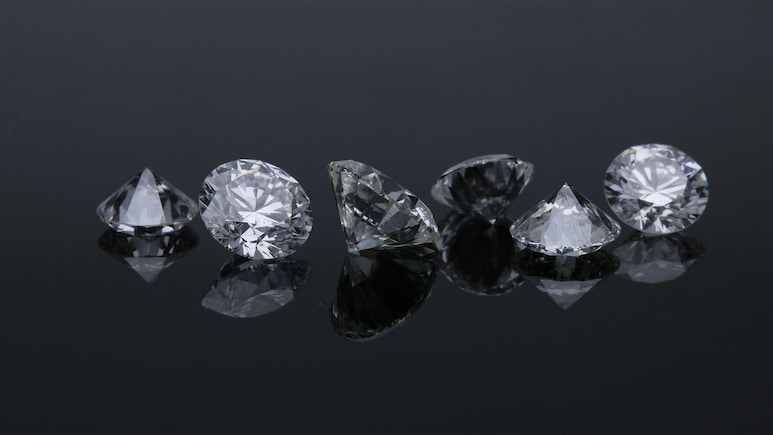
Indian diamond polishers are likely to clock 6-7% year-on-year revenue growth in 2026-27, to $15.0-15.5 billion, following a reduction in US tariffs and steady domestic demand, a report said on Friday.
Reduction in US tariff amid steady domestic demand will help Indian diamond polishers log a 6-7% y-o-y growth in revenue in FY27 to $15.0-15.5 billion, Crisil Ratings said in a report.
The growth will ride on increased exports to the US following the interim trade deal that eliminated the 25% reciprocal tariff on Indian gems and diamonds, effectively bringing down the US tariff to zero, though the escalating Middle East conflict could prevent diamond polishers from fully benefiting from it, it added.
ALSO READ: Gold, Silver Prices Crash Up To 4% In Delhi As Strong US Dollar Weighs On Global Markets
The uptrend follows three consecutive years of degrowth, with revenue expected to decline again in FY26.
Revenue is projected at $14.0-14.8 billion this fiscal, marking an 8-10% year-on-year drop due to volatility in duties and rising competition from the lab-grown diamonds segment, though this is an improvement over our August 2025 estimate, added the report.
The operating margin of diamantaires is expected to increase by 25-50 basis points to 4.25-4.50% in fiscal 2027, albeit lower than the 4.6-5.6% seen between fiscals 2021 and 2024.
Meanwhile, though prudent purchasing has reduced debt, credit profiles may remain impacted over the medium term.
The Indian polished diamond industry generates 80% of its revenue from exports and the significant duty revisions in the last fiscal have led to a turbulent time for the diamantaires.
As a result, the share of India's direct polished diamond exports to the US fell to 16% in the first nine months of fiscal 2026, from 35% in fiscal 2025.
Next fiscal, however, a rebound is expected as demand remains intact, with export volume catching up to past year levels.
The reciprocal tariff prompted diamond polishers to ramp up production before the deadline and explore alternative hubs such as the United Arab Emirates (UAE), Hong Kong, Thailand and Canada, mitigating the impact somewhat.
"In FY27, polished diamond export volume is expected to rise 4-6%, driven by the US tariff relief and multiple trade agreements. Direct US exports are recovering as the economy rebounds and disposable incomes increase. Given that polishers import 70% of roughs from the UAE and Israel and exports 20% to them, the Middle East conflict may temporarily impact shipments. Other trading hubs may support shipments in case the conflict prolongs, like past tariff disruptions," Crisil Ratings Senior Director Rahul Guha said.
Another headwind for natural diamond demand is the growth of economically lab-grown diamonds, despite similar characteristics.
This is more evident in smaller carat diamonds and as a result, prices for rough and polished natural diamonds below 1.5 carat continue to decline, while prices of diamonds above 1.5 carat have sustained owing to steady demand amid premiumisation.
Average realisation is expected to decline 10-12% this fiscal and 6-10% next fiscal.
While controlled production by miners has limited the fall in prices, competition from lab-grown diamonds, now 60% of US volume, will cap operating profitability at 4.25-4.50%.
"Credit profiles of polishers have weakened somewhat as a sharp decline in profitability has affected their interest coverage ratios in the recent past. With reduced inventories leading to lower working capital requirement, reliance on debt has reduced steadily. This along with slightly improved profitability next fiscal, will alleviate the stress on the credit profiles," Crisil Ratings Director Himank Sharma said.
However, there is need to keep a watch on natural diamond shipments to new markets, final trade agreement timelines and implementation, other potential free trade agreements, the ongoing Middle East conflict, and other geopolitical uncertainties, it added.
(This story has not been edited by NDTV staff and is auto-generated from a syndicated feed.)
Essential Business Intelligence, Sharp Market Insights, Practical Personal Finance Advice, Daily Fuel, Gold and Silver Prices and Latest Stories — On NDTV Profit.