India's exchange rate and current account balance could face pressure if geopolitical tensions in the Middle East persist, the Finance Ministry has cautioned in its Monthly Economic Review, even as it highlighted the country's strong macroeconomic fundamentals to absorb potential shocks.
In its latest monthly economic review, the ministry said a prolonged crisis could lead to higher energy prices, which may weigh on India's external balances and put pressure on the rupee.
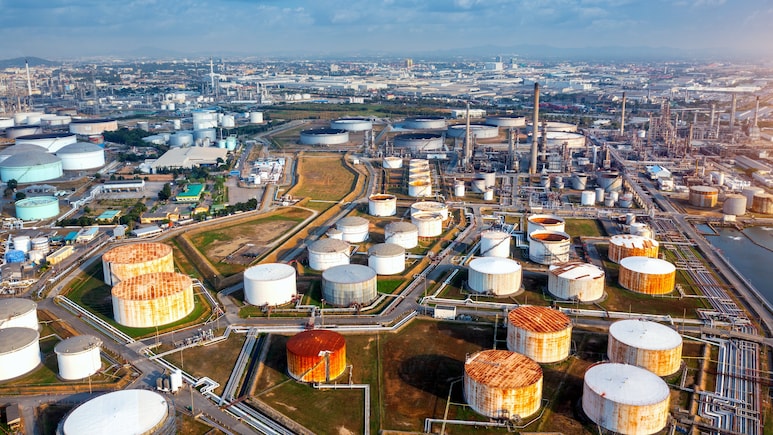
The warning comes amid escalating tensions in the Middle East following US–Israel strikes on Iran, which have disrupted shipping routes through the Strait of Hormuz, a key artery for global energy trade that handles nearly 20% of global oil flows.
Also Read | Layoffs Are Rising In Tech, But These Skills Are Helping People Unlock Better Pay
The conflict has already pushed Brent crude prices up by about 9% to near $80 per barrel, while LNG prices have surged roughly 50%.
The ministry noted that sectors heavily dependent on imported energy, such as fertilisers and petrochemicals, could face cost pressures if elevated prices persist.
Despite the emerging risks, the Finance Ministry emphasised that India remains well-positioned to manage the impact of higher crude prices.
India has sufficient foreign exchange reserves, a low current account deficit and relatively low inflation to mitigate the impact of rising crude prices, the ministry said.
ALSO READ: Middle East Conflict: How Crude Oil Spike Can Hurt India's Banks — UBS Explains
India's current account deficit (CAD) stood at 0.8% of GDP in the first half of fiscal 2026, reflecting relatively stable external balances despite global trade uncertainty.
The ministry added that the external sector has remained stable even as global trade faces heightened volatility.
India's ongoing trade diplomacy with key partners, including the European Union, the United States and Oman, is expected to further strengthen the country's external resilience over time.
The ministry said India's economy continues to demonstrate strong growth momentum.
Real GDP growth for fiscal 2026 is estimated at 7.6%, while real gross value added growth is projected at 7.7%.
High-frequency indicators for January 2026 also point to broad-based economic activity across sectors, suggesting the economy remains resilient despite global headwinds.
Labour market conditions are also showing improvement, with employment trends strengthening in recent months.
Looking ahead, the ministry said the Union Budget for 2026–27 outlines a policy framework that balances fiscal consolidation with continued capital expenditure.
Budget initiatives are aimed at supporting manufacturing, agriculture, micro, small and medium enterprises (MSMEs), infrastructure development and human capital formation.
These measures are expected to sustain the growth momentum even as global uncertainties remain elevated. Reflecting this outlook, the Finance Ministry has upgraded India's real GDP growth estimate for fiscal 2027 to a range of 7.0%–7.4%.
Essential Business Intelligence, Sharp Market Insights, Practical Personal Finance Advice, Daily Fuel, Gold and Silver Prices and Latest Stories — On NDTV Profit.