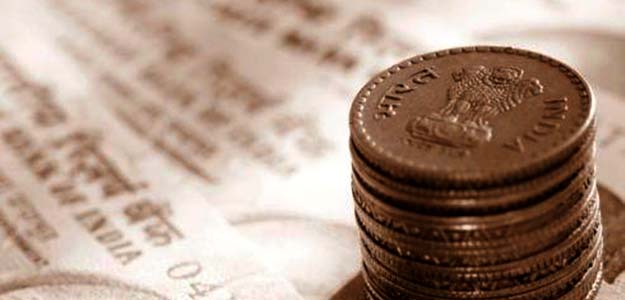
New Delhi: The government is scrambling to put together a 'Plan B' to raise even a fraction of its $10 billion (Rs 62,000 crore at 1 dollar = 62 rupees) target from asset sales, officials said, with potential new sales including part of its stake in refiner Indian Oil.
Prime Minister Narendra Modi's government needs to complete some major deals to deliver on a budget promise to trim the fiscal deficit to a seven-year low by the end of the year in March.
Pressure on the government increased with the Reserve Bank of India's surprise move on Thursday to cut interest rates, placing the onus on the government to help revive the economy by putting public finances on a firmer footing.
One official in the Finance Ministry's Department of Disinvestment said on Friday the government was now considering putting other assets on the block, including 10 per cent of IOC, worth $1.3 billion (Rs 8,060 crore) at current market prices.
Top of the sell-off list are Coal India and Oil and Natural Gas Corp (ONGC), in which the government plans to sell 10 per cent and 5 per cent respectively, stakes that are together worth around $6.3 billion (Rs 39,060 crore) at current prices, a large part of the target.
But demand has been lukewarm, not least due to plunging oil prices and questions over ONGC's share of fuel subsidies.
"Disinvestment is a major concern. This year again we are likely to fall well short of the target," another government official said.
A sale of IOC, in which the government owns nearly 69 per cent, could be more welcome in the market than either ONGC or Coal India, where fund managers want clarity on coal output targets, and on the amount of subsidies ONGC will need to pay.
India subsidises some types of fuel, sharing the cost between the government and upstream companies. The percentage each pays is decided quarterly, but investors would prefer a fixed formula, which would make profits easier to forecast.
"In the case of IOC, it is mainly a domestic retailer and has a lot to do with the domestic economy. The fall in crude prices and government decision not to charge (an) oil subsidy will make it (IOC) a better choice in the current environment."
Mr Modi's push to reduce hefty state ownership that is a legacy of a once Soviet-style planned economy has been thwarted by sliding oil prices, delayed reforms, opposition from unions and bureaucratic fumbling.
Several officials have said the government is highly unlikely to hit its target by March 31. To date, it has raised just over $300 million (Rs 1,860 crore), including the December sale of 5 per cent in steelmaker Steel Authority of India (SAIL).
In the past, government share sales that have met with little institutional appetite have been rescued by state-owned Life Insurance Corporation of India, India's largest equity investor. A substantial participation from LIC again could raise questions over how far the sales are simply ticking an accounting box.
LIC took almost three-quarters of the shares in SAIL sold by the government in December.
Copyright @ Thomson Reuters 2015
Essential Business Intelligence, Sharp Market Insights, Practical Personal Finance Advice, Daily Fuel, Gold and Silver Prices and Latest Stories — On NDTV Profit.