- Reserve Bank of India likely to hike repo rate by 25 basis points after 3.5 years
- Inflation has breached the RBI's 4% target for three months, with broadening price pressures
- India's GDP growth at 7.8% supports a rate hike without risking economic slowdown
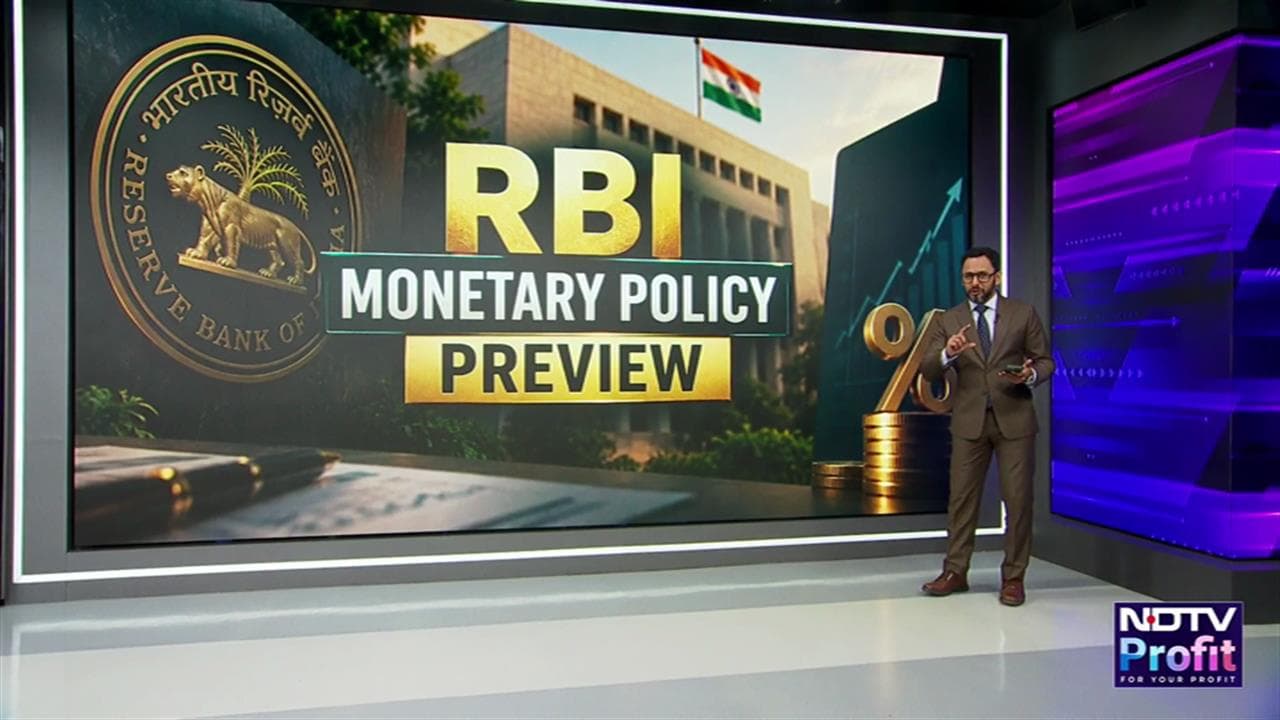
Three-and-a-half years after it last raised the benchmark lending rates, the Reserve Bank of India is expected to resume the rate-hike cycle, as external headwinds have raised the risks linked to a prolonged spell of inflation.
The Monetary Policy Committee (MPC) of the central bank is likely to shift away from its accommodative approach, with analysts largely projecting a 25 basis points hike in the repo rate, or the rate at which the RBI lends to the commercial banks.
Around 60% of economists polled by Reuters poll expect the rates to rise by a quarter percentage point. This would raise the repo rate from 5.25% at present to 5.5%.
Also Read | Layoffs Are Rising In Tech, But These Skills Are Helping People Unlock Better Pay
"The MPC is meeting at a critical juncture, with inflation ticking up and global central banks tightening aggressively. However, India's macroeconomic fundamentals remain robust, suggesting any rate adjustment will be measured rather than dramatic... A maximum 25 basis point rate hike appears most likely at this meeting," said Ajitabh Bharti, co-founder and executive director of CapitalXB.
Below are the five key factors guiding for a likely rate hike on Oct 7, when the MPC will announce its decision.
Broad-Based Inflation
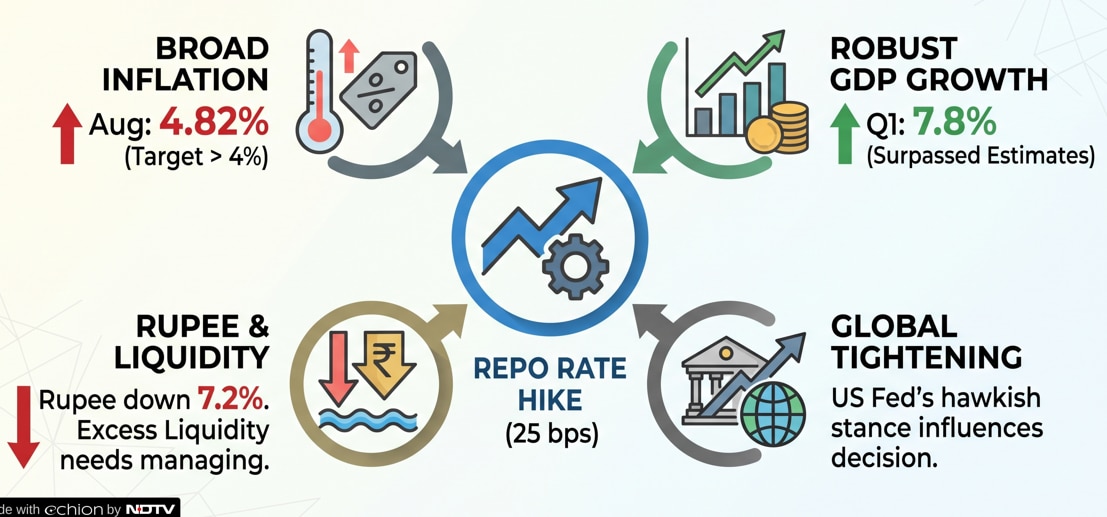
Headline consumer inflation has breached the Reserve Bank of India's 4% target for three consecutive months, quickening to 4.82% in August. Price pressures are actively broadening across the economy, with nearly half of the CPI basket now trading above the target threshold.
The forward-looking inflation trajectory signals further upside risks that warrant a preemptive hike. An adverse base effect is set to kick in during the second half of fiscal 2027, threatening to push headline prints higher.
The impact of El Nino is likely to worsen the inflation outlook, as experts believe the weather phenomenon would hit Rabi crops as well. Plantation during the Kharif season has already been affected due to deficient Monsoon rainfall.
A lower agricultural output can worsen the food price inflation, which has driven the overall CPI print in recent months.
This domestic pressure is compounded by global crude oil remaining elevated around $100 per barrel, keeping imported inflation risks alive.
Higher GDP Print
India's gross domestic product (GDP) growth in the first quarter surpassed estimates at 7.8%, showing the country's economic resilience despite external headwinds.
Crucially, resilient underlying economic momentum gives policymakers the necessary runway to act. With first-quarter GDP expanding at a robust pace, the central bank has the economic cushion to hike interest rates and prioritise price stability without risking an immediate slowdown.
Rupee Jitters
Mounting currency volatility provides a compelling case for a rate hike to anchor external stability. With the rupee sliding to 96.44 against the US dollar — depreciating 7.2% — imported inflation risks have surged across key import-dependent sectors.
Delivering a rate hike would help widen the interest rate differential against global peers, stemming capital outflows and offering crucial support to the battered currency.
Liquidity Management
Domestic liquidity management may require active monetary tightening, in view of the robust foreign currency inflows through FCNR-B deposits. According to Kotak Institutional Equities, the RBI's strategic swap window boosted the liquidity of Indian lenders by $127 billion.
This excess cash overhang threatens to dilute monetary policy transmission and stoke demand-driven price pressures, making a rate hike an effective tool to rein in surplus funds and realign liquidity conditions with the central bank's inflation stance.
Fed Effect
The hawkish blueprint laid down by the US Federal Reserve, in mid-September, almost made it certain that several central banks around the world would shift to a tightening cycle. The Fed not only raised the lending rates for the first time in three years, but signalled two more hikes by the end of 2026.
This suggested that a hawkish monetary policy would be a new normal, at a time when the global economy continues to battle supply chain disruptions, elevated commodity prices, and the resultant surge in imported inflation.
ALSO READ: Emerging Markets To Bear The Brunt Of Spiking US Yields Amid Global Energy Crisis, Warns David Roche
Essential Business Intelligence, Sharp Market Insights, Practical Personal Finance Advice, Daily Fuel, Gold and Silver Prices and Latest Stories — On NDTV Profit.