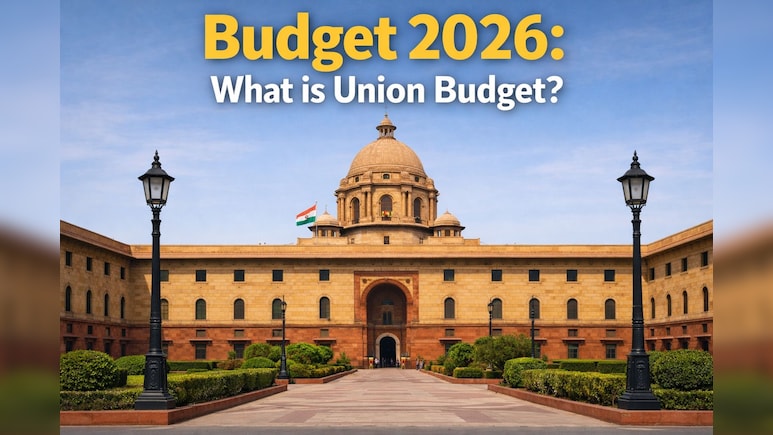
The Union Budget of India sets out the central government's financial plan for a financial year. It lists expected revenues and proposed spending and provides a framework for fiscal policy. The document is prepared ahead of each financial year starting April 1 and is presented to Parliament by the finance minister.
The Budget serves as the government's annual financial statement under the Constitution. It reflects policy priorities, takes account of the previous year's performance and guides government action in the year ahead. Preparation involves several months of consultation across ministries and departments before the final document reaches Parliament.
Below are the explanations what the Union Budget is, why it is important and how the process has developed over time.
Also Read | Layoffs Are Rising In Tech, But These Skills Are Helping People Unlock Better Pay
What Is Union Budget?
The Union Budget is the government's statement of estimated receipts and expenditures for a financial year. It includes projections of revenue from taxes and other sources and planned spending on administration, welfare, infrastructure and other heads. It is commonly referred to as the Annual Financial Statement and is laid before Parliament for approval before it takes effect from April 1.
ALSO READ: Budget 2026: What Is Fiscal Deficit? Check Definition, Meaning And More
Why Is The Union Budget Important?
The Budget acts as the financial roadmap for the government. It sets out how much the government expects to earn, how much it plans to spend and how it intends to bridge any gap between the two. These decisions influence fiscal deficit targets, borrowing needs, interest rates and overall economic conditions. Budget proposals also affect households and businesses through changes in taxes and government expenditure.
Who prepares Union Budget?
The preparation of the Budget is led by the Budget Division in the Department of Economic Affairs under the Ministry of Finance. The process involves extensive input from Union ministries, departments dealing with expenditure, revenue, investment and financial services, autonomous bodies, states and Union Territories and the tax administration. Each provides estimates and projections, which are reviewed and revised before being consolidated into the final document.
ALSO READ: Budget 2026: What Is A Subsidy? Check Definition, Key Aspects, Pro, Cons And More
How Is Union Budget Prepared And presented?
Work on the Budget begins around six months before its presentation. Departments submit estimates, which go through several rounds of scrutiny and revision. The Finance Ministry then assesses these figures against current economic conditions and available resources. This stage involves matching expected revenue with proposed spending to determine borrowing needs and fiscal deficit targets. Once finalised, the Budget is presented to Parliament through the Finance Bill and must be approved by the Lok Sabha.
How Has Union Budget Evolved Over Time?
Since Independence in 1947, India has presented 73 annual Budgets, along with interim and special Budgets. Interim Budgets, or votes on account, are typically presented in election years to cover government spending for a limited period until a full Budget is introduced by the new government.
The timing of the Budget has also changed, with the presentation moving to February 1 from 2017. The separate Railway Budget was merged with the Union Budget the same year. More recently, the government shifted to paperless Budget documents.
Essential Business Intelligence, Sharp Market Insights, Practical Personal Finance Advice, Daily Fuel, Gold and Silver Prices and Latest Stories — On NDTV Profit.