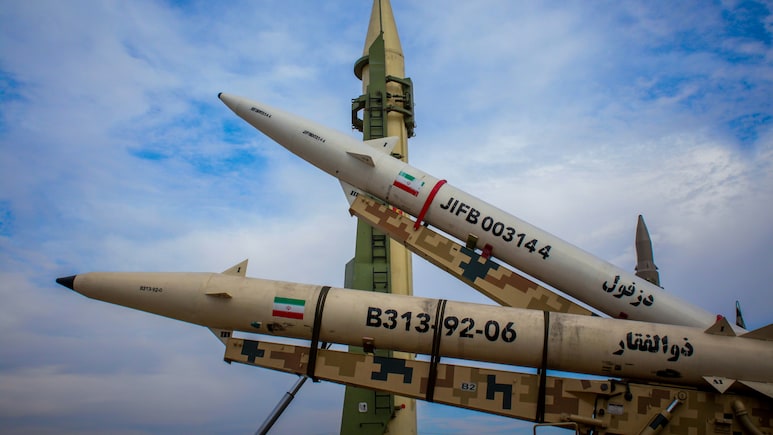
- Iran’s $10 billion defence budget contrasts with the US $850 billion budget
- Shahed-136 drone costs about $35,000, offering a low-cost attack option
- US Patriot missile system costs over $1 billion per battery and $4 million per missile
Iran's relatively modest defence budget of about $10 billion (Rs 84,000 crore) stands in stark contrast to the United States' $850 billion (Rs 71 lakh crore). Yet, in the ongoing Gulf conflict, Tehran appears to be leveraging a decisive economic advantage, according to an analysis by Markets by Zerodha.
At the centre of this shift is the Shahed-136 drone, a low-cost weapon priced at roughly $35,000 (Rs 29 lakh). Built with simple components, including a small piston engine and basic GPS navigation, it is inexpensive yet effective when deployed in large numbers.
In contrast, the analysis by Zerodha on X says that the US-made Patriot missile system represents the other end of the spectrum. A single battery costs over $1 billion (Rs 8,400 crore), while each interceptor missile is priced at around $4 million (Rs 34 crore), over 100 times the cost of a Shahed drone.
Also Read | Layoffs Are Rising In Tech, But These Skills Are Helping People Unlock Better Pay
Iran's entire defence budget is $10 billion, or ₹84,000 crore. The United States' defence budget is $850 billion, or ₹71 lakh crore. Yet in the war currently being fought in the Gulf, Iran has the better economics.????????
— Markets by Zerodha (@zerodhamarkets) April 23, 2026
The imbalance is not just theoretical. Gulf states reportedly burned through months of interceptor stockpiles within days as hundreds of drones targeted critical infrastructure. With production cycles stretched, even manufacturers like Lockheed Martin, which produced about 600 Patriot interceptors in 2025, are struggling to keep pace, Zerodha pointed out.
The strategy, the report notes, is clear: overwhelm high-cost defence systems with swarms of low-cost drones, draining stockpiles faster than they can be replenished.
This model has already played out in the Russia-Ukraine war, where Ukraine shifted to mass-producing first-person-view (FPV) drones costing as little as $400 (Rs 34,000). Drone production there has surged from 800,000 units in 2023 to a targeted five million this year, while Russia has announced plans to produce up to 1,000 attack drones per day.
ALSO READ: World War 2-Style Arms Push: Trump Team Taps Carmakers GM, Ford As Iran War Drains Stockpiles
The evolving battlefield has exposed a structural weakness in traditional military thinking, that superior, expensive technology can consistently outmatch volume.
“The defence acquisition system, as you knew it, is dead,” US Defence Secretary Pete Hegseth said in November 2025, signalling a push for faster, more scalable procurement.
The US has since begun adapting, deploying systems like the LUCAS (Low-Cost Uncrewed Combat Attack System), developed in just 18 months and inspired by Iran's drone design. However, scaling such production remains a challenge due to dependence on global supply chains, particularly Chinese components.
Essential Business Intelligence, Sharp Market Insights, Practical Personal Finance Advice, Daily Fuel, Gold and Silver Prices and Latest Stories — On NDTV Profit.