The US, Israel Iran war entered its sixth day on Thursday with no visible indications of de-escalation. Tremors of war are being felt across the globe in one way or another.
Notably, the economic toll on the horizon is likely to sustain even after the conflict ends. Trade has taken centre stage as countries navigate strained trade routes, straits and chokepoints.
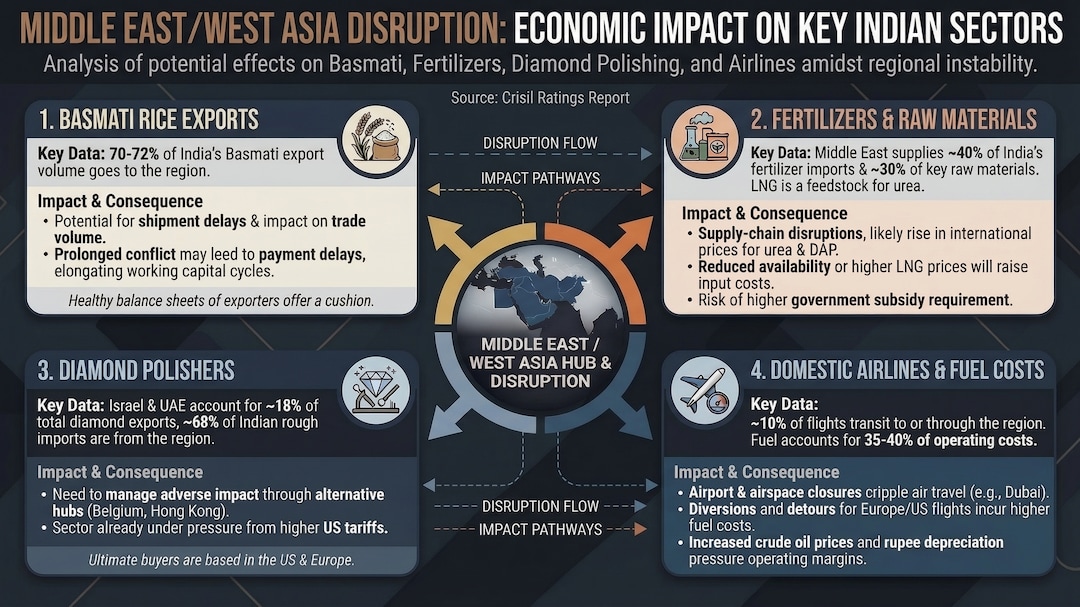
For India, while there is a host of sectors on the hard-hit list. Basmati rice, fuels like LNG and LPG, fertilisers, domestic airlines, and diamond polishers are likely to face the harshest brunt, according to the Crisil Rating's report.
Also Read | Layoffs Are Rising In Tech, But These Skills Are Helping People Unlock Better Pay
The report highlights that basmati rice has the highest direct export exposure with the Middle East and West Asian countries accounting for 70-72% of India's total basmati export volume, and therefore could be the worst hit.
ALSO READ: India Seeks Clarity From US On Strait Of Hormuz Insurance Plan
Further, India imports 85% of its crude oil and half of its LNG requirement. Of this, 40-50% of crude oil and 50-60% of LNG are shipped through the Strait of Hormuz. Most shipping vessels have stopped sailing on this route since March 1, due to increased risk of passage and any prolonged disruption of this trade route will have a bearing on global crude oil and LNG availability, and their prices.
The hit on LNG will have a domino effect on other sectors and industries such as ceramics, fertilisers, downstream oil refiners, paints and specialty chemicals sector, city gas supply, and synthetic textiles.
The fertiliser sector is highly vulnerable as India imports 30% of its finished fertiliser requirement and 30% of key raw materials (like rock phosphate and phosphoric acid) from the Middle East. Beyond direct supply chain disruptions, the sector is squeezed by energy costs; LNG is a primary feedstock for manufacturing urea.
The Middle East serves as a vital hub for the diamond industry, with the UAE and Israel accounting for 18% of India's diamond exports and 68% of its rough diamond imports in the first nine months of its fiscal. The disruption to regional auctions could be significant, however, polishers can still mitigate this problem by shifting their trading activities to alternative hubs like Belgium or Hong Kong.
Besides these, domestic airlines are also facing severe operational hurdles, as roughly 10% of their total flights transit to or through the Middle East. Closures of key airports and airspace, particularly in Dubai, crippled travel in early March; while limited evacuations began on March 3, 2026, a return to normalcy is expected to be slow.
Any Winners?
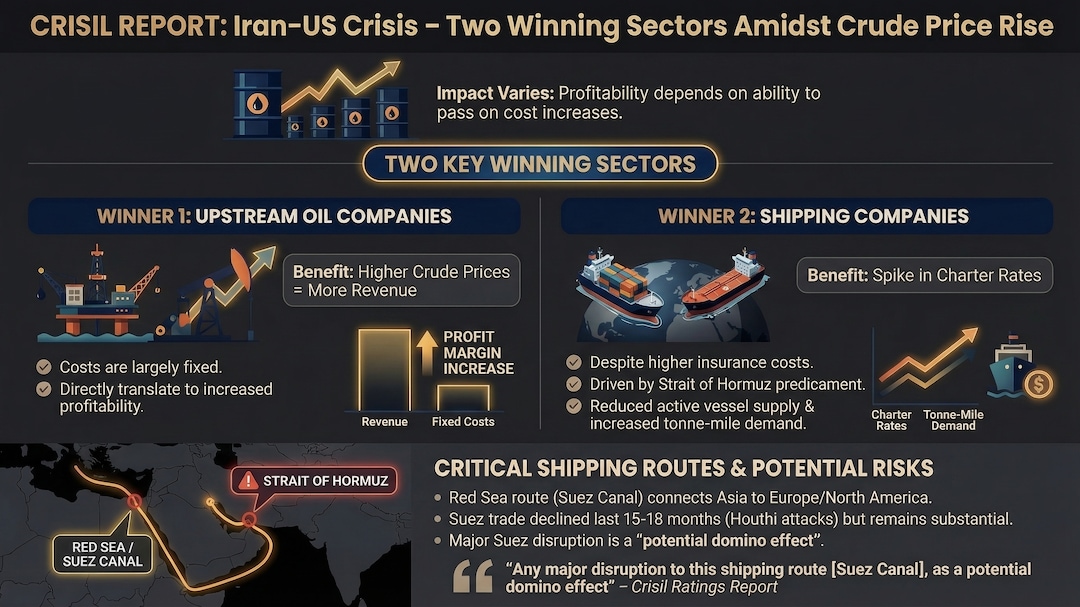
The grass is greener for only a handful of players. According to the report the spike in crude oil price will benefit upstream oil companies because it translates to more revenue, while costs are fixed.
Additionally, despite a rise in insurance costs, shipping companies are likely to benefit from a spike in charter rates because of the predicament at the Strait of Hormuz, with reduced supply of active vessels and an expected increase in the tonne-mile demand.
Essential Business Intelligence, Sharp Market Insights, Practical Personal Finance Advice, Daily Fuel, Gold and Silver Prices and Latest Stories — On NDTV Profit.