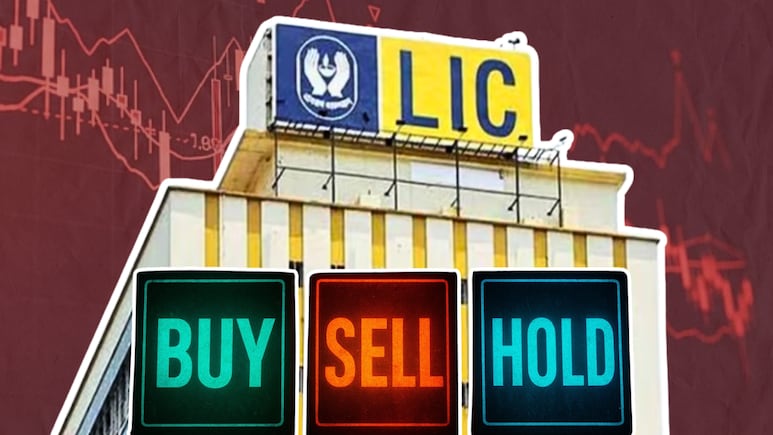
Nearly four years after its blockbuster listing, Life Insurance Corporation of India (LIC) continues to trade below its May 2022 IPO price of Rs 949, raising a key question for investors: is the country's largest insurer a deep value opportunity, or a stock weighed down by structural challenges?
The stock currently trades at roughly a 13% discount to its issue price, despite significant changes in its business strategy and improving profitability metrics. While LIC briefly touched its IPO level in early 2024, it has struggled to sustain momentum since then, even as analysts highlight a growing gap between price and underlying value.
A Fundamental Shift Underway
The company's Q3 FY26 results were driven largely by changes in its product strategy. Management has increasingly focused on high-margin non-participating products, which offer better profitability compared with traditional participating policies. LIC's Value of New Business (VNB) margin expanded to 21.2% in Q3 FY26 from 17.1% a year earlier, narrowing the gap with private insurers.
Also Read | Layoffs Are Rising In Tech, But These Skills Are Helping People Unlock Better Pay
LIC's solvency ratio improved to 2.19 as of December 2025, comfortably above the regulatory requirement of 1.5, providing greater capital flexibility and supporting dividend payouts.
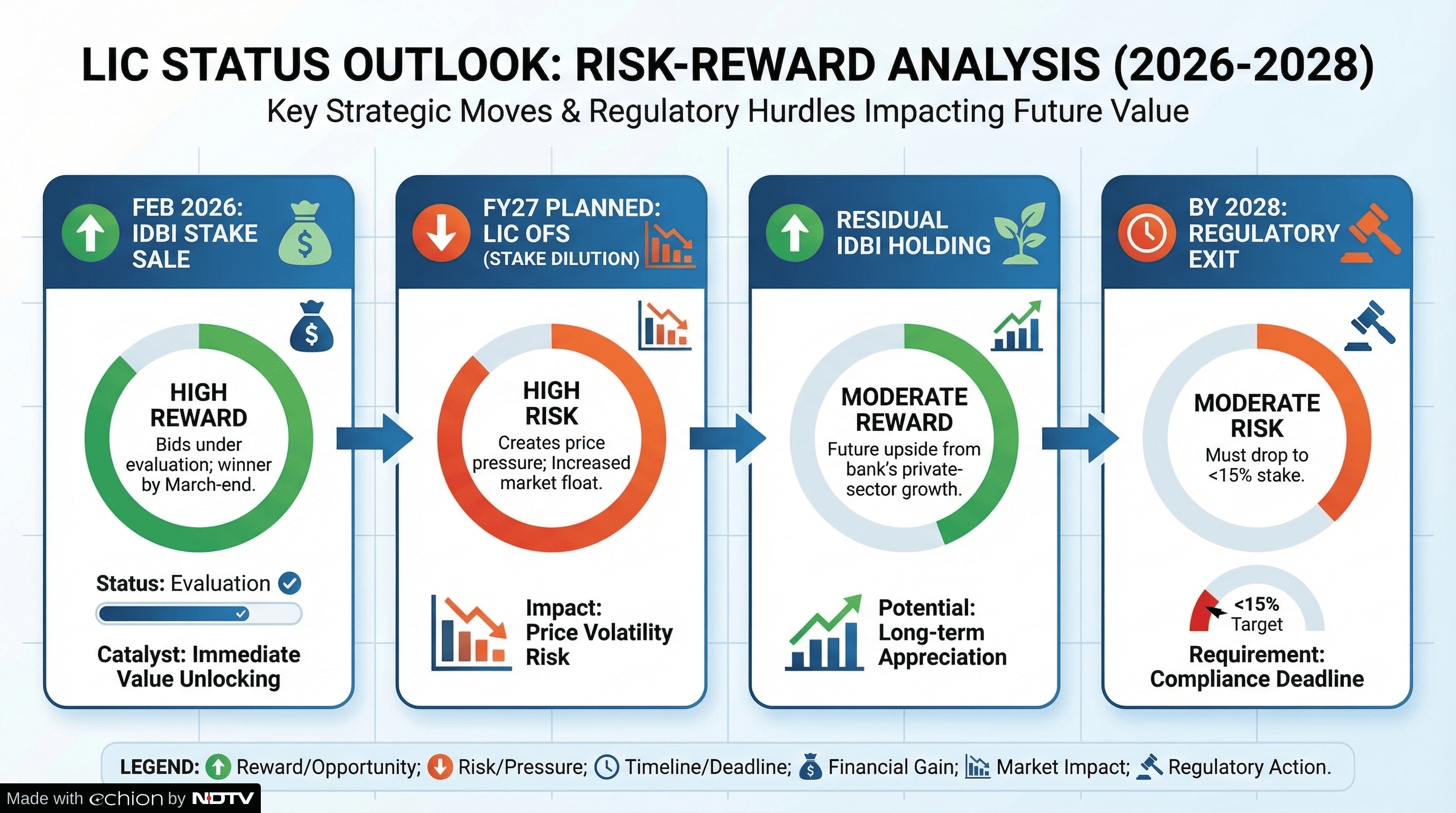
Another potential trigger for the stock is the long-awaited divestment of IDBI Bank, where LIC currently holds a 49.34% stake after stepping in to rescue the lender in 2019 with a Rs 21,624 crore capital infusion. Under the government's divestment plan, LIC is expected to sell 30.24% of its stake, alongside the government's 30.48% holding. Analysts estimate that LIC's share of the transaction could unlock Rs 33,000-Rs 36,000 crore, allowing the insurer to book substantial gains.
Market Experts Divided
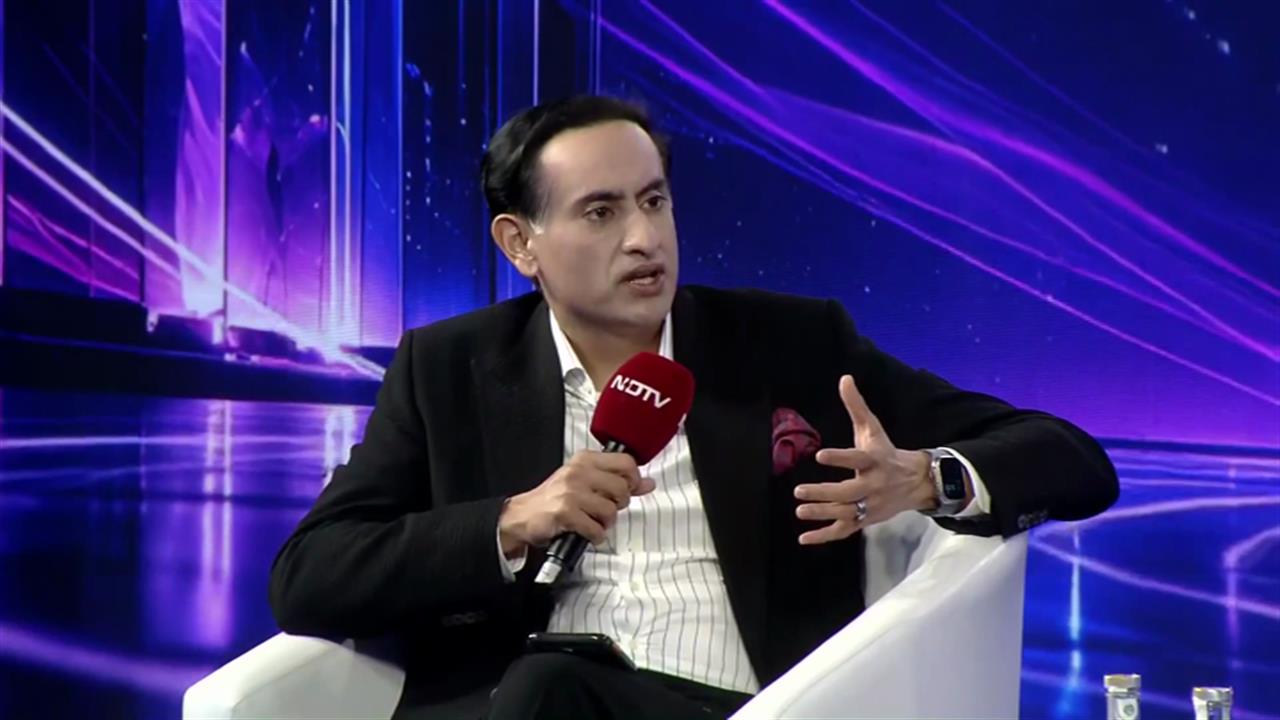
Parag Thakkar, Head and Fund Manager at Fort Capital, believes the stock represents a classic deep value opportunity. According to him, LIC's valuation discount is difficult to justify given the scale of its franchise and improving fundamentals.
He added that LIC's brand strength and distribution reach - combined with improving margins - make the current price an attractive starting point for long-term investors. Thakkar acknowledged that the government's potential offer-for-sale (OFS) remains an overhang for the stock. However, he argues that such concerns should not deter value investors.
"Even if an OFS comes, that is part of the structure of the company because the government holds a large stake. But if the value is clearly visible on the table, investors should focus on that. The stock has essentially delivered flat returns since listing, and for a value investor that actually becomes a good entry point," he said.
ALSO READ: Kotak Rings AI Alarm, Slashes Target Prices Up To 28% for TCS, Infosys & Other IT Majors
The Other View
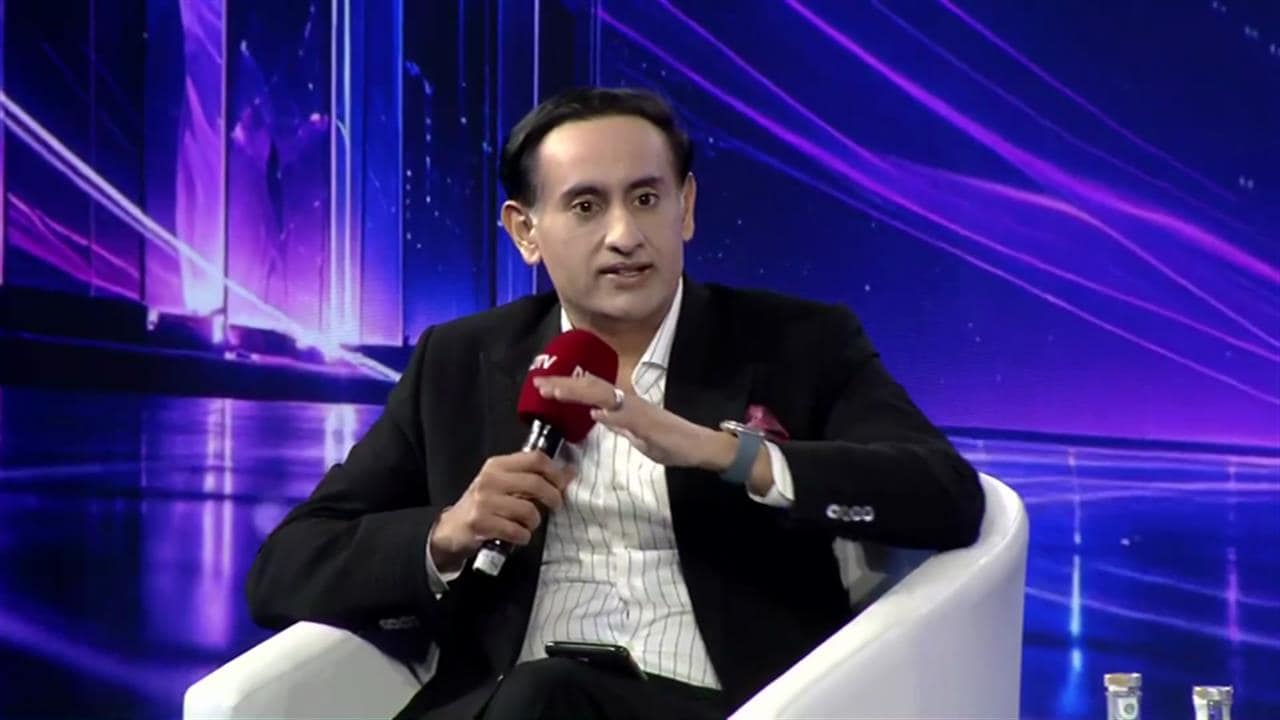
Sachin Jasuja, Head of Equities and Founding Partner at Centricity WealthTech, takes a more cautious view. According to him, investors should focus more on the structural competitiveness of LIC's core business rather than potential one-time triggers such as stake sales or valuation re-rating.
"We look at the operating business, and in our view LIC may continue to face challenges in the coming years," Jasuja said. He pointed out that competition in the life insurance sector has intensified, with private insurers and fintech-driven distribution models gaining market share.
"One-time value unlocking events - such as stake sales or other corporate actions - do not necessarily fix the long-term growth challenges. Investors may find better opportunities in private insurers where operating performance is consistently improving," he added.
The Valuation Gap
The insurer currently trades at about 3.9x price-to-book value, compared with roughly 10.5x for SBI Life, 9x for HDFC Life and 7x for ICICI Prudential Life. Analysts estimate that LIC trades at a 50-65% discount to private insurers on P/B terms and about 41% below its own three-year median valuation multiple.
Brokerages broadly see upside from current levels. Citi has a target price of Rs 1,345, Kotak Securities Rs 1,300, ICICI Securities Rs 1,230, JPMorgan Rs 1,200, and Motilal Oswal Rs 1,100, while Bernstein has a more conservative target of Rs 940.
Essential Business Intelligence, Sharp Market Insights, Practical Personal Finance Advice, Daily Fuel, Gold and Silver Prices and Latest Stories — On NDTV Profit.