- Indian banks requested RBI to revise state bond valuation rules to reduce accounting losses
- Current valuation uses uniform yield by maturity, undervaluing fiscally stronger states’ bonds
- Banks want bond values closer to auction prices to reflect state-specific financial health
Indian lenders asked the Reserve Bank of India to change the way state government bonds are valued on their books, saying current rules result in accounting losses and discourage further investment, according to people familiar with the matter.
In meetings with the RBI this year, some banks asked to be allowed to value the bonds closer to their prices at auctions, the people said, declining to be identified because the discussions are private. The current method requires a blanket yield depending on maturity, which undervalues bonds from fiscally stronger states and overvalues those with relatively worse financials.
Banks have also raised the matter with Financial Benchmarks India Ltd., which sets valuation prices for bonds, in separate meetings over the last few months, they added.
Also Read | Layoffs Are Rising In Tech, But These Skills Are Helping People Unlock Better Pay
The potential for even more paper losses has made banks reluctant to accept lower yields on state bonds, weighing on demand just as issuance rises. Weaker demand from banks could push up borrowing costs, not only for states but across the broader sovereign bond market.
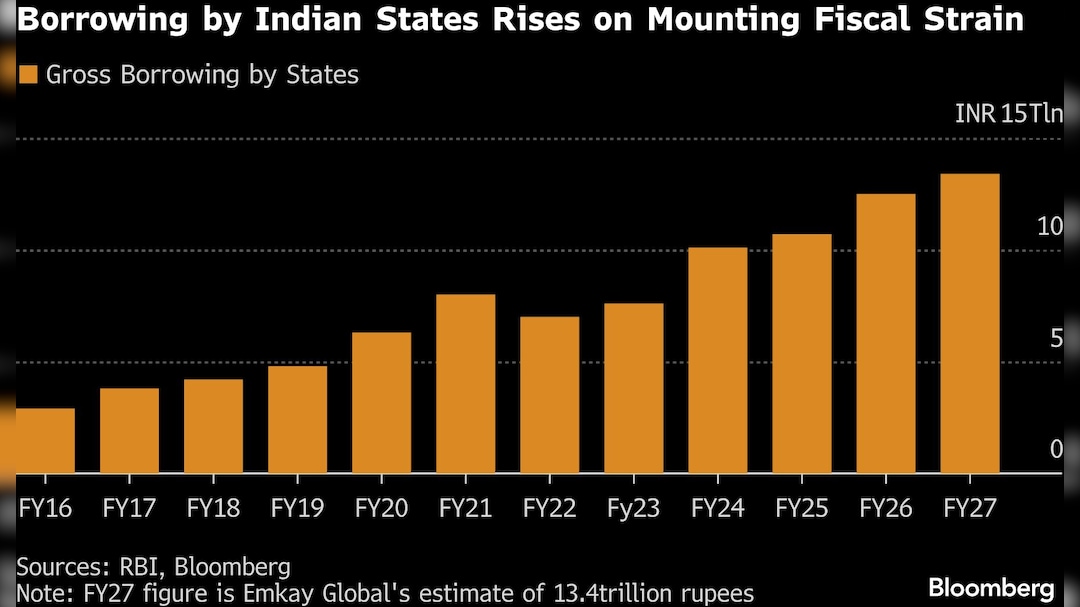
The request comes as Indian states step up borrowing and banks remain the dominant buyers of their debt. States are set to raise a record $138 billion in the year ending March, while banks hold about a third of outstanding state bonds, central bank data show.
Under current rules, which were derived to deal with the illiquid nature of many of the securities, state bonds with the same maturity are valued at a uniform yield regardless of the issuing state's financial health. Bonds maturing in a given year are marked to a yield derived from traded prices of similar-tenor securities, the people said.
Until last year, bond yields across states did not vary as much as they do now. As state debt supply surged, fluctuations became sharper, magnifying challenges with the current valuation method.
The framework hurts banks when they purchase bonds from fiscally stronger states, which typically offer lower yields. When those bonds are later marked on their books using the standardized valuation approach, they can be priced at a loss.
Essential Business Intelligence, Sharp Market Insights, Practical Personal Finance Advice, Daily Fuel, Gold and Silver Prices and Latest Stories — On NDTV Profit.