(Bloomberg) -- As Ukraine's vast farmlands get caught up in war, there's a real risk that the top sunflower grower will struggle to plant seeds this year and that harvests of other crops already sown will suffer.
From fields to processing plants to ports, Russia's invasion is paralyzing Ukrainian agriculture, an industry that produces tens of millions of tons of grains and oilseeds and ships crops across the globe. The sector is so core to Ukraine's identity that its flag depicts blue skies blanketing yellow farm fields.
Wheat and corn prices have rocketed to the highest in a decade with Black Sea exports grinding to a halt. Another big problem for supply is that Ukrainian farmers are finding fieldwork hard or have joined the military just weeks before spring planting begins. That could devastate output of crops like sunflowers -- the country's national flower that has become a global symbol of its resistance.
“The best-case scenario is yields will be lower. The worst-case is nothing gets planted,” said Kees Huizinga, a Dutch farmer who was lured to Ukraine two decades ago by its huge opportunities in agriculture. “If you miss the window of opportunity for planting, you're too late.”
Ukraine is also the top exporter of sunflower oil, a cooking oil made from seed. Wiping out a key supply source risks further raising global food prices that are contributing to red-hot inflation and squeezing household budgets.
“Global consequences could be very, very tough” if Ukraine's farming is disrupted, National Bank of Ukraine Deputy Governor Serhiy Nikolaychuk told Bloomberg TV on Thursday.
Crop Risk
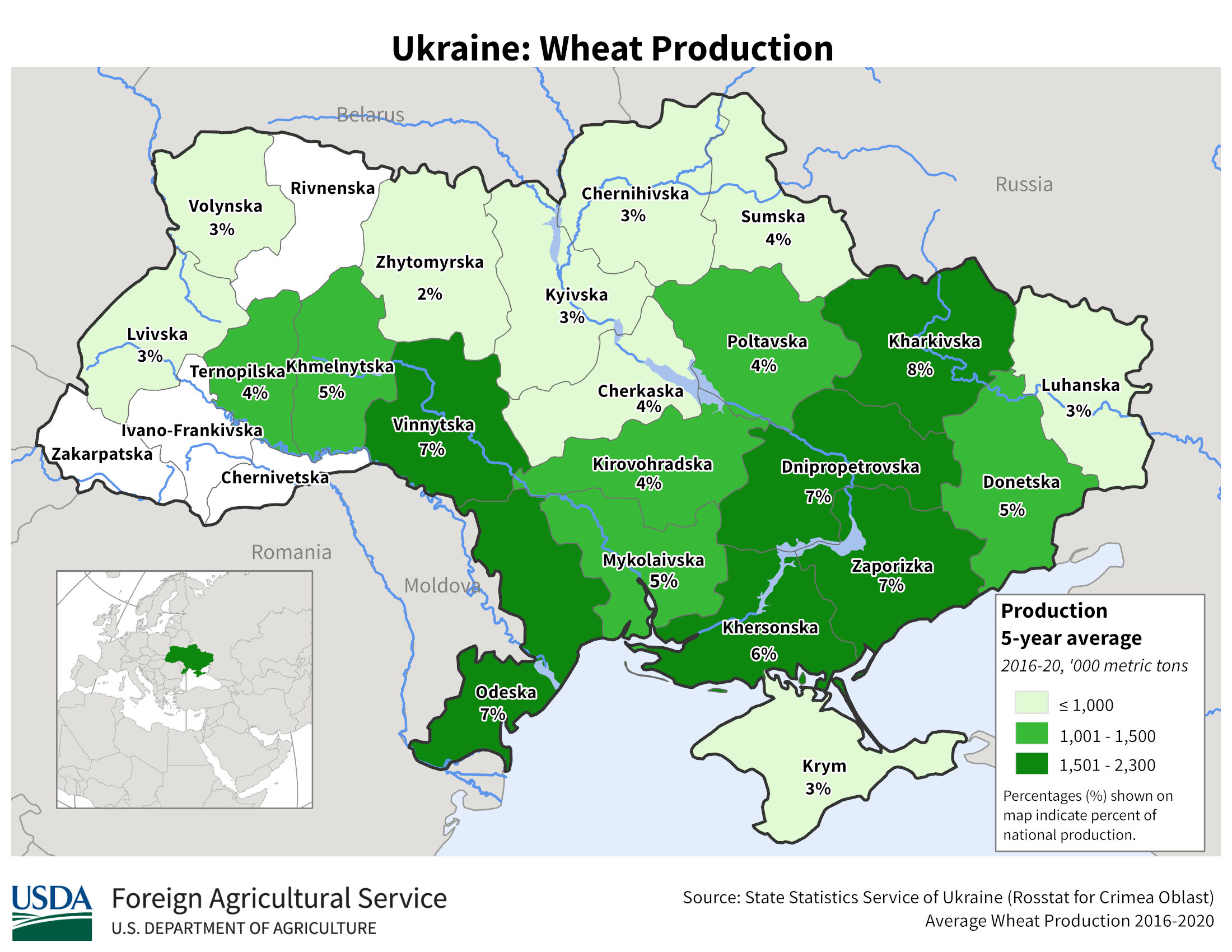
Spring barley can be sown as early as March, though some of the grain and most wheat is planted before winter. Farmers usually put fertilizer on those crops now as they emerge from dormancy. Ukraine's south -- where Russia is stepping up its campaign to take key cities -- is a key region for both grains.
Even if the war ends immediately, nutrient applications will be disrupted, likely curbing yields, said Andrey Sizov, head of consultant SovEcon. Sunflower, sugar-beet and corn are most at risk due to difficulty reaching fields and accessing inputs, Strategie Grains President Andree Defois said.
Even those with fertilizers are limiting applying them at night for fear tractor lights will attract attention of the likes of drones. Machinery noise is also alarming some locals worried that it's Russian tanks or rockets. Along with limited access to inputs and fuel, Huizinga is unsure how much land will get sown.
His operation in central Ukraine that covers roughly 15,000 hectares (37,000 acres) usually has some 400 workers and grows multiple crops. About 10% of staff is now in the army, and there's not enough inputs to finish planting once it starts.
Guessing output is hard at this stage. An initial outlook points to Ukraine's corn crop shrinking a third from 2021's record harvest to 30 million tons, said Pete Meyer, head of grains and oilseed analytics at S&P Global Commodity Insights. Shipments may fall by a similar percentage.
With planting just around the corner, it's impossible that it will be a “normal year” for supplies, he said.
Strategie Grains expects Ukrainian corn sales to the European Union to drop by 1.6 million tons this season. In Russia, where exports have also slowed with traders wary of booking cargoes through the Black Sea, farmers may also cut back on corn given that it's relatively expensive to grow, SovEcon's Sizov said.
Major Ukrainian agribusiness Kernel Holding SA this week said that hundreds of its workers have joined the military as Moscow presses ahead with its offensive. A lot of action has been in the north, where it has substantial farming operations.
With exports stifled, much grain is sitting idle. Huizinga's farm is supplying local mills to feed citizens and soldiers, he said in a video posted by Global Farmer Network.
“If people don't go back on their tractors and start planting, or if they're not able to, that's 100 million tons of food not being produced,” he said. “There's enough food for the local population, but it will be a huge gap in the world market if this doesn't stop soon.”
©2022 Bloomberg L.P.
Essential Business Intelligence, Sharp Market Insights, Practical Personal Finance Advice, Daily Fuel, Gold and Silver Prices and Latest Stories — On NDTV Profit.