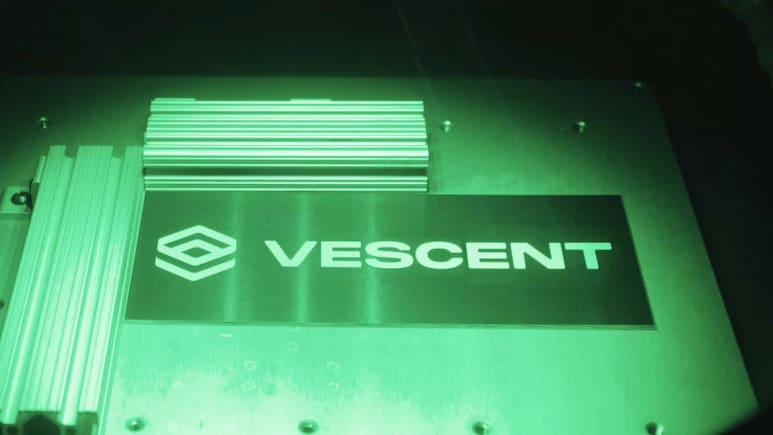
Quantum technology is often discussed as a future industry, with breakthroughs in computing and communications still some way from widespread commercial use. Colorado-based Vescent is making a different bet: that quantum physics can already support a viable business by solving precision problems for customers today.
The company is positioning itself as a rare profitable business in the quantum technology ecosystem, building and selling specialised hardware rather than waiting for a breakthrough application to unlock the market. Its products include optical frequency combs and precision atomic clocks, which use quantum physics to measure time and frequency with exceptional accuracy.
“Quantum tech awaits its ChatGPT moment” is one way to describe the challenge facing the industry: turning complex scientific capabilities into products with clear commercial applications. For Vescent, the opportunity lies in technologies that underpin navigation, communications and financial systems, where even tiny timing errors can have significant consequences.
Also Read | Layoffs Are Rising In Tech, But These Skills Are Helping People Unlock Better Pay
At the company's laboratories, CEO Scott Davis showcases stabilised lasers and optical references being tested, alongside frequency combs that link optical frequencies to measurable reference points. The technology must move beyond laboratory demonstrations to become reliable, packaged systems that customers can deploy in the field.
That requires more than scientific breakthroughs. Vescent's production floor brings together manufacturing, quality control and testing, while its environmental laboratories subject finished systems to temperature changes, vibration and shock. The process illustrates a central challenge for deep-tech companies: translating advanced physics into repeatable products that can be manufactured, sold and supported commercially.
The business model also offers a relevant lens for India, which is trying to move quantum research into commercial applications. The government's National Quantum Mission has an outlay of Rs 6,003.65 crore through 2030-31, with a focus on quantum computing, communications, sensing and materials. Precision atomic clocks and quantum sensing are among its stated priorities.
For India's emerging quantum startups, Vescent's experience raises an important question: can companies build sustainable businesses by commercialising specialised quantum hardware before the technology reaches its mass-market moment?
Essential Business Intelligence, Sharp Market Insights, Practical Personal Finance Advice, Daily Fuel, Gold and Silver Prices and Latest Stories — On NDTV Profit.