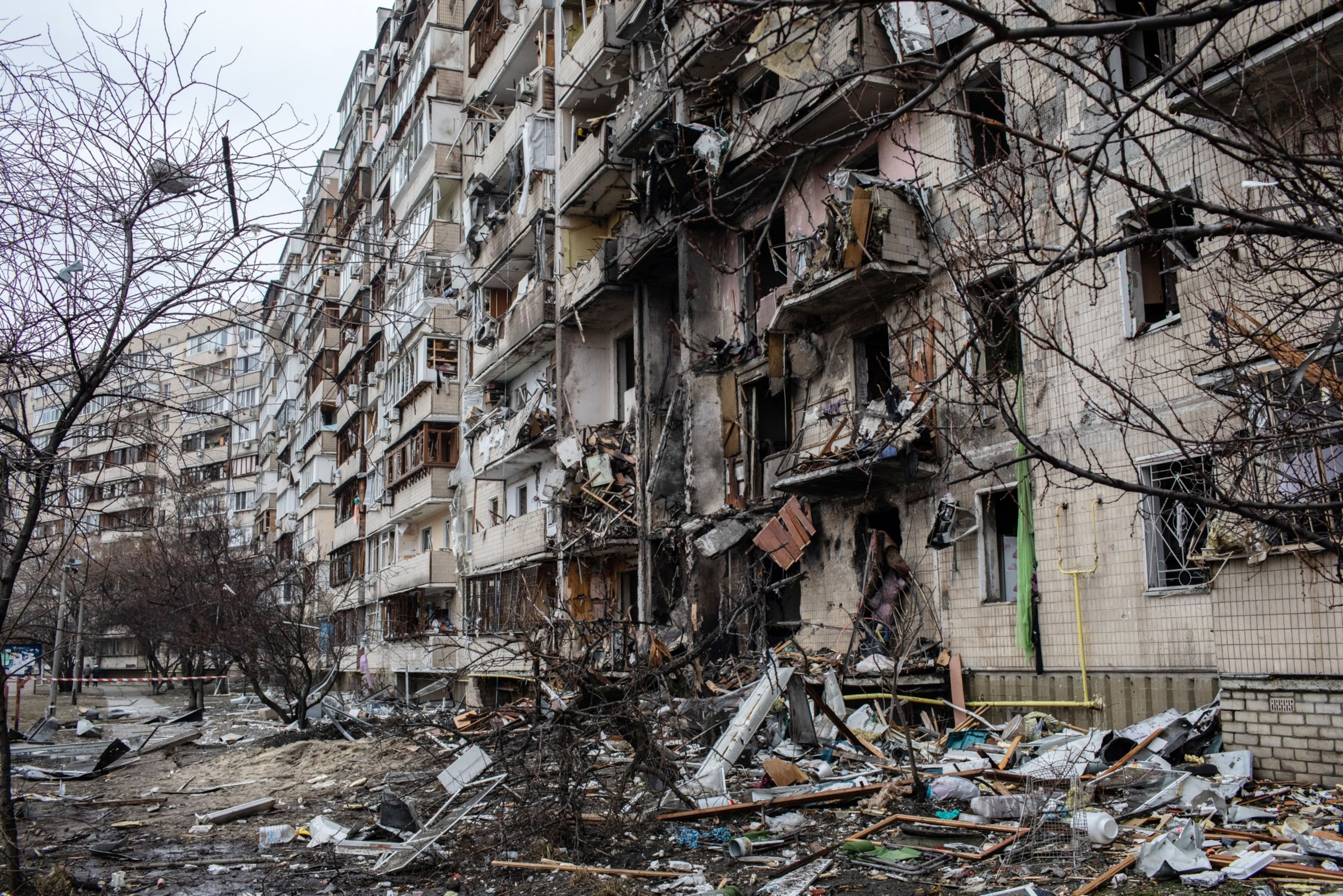
For a second week in a row, Russia's continued attacks in Ukraine dominated news and price action across markets. Fighting continued and the week ended with news of Russian troops occupying a nuclear plant site. You can continue to follow the latest updates here.
Much of what was feared in terms of market reaction played out. Oil rose even higher into the hundreds, with WTI crude trading at about $110 a barrel and Brent crude a few dollars higher. Equity markets fell, currencies weakened.
With growth fragile, inflation just within tolerance levels and incomes still strained for many, higher oil was the last thing India needed at this stage. Economists are starting to pencil in the impact of higher oil prices lasting longer than anticipated.
If oil averages close to $100 a barrel for a prolonged period, the drag on GDP growth could be up to 0.9 percentage point, inflation could rise by around 1 percentage points and the current account deficit could widen by 1.2 percentage points, wrote HSBC's chief India economist.
Deutsche Bank's Kaushik Das sees a 30-basis-point downside to the Reserve Bank's 7.8% GDP growth forecast for FY23 and a 50-70-basis-point upside to inflation forecasts even if the government absorbs a part of the higher oil prices and passes on only 50% of the rise to consumers.
The current account deficit could widen to 2.7% of GDP and the rupee, which breached 76/$ this week, could fall to 77/$, Das wrote.
On the trade front, while the direct impact isn't significant, there are key commodities—edible oils and fertilisers—where Russia, Ukraine and Belarus make up 11-11.5% of total imports, pointed out Nomura's Sonal Varma in her note. Also, over 30% of project goods imports (materials used in infrastructure projects) are sourced from Russia-Ukraine, Nomura cautioned.
Globally, current conditions have the potential to trigger a stagflationary crisis similar to the OPEC oil embargoes of the 1970s, wrote Jefferies' Chris Wood. "The only possible positive outcome is that the geopolitical concerns cause the G7 central banks to proceed more cautiously with their tightening agendas," he said in his weekly GREED & Fear.
Beyond the immediate, as we discussed last week, there are medium-term implications to think about.
Did the use of payment systems as weapons against Russia bring decades old fears to life? And will central banks think harder about diversification of reserves after the U.S. effectively put a freeze on a large part of Russia's dollar holdings? We explored that topic in this piece. The Reserve Bank, for one, has worried about the dominance of certain payment systems including SWIFT, Visa and Mastercard for years, say veterans. And diversification of reserves has been a well-stated policy. But options on both fronts are limited.
One line of thinking has been that central bank digital currencies could gain, well, currency. China, for instance, could consider using the e-CNY as a way to bypass SWIFT, wrote Bloomberg's Andy Mukherjee.
The other thought gaining traction is that cryptocurrencies will be seen as an alternative given the sledgehammer approach taken by governments to use fiat currencies as a tool of war. Binance, one of the largest global crypto platforms, seemed to push that case by refusing to clamp down on Russian users. The exchange's chief called it unethical. But how long can crypto stay neutral? In a world where even Switzerland is ditching historic neutrality, crypto is finding it hard to escape geopolitical facts on the ground, wrote Lionel Laurent in this Bloomberg Opinion piece.
Till next week.
Essential Business Intelligence, Sharp Market Insights, Practical Personal Finance Advice, Daily Fuel, Gold and Silver Prices and Latest Stories — On NDTV Profit.