For more than a decade, television has been living under a death sentence. Smartphones have become ubiquitous, streaming has moved into the mainstream, audiences have fragmented, and advertising expenditure has migrated towards digital media. More recently, 'cord-cutting' has appeared to provide the final nail in television's coffin.
There is only one difficulty with this argument. It may have confused the decline of one form of television with the decline of television itself.
In India, the picture is considerably more nuanced. Linear television continues to command extraordinary reach, with audiences remaining remarkably stable despite the rise of digital media. At the same time, the overall television universe continues to expand, while Connected TV is creating new ways to consume and monetise content on the same large screen. What is changing, therefore, is not simply television itself, but the way television reaches us.
Also Read | Layoffs Are Rising In Tech, But These Skills Are Helping People Unlock Better Pay
Television Has Changed Its Technology, Not Its Human Grammar
For most of its history, the television set, the television channel and the infrastructure through which programming entered the home were essentially one system. The programme, the 'pipe' and the screen were inseparable.
That relationship no longer holds.
The same television set can now carry a linear news channel, YouTube, a streaming series, a live cricket match, an OTT film or a broadcaster's own digital service. The screen has acquired search, recommendation, personalisation and on-demand viewing.
Yet many of the behaviours associated with television have proved remarkably durable.
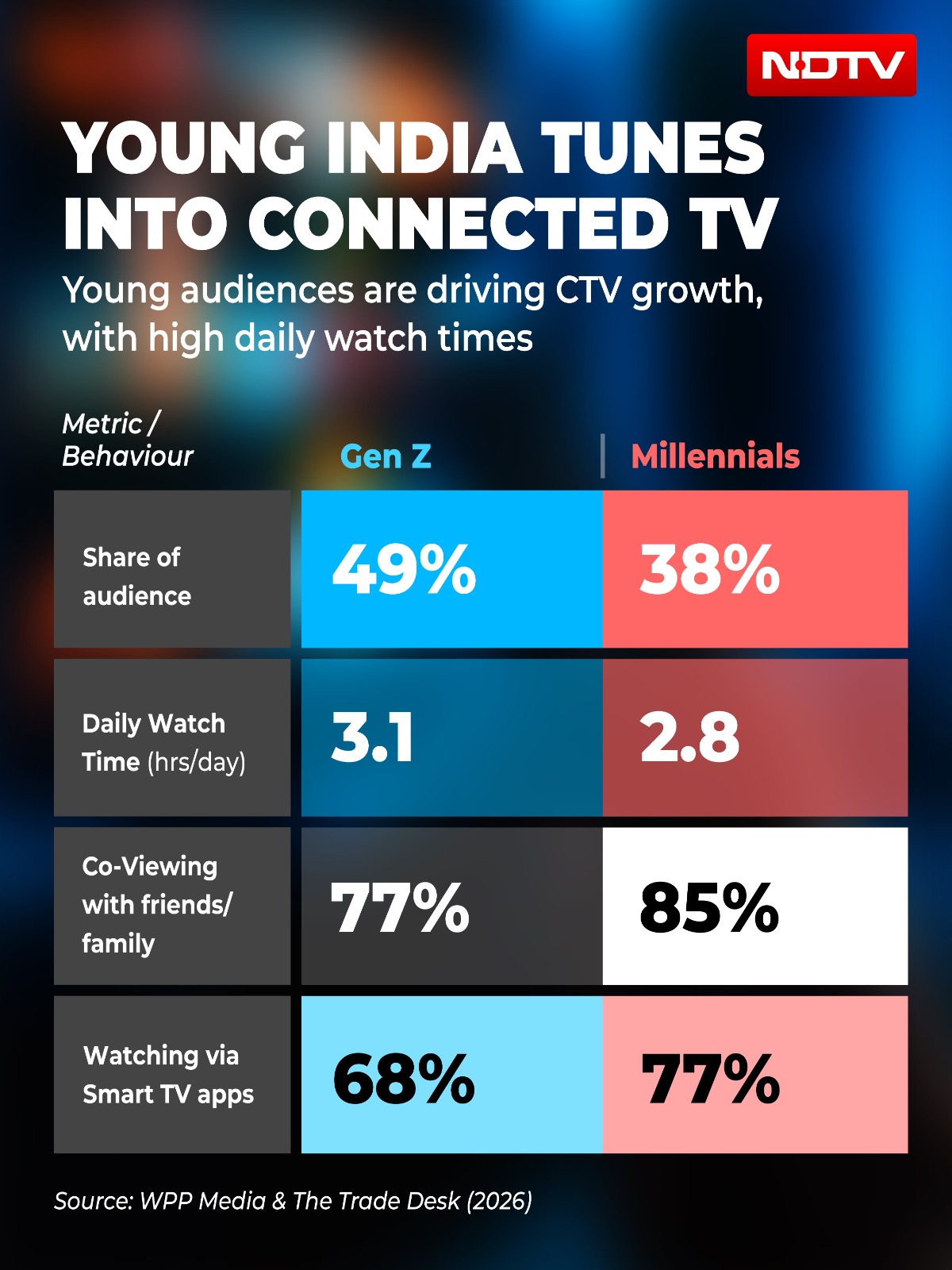
More than 80% of Connected TV viewing is shared with family or friends, while the average connected-TV household contains 3.3 people (WPP Media & The Trade Desk, 2026).
The schedule may have weakened, but the ritual has survived.
The smartphone is fundamentally personal. Television remains unusually capable of being social. Personal screens fragment audiences into individuals; the large screen can still aggregate them into households.
The Case Against Television Begins With The Wrong Defendant
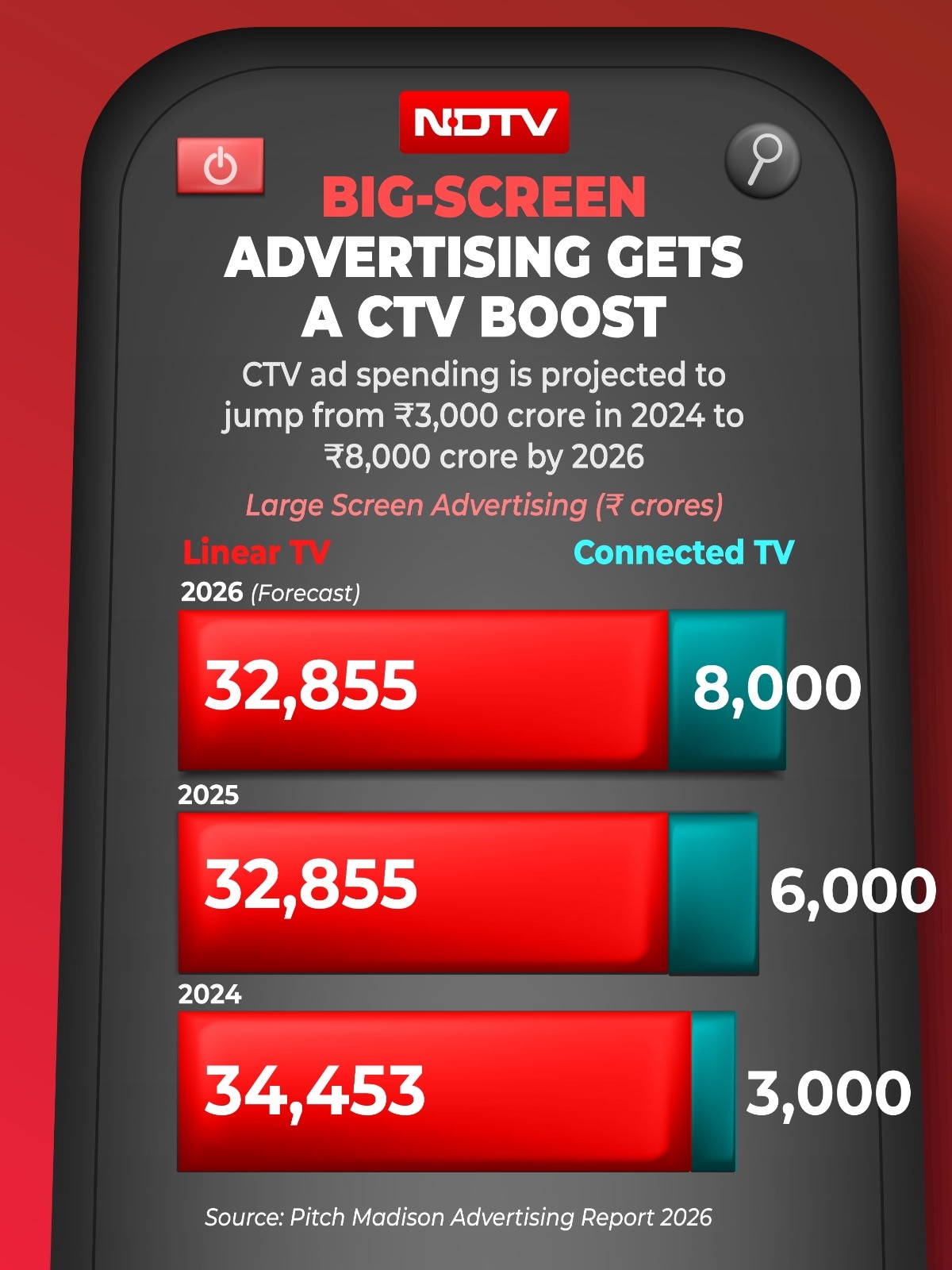
The pressures on Linear TV are real. Pitch Madison estimates that Linear TV advertising declined from Rs 34,453 crore in 2024 to Rs 32,855 crore in 2025, a fall of 4.6% (Pitch Madison Advertising Report, 2026).
But advertising decline is not the same as audience collapse.
According to EY data, Linear TV reached approximately 745 million people every week in 2025, compared with 751 million in 2024. Weekly GRPs were similarly stable at 3,215 versus 3,246.
Television also continues to deliver extraordinary monthly reach, at around 831 million people, compared with roughly 491 million for YouTube (EY, 2026).
At a time when OTT and digital consumption are growing rapidly, the important story is the stability of those numbers.
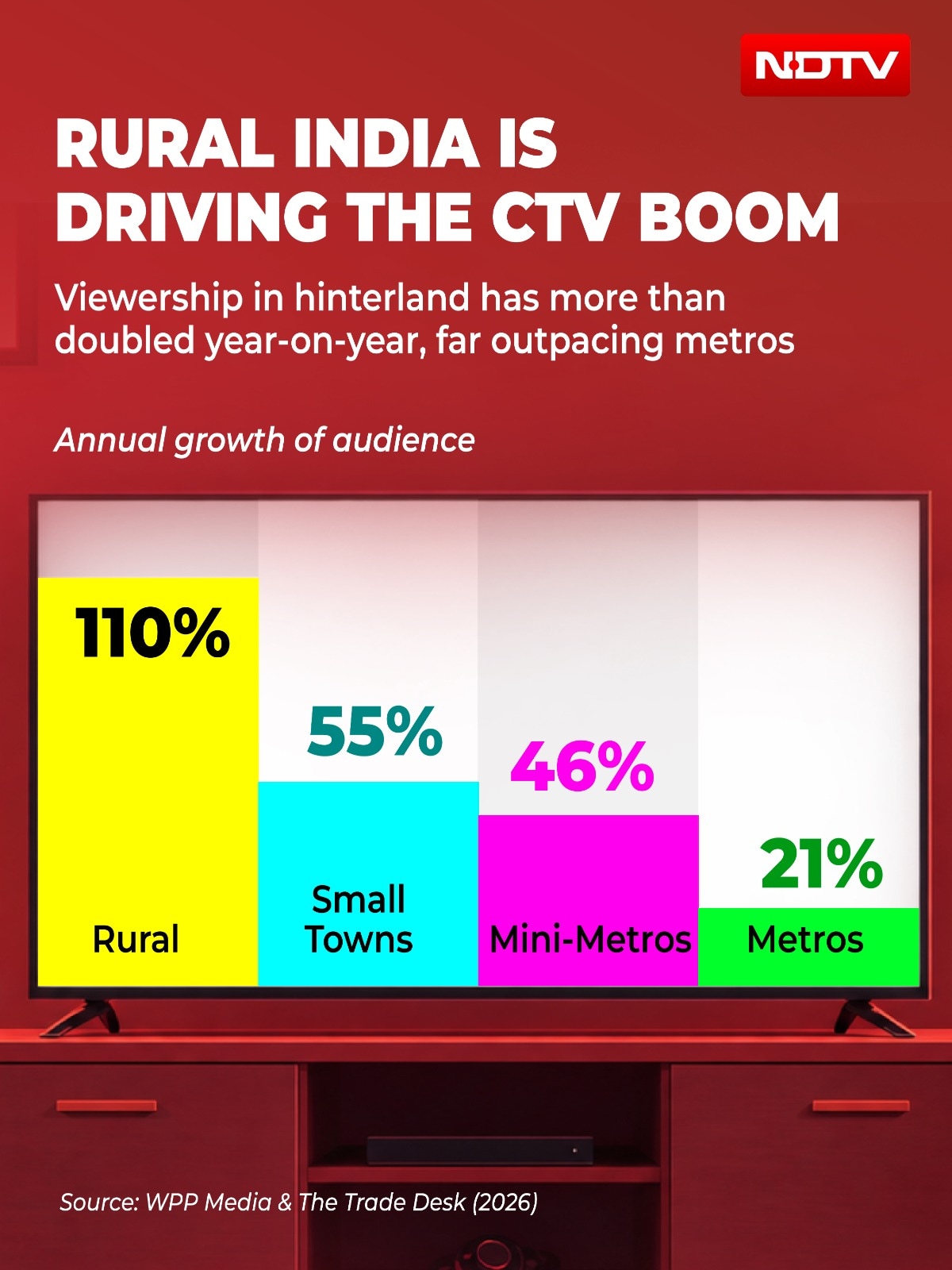
In India, that scale still matters. Television reaches across languages, income groups, metros, smaller towns and price-sensitive audiences in a way few individual platforms can replicate.
For a national campaign, a breaking news event, an election, a movie launch or live sport, Linear TV can still create immediate scale and a shared viewing experience that fragmented digital consumption often struggles to reproduce.
The Television Universe Is Still Growing
There is another problem with the idea that television is simply disappearing. The television universe itself continues to expand.
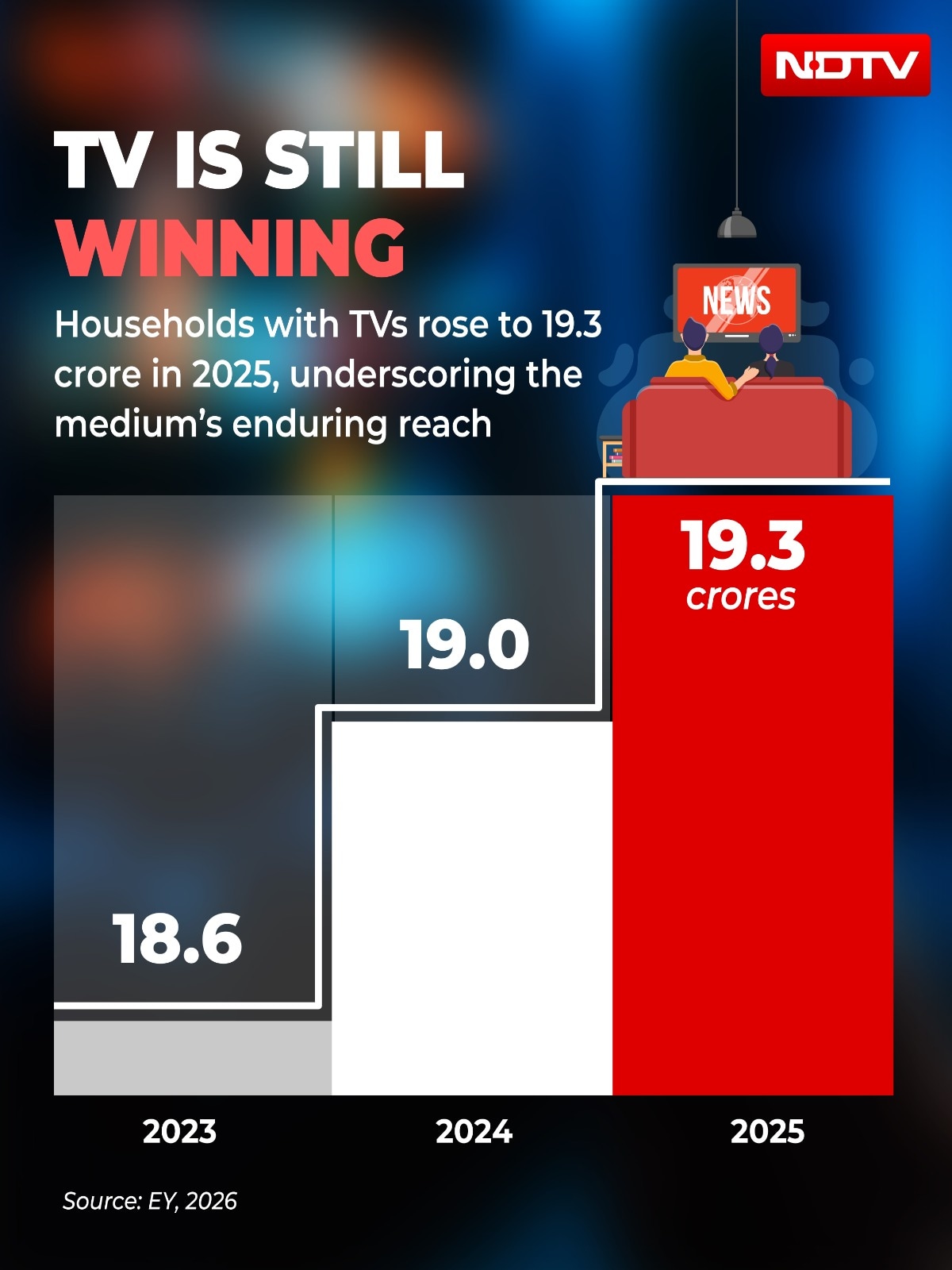
TV subscriptions increased from approximately 186 million in 2023 to 190 million in 2024 and 193 million in 2025. Free-to-Air homes rose from around 45 million to 53 million, while India now has 956 television channels, approximately 65% of them Free-to-Air (EY, 2026).
These are not the numbers of a medium simply being abandoned. What is changing is the composition of the television household.
Some households are combining Linear TV with OTT, YouTube and Connected TV. Others continue to depend on Free-to-Air television as an affordable gateway to news and entertainment.
Media transitions rarely happen through clean substitution. Old and new systems coexist.
The Big Screen Is Becoming a Digital Platform
Connected TV makes that overlap even clearer.
India's CTV universe is estimated at approximately 207 million viewers across 62-65 million households, with average daily consumption of around 2.9 hours (WPP Media & The Trade Desk, 2026).
There is a certain irony here. The internet was once expected to take video away from television. Instead, the internet has moved into television.
The Smart TV retains the large canvas and lean-back experience of traditional television while acquiring the attributes of digital media - search, recommendation, addressability and measurement.
More importantly, CTV is not simply replacing Linear TV. Research suggests that 68 per cent of CTV households continue to maintain some relationship with Linear TV (WPP Media & The Trade Desk, 2026).
The household is not moving neatly from 'TV' to 'digital'. It is assembling different forms of viewing around the same screen.
Linear TV continues to provide mass reach. CTV adds another way to consume and monetise content on the same large screen.
The Broadcaster Is Bigger Than the Broadcast Pipe
This is where the broadcaster perspective becomes important.
Broadcasters are not just owners of cable or satellite distribution. Their real assets are content, brands, talent, live programming, news, sport, entertainment formats and the ability to build large audiences around moments that matter.
Those assets can now travel.
An election, a cricket match, a major news story or an entertainment franchise can live across Linear TV, CTV, OTT, YouTube and other digital platforms.
The channel is therefore no longer the entire definition of the broadcaster. The strategic opportunity is not to defend an old pipe. It is to make the content travel.
Capital Is Repricing Television, Not Abandoning It
The advertising numbers bring the argument together.
Linear TV advertising declined from Rs 34,453 crore in 2024 to Rs 32,855 crore in 2025. But during the same period, CTV advertising approximately doubled from Rs 3,000 crore to Rs 6,000 crore.
When Pitch Madison combines Linear TV and CTV into a single Large Screen category, advertising expenditure actually rises from approximately Rs 37,453 crore to Rs 38,855 crore, growth of around 3.7 per cent (Pitch Madison Advertising Report, 2026).
That may be the most revealing number in the debate. Capital is moving, but it is not simply leaving the television screen.
Linear television remains one of India's largest reach platforms. The overall TV universe continues to grow. CTV is adding another layer of consumption and monetisation. And broadcasters increasingly have the ability to take their strongest assets across all of these environments.
The premature obituary of television mistakes the decline of its old distribution architecture for the decline of the medium itself.
Linear television may be losing its monopoly on the screen. But the screen itself is unambiguously, getting a second life.
(Rahul Kanwal is the CEO & Editor-in-Chief at NDTV, and Subha Sankar Chatterjee is Creative Director for Strategic Brand Collaborations at NDTV)
Essential Business Intelligence, Sharp Market Insights, Practical Personal Finance Advice, Daily Fuel, Gold and Silver Prices and Latest Stories — On NDTV Profit.