- Tata Sons boardroom rift centers on Tata Trusts' 66% ownership and voting rights
- Harish Salve links dispute to RBI's mandate for Tata Sons' public listing
- Singhvi defends Tata Trusts' demand for one-third board representation
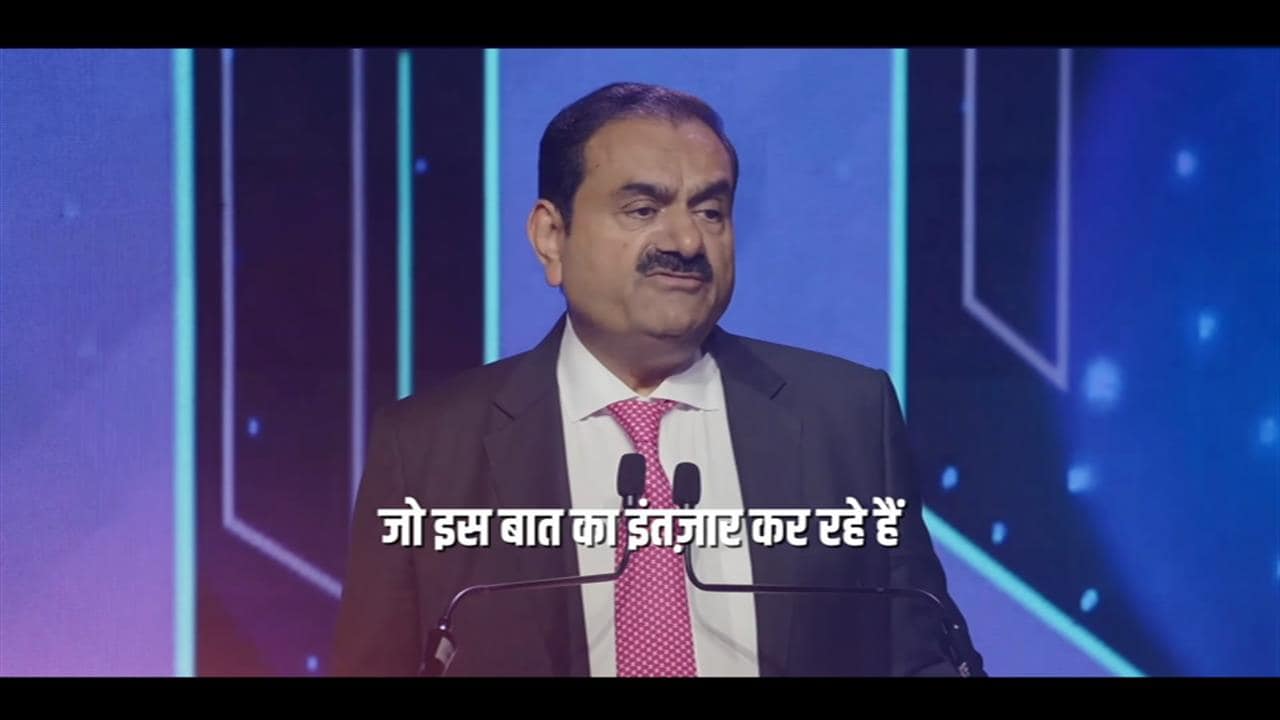
The ongoing boardroom rift and leadership tussle at Tata Sons transpired publicly on Sunday as top legal luminaries Abhishek Manu Singhvi and Harish Salve traded conflicting stances on Chairman N Chandrasekaran's reappointment and the holding company's proposed listing. Speaking to NDTV CEO and Editor-in-Chief Rahul Kanwal, Singhvi asserted the sovereign voting rights of Tata Trusts as the 66% majority owner, while Salve countered that the leadership clash is merely distracting from the primary regulatory mandate to take Tata Sons public.
Board Powers, Shareholder Rights
Singhvi said the dispute was fundamentally about the Tata Trusts' majority ownership of Tata Sons rather than individual shareholders or executives.
Also Read | Layoffs Are Rising In Tech, But These Skills Are Helping People Unlock Better Pay
“What has happened is that you cannot have a runaway board which decides things with the active disagreement of 66% shareholders. It is a major principal issue of shareholder-owner privacy. It is not about Noel Tata. He isn't an individual shareholder and it's not even about Chandrasekaran,” Singhvi said.
“The issue is about the privacy of a 66% collective called a trust. How is the runaway board allowed to run independently of its 66% owner? Then you would have disastrous consequences of corporate governance across the country,” he said.
Salve, however, said the focus on whether the board could act against shareholder wishes was distracting from what he called the “real issue” raised by the Tata Trusts.
“A lot of short answers for what you said. Bigger issues are at play. Let's not miss the wood for the trees. It's a good forensic ploy to obtain legal advice,” Salve said.
He said the Trusts' concerns centred on the Tata Sons listing and their disagreement with Tata Sons Director and Sir Dorabji Tata Trust Vice Chairman Venu Srinivasan's position on it.
“In their words, ‘You are supportive of the listing of this company, the Tata Trusts are against the listing of the company. You, Mr Srinivasan, are therefore conflicted,'” Salve said.
“Which is the true agenda? Why is this company listing?” he said.
Tata Trusts' Board Representation
Singhvi defended the Trusts' demand for continued representation on the Tata Sons board, saying they were seeking only a minimum of one-third representation while allowing the remaining two-thirds to comprise non-Tata nominees.
He said the arrangement required the concurrence of the relevant Trust nominees for certain board decisions and that the absence of the required affirmative vote effectively operated as a veto.
“Earlier it was three Tata nominees or you could concur, then it was changed in 2014 to say that only the majority of the Trust nominees have to. In short of a majority, the lack of an affirmative board acts as a veto,” Singhvi said.
He also cited a Supreme Court observation on corporate majority, saying: “Right or wrong, corporate majority has to prevail. The definition of corporate majority is he who owns the shares.”
Salve's argument, meanwhile, centred on why the RBI had required Tata Sons to move towards a public listing in the first place.
He said the RBI's classification of Tata Sons as an upper-layer NBFC was driven by concerns over direct and indirect access to public funds, including through companies within the Tata Group.
Tata Sons Listing
Salve said the RBI had initially taken a different approach to holding companies with access to public funds but subsequently reconsidered its position.
He cited Tata Steel's roughly 4% stake in Tata Sons, which he valued at around Rs 40,000 crore, as an example of the economic implications of Tata Sons' structure. A listing, he said, could allow Tata Steel to monetise its holding and deleverage, while continuing to hold the stake would leave it reliant on dividends from Tata Sons to service its debt.
Singhvi, however, said the listing issue should not be conflated with Chandrasekaran's reappointment.
“I think the Red Herring issued in the middle of a Chairman appointment is the issue. There is no connection between the two,” he said.
He said Tata Sons had applied for deregistration more than two years ago and that the application had only recently been rejected by the RBI. He said the regulatory action could potentially be challenged through a writ petition.
Corporate Governance And RBI Oversight
Salve argued that Tata Sons' size justified regulatory oversight and higher corporate governance standards.
“Tata Sons, roughly valued at $20-25 billion. Tata Group itself plus Tata Sons valued at $270 billion. Our economy will be affected if something happens to Tata Sons,” he said.
He said the threshold for an upper-layer NBFC was high and questioned whether it was unreasonable for a company of Tata Sons' size to be subject to enhanced regulatory standards.
“What happens when the regulator says, list yourself? A: Corporate governance runs dry. B: The Reserve Bank has the right of oversight over who comes on the board,” Salve said.
“Is there anything wrong from me as an Indian to expect when the regulator says, when companies become this large, they must abide by certain standards?” he said.
Singhvi, meanwhile, said the Tata Group's structure was deliberately designed around the Tata Trusts' philanthropic role and warned against severing what he described as the relationship between the Trusts and Tata companies.
“The important point in this architecture is that in anything and everything that goes out of Tata Sons, it must go to a charitable philanthropic trust, unlike a normal shareholder. And from there, it must travel to the stated charitable work like hospitals and research,” Singhvi said.
Legal Battle
Singhvi stated that the dispute could ultimately move into the courts.
“I have the privilege to be close to all the principal actors. It is a matter of deep regret that something like this has moved out, but it's been brewing for a while. It appears now that it is irreversible, except a legal battle,” Singhvi said.
“I wish there was some way to do this without the litigative path. But it appears that things have reached far beyond that,” he added.
Essential Business Intelligence, Sharp Market Insights, Practical Personal Finance Advice, Daily Fuel, Gold and Silver Prices and Latest Stories — On NDTV Profit.