Startups Need To Act Like Public Entities Sooner, Says McKinsey's Vivek Pandit
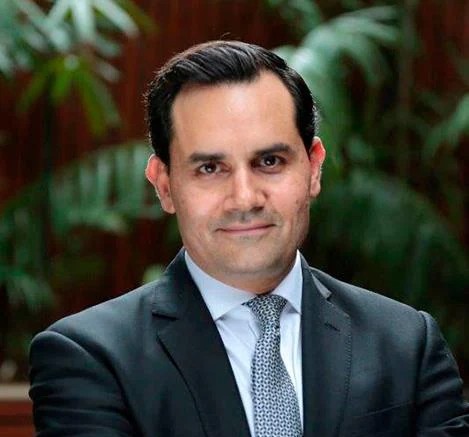
Startups need to act like public entities sooner on their road to an eventual listing, according to Vivek Pandit of McKinsey and Co.
"Startups need to adopt better financial governance and get independent directors on their boards sooner," said Pandit, senior partner at the global management consulting firm, on the sidelines of the Startup20 Summit in Gurugram on Monday. "We celebrate the unicorn status and then ignore the loss of money when it goes public."
Companies are staying private longer because there's capital coming in, he said. "But are they ageing well?"
Expectations from a company that has absorbed hundreds of millions of dollars are far higher. They can stay private for a long time and be funded, but expectations get really high during that period, according to Pandit.
As a result, the valuations of these companies go up in the private market, and when they go public, it goes down, Pandit said. "Obviously, one doesn't want to be an investor in such an IPO."
India's first wave of internet startup listings—that comprised Paytm, Zomato, CarTrade, PolicyBazaar and Nykaa—are all struggling. These shares are either trading below their IPO price or are way below their peak during the funding euphoria of 2021.
India created 67 unicorns in the last two years but lost only three to valuation issues despite the market turbulence that has rocked the venture capital ecosystem, Pandit said.
Investors are writing bigger cheques, and that's happening at increasingly rich multiples; somewhere between 20 and 22 times the revenue are the multiples at which people are ready to pay, Pandit said.
"When you have a lot of capital with a lot of expectations, it creates pressure," he said. "That pressure is now coming out in ways that we need to address."
The startup world is in some sense "rewarded for acting first, thinking second, and apologising third", he said.
Investor sentiment in India's startup ecosystem has taken a hit with corporate misgovernance allegations at startups such as BharatPe, Trell, Zilingo, GoMechanic, and, more recently, Byju's and Mojocare. There is increased investor scrutiny, making the due diligence process longer. Funding is coming to firms that are lean and have demonstrated free cash flow or a path to profitability, say experts.
Pandit quoted a McKinsey study that scrutinised data from 83 unicorns to highlight that unicorn boards remain highly concentrated. Only 67% of unicorns have one to six directors, he said. "Of all directors across unicorns, only 8% are independent. Boards lack independents and gender diversity."
Of the 83 unicorns studied, 41 had no women on the board. Seventy seven of these unlisted unicorns had 5% independent directors on their boards. When these companies moved to the draft red herring prospectus stage during the process of listing, that number jumped to 38%, and when they listed, it rose to 54%.
"Founders or investors aren't valuing independence on the board. They're just doing it because SEBI has mandated it. It is still a tick mark," he said.
According to Pandit, he is a "polite sceptic" of self-regulation in startups but expects them to take action so things don't worsen. "Everyone believes regulation will throttle innovation. So, startups should try hard not to get a regulator."

-
The Economic Imperative: Analysing The Material Driving Force Behind India-Canada Strategic Reset

This economic complementarity is further reinforced by deep institutional investment ties and talent mobility, which form the bedrock of the bilateral framework.
-
Medicine Pricing: Where Must Profit Stop?
India must confront excessive margins, hidden incentives and regulatory gaps that threaten the integrity of medicine.
-
Why Amazon And Flipkart Are Struggling To Beat Meesho In India's Smaller Cities
With 274 million users and lowest-cost logistics, Meesho is defending its value commerce crown against giants like Amazon and Flipkart.
-
High US Salaries, No Green Card Certainty: The Financial Calculation Facing Indian H-1B Families
The suspension of PERM processing at eight technology employers does not cancel existing H-1B visas. What it does is force a question many Indian families have been avoiding: is the US salary worth tying your career and family plans to one employer?
-
Swiggy vs Eternal: Food Delivery's Two Rivals Are No Longer In The Same Race
Eternal is building a private AI assistant, dark.ai. Swiggy is still working out how to make Instamart pay, with an operating loss of Rs 895 crore in the July-September quarter while Blinkit stayed profitable.
-
Where You Live Shapes How You Get To Work | The Reason Why
Two-wheelers are the most popular way to get to work in India, accounting for nearly 43% of workplace commutes.
-
Unhedged Position: Can India See An Indonesia-Style Time Correction?
The Nifty is trading below levels it first clocked in 2024. Is there, then, as I have suggested in the headline, potential that the current time correction drags on painfully for the next three-five, even ten years?
-
Navigating Friction And Energy Realities: An Analysis Of Marco Rubio's October Visit To India
Occurring at a critical juncture marked by stalled trade negotiations and escalating geopolitical pressures over global energy supplies, the visit offers a profound window into modern US-India relations.
-
India Exports Capital. Why Not Export Trusteeship?
The big question, then, is whether India can build an institution that global borrowers, investors, banks, and lawyers can trust, even without an Indian connection.
-
France's Economy & Politics Are In Crisis | The Reason Why
Let's look at how the French economy and politics evolved under Nicolas Sarkozy, Franois Hollande and Emmanuel Macron.










