- Pronto raised $25 million and grows bookings 20% weekly, supply-constrained now
- Daily bookings hit 18,000 in February, aiming for 70,000 by June if trends continue
- NCR accounts for 50% demand; Gurgaon 25%, Bengaluru 20-25%, Mumbai and Pune follow
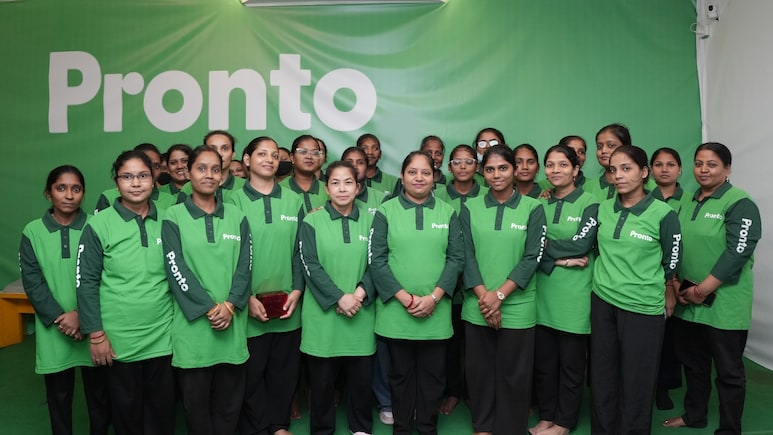
The instant house-help segment is quickly emerging as one of the hottest spaces in India's startup ecosystem, and Pronto is betting big on scale. Fresh off a $25-million funding round, Chief Executive Officer Anjali Sardana says the company is growing at a blistering pace, and is deeply supply constrained.
"We're growing at roughly 20% week-on-week for the last three months," the founder told NDTV Profit. "Our utilisation is among the highest in the category, about seven bookings per day per professional."
Pronto ended February at 18,000 daily bookings and is targeting an ambitious 70,000 daily bookings by June if the current growth trends hold. The fresh capital will be deployed across three priorities: scaling supply by onboarding more professionals, intensifying operations in existing micro-markets and expanding into additional micro-markets within current cities.
Also Read | Layoffs Are Rising In Tech, But These Skills Are Helping People Unlock Better Pay
"We are deeply supply constrained today. To continue powering growth, we need more professionals on the platform," Sardana said.
Geographically, the National Capital Region accounts for 50% of Pronto's demand, with Gurgaon alone contributing 25%, a reflection of the company's early roots. Bengaluru contributes 20-25% of demand, followed by Mumbai and Pune.
On user behaviour, Sardana shared exclusive engagement metrics. Returning users book an average of four times per month, while new users transact about twice in their first month. However, usage is heavily skewed: the top 1% of customers use Pronto more than 23 times a month, and the top 10% book over nine times monthly, signalling strong power-user economics.
In its first year of existence, Pronto burned $8 million, a figure Sardana argues is structurally lower than quick commerce peers due to the asset-light model. Unlike dark-store-heavy businesses that require Rs 70-80 lakh per store plus inventory investments, Pronto operates largely on variable costs.
Profitability, she says, is a strategic choice. "In our oldest micro-markets, we're seeing very strong unit economics. Growth becomes organic, marketing drops significantly, and utilisation remains high."
The company recently shifted its base from Gurgaon to Bengaluru, not due to air-quality concerns, Sardana clarified, but for deeper access to engineering and product talent. "The depth of the tech talent pool in Bangalore is unparalleled," she said.
Backed by investors who were early supporters of Zepto, including Paul Hudson of Glade Brook and General Catalyst's Neeraj Arora, Pronto is also drawing lessons from the quick commerce playbook. "We've been able to use learnings from that journey, it's been super helpful," Sardana said.
With aggressive growth targets and high-frequency users driving repeat demand, Pronto is positioning itself as a serious contender in India's rapidly intensifying instant services race.
ALSO READ: Zomato, Swiggy Commissions Too High? Macquarie Flags 30% Downside On Food Delivery Stocks
Essential Business Intelligence, Sharp Market Insights, Practical Personal Finance Advice, Daily Fuel, Gold and Silver Prices and Latest Stories — On NDTV Profit.