PGA-LIV Merger Raises More Legal Questions Than Ethical Ones
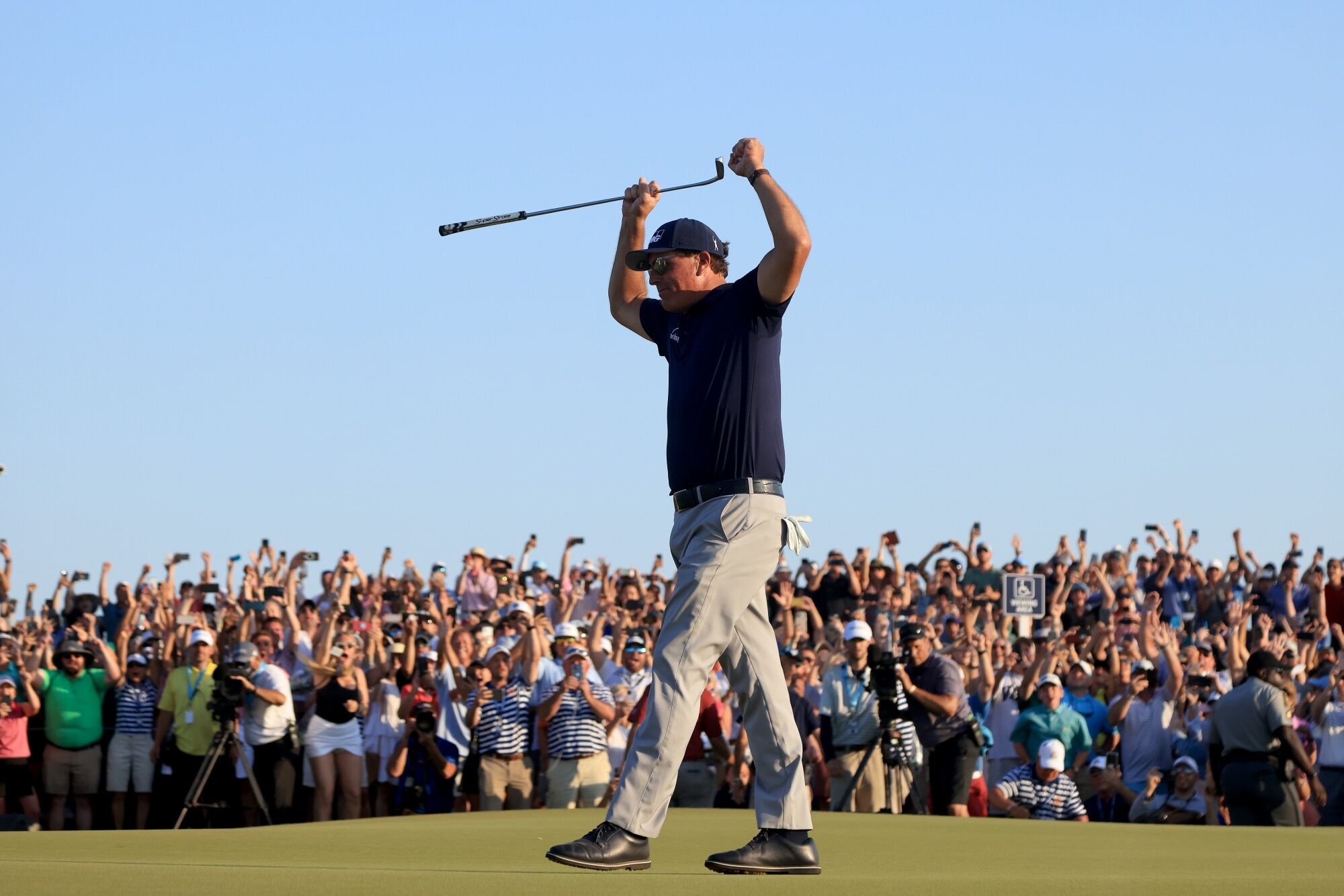
(Bloomberg Opinion) -- The lawyer in me has two questions about this week's stunning announcement that the PGA Tour and LIV Golf are merging. The ethicist in me has one.
I wonder, first, what's going to happen to the players who rejected the Saudi-backed LIV tour and stayed loyal to the PGA. After all, many of them left millions — in some cases tens of millions — on the table. Now they're being told that the rivals are creating what the parties themselves call “a new, collectively owned, for-profit entity.”
Maybe the umbrella organization that's now going to govern the sport should prioritize making up for some of the largesse the players missed because of their loyalty. Otherwise the new entity might face lawsuits by golfers who believe they were hoodwinked by the PGA and left millions of dollars on the table. Maybe the merger deal will turn out to include a clause setting aside a big pot of money — that formerly tainted and untouchable Saudi cash — for distribution to those who refused to switch.
I know, I know: Typically the economic cost of bad predictions about the future lie quite properly on those who made them. Here, however, the players who rebuffed LIV's advances have a reasonable case that they were misled.
Second lawyerly thought: Remember that pesky antitrust lawsuit filed last September by Phil Mickelson and other pros who'd defected to LIV? The complaint alleged that the PGA Tour's restrictions on play in unsanctioned events was an illegal use of monopsony power, and that its punishment of players who signed with LIV was forbidden “anticompetitive conduct.”
At the time, I wrote that the lawsuit, together with scrutiny by federal regulators, would force PGA to cave on the effort to ban players who'd signed with LIV. Like everyone else, however, I never imagined that we'd get the O. Henry ending of a merger.
Why not?
Because the merger, too, raises antitrust questions. For instance, will LIV and PGA remain competitors? Or might they come up with some rule that spells out how many tournaments players may (must?) compete in for each? Because if they don't bid against each other, player incomes might actually tumble. After all, the only reason LIV has had to offer so much money is that it's trying to pry pros away from the PGA.
Small wonder that federal authorities reportedly plan to scrutinize the merger. Until about five minutes ago, the feds were investigating the PGA for — well, pretty much the same stuff that Phil Mickelson and his fellow plaintiffs alleged in their suit. Now that the PGA has waved the white flag and agreed to create an umbrella group alongside LIV, authorities are going to look into that too.
True, professional golf has survived antitrust examination before, going all the way back to the 1930s. The last serious threat, a Clinton-era FTC investigation that led to a staff recommendation to take action, died in 1995 under intense pressure from Capitol Hill.
Things are different now. As one observer has noted, should Pepsi and Coke undertake a joint venture, we'd expect the antitrust folks to be interested. If that sentence makes you wonder how the National Football League and the American Football League got away with their 1966 merger, Congress passed a special antitrust exemption. That's not likely to happen this time around, and not only because we're a long way from the Clinton era. The other reason is the Saudi money in the picture, which is the cause of this week's outraged commentary suggesting that the PGA has sold whatever's left of its soul.
Which leads to my ethical question: Why is anybody surprised that the PGA decided to go for the money? It's a business, and the televised events are marketed to a small but, ahem, rather exclusive clientele. It's no accident that two of the three companies with the greatest number of sponsorship deals with individual golfers are Rolex and NetJets.
The PGA wants to maximize profit, and it's betting that the outrage will fade and the fans will stay.
Don't get me wrong. I'm not saying a company can't draw any ethical lines. Moreover, I've long taken the view that those in the public eye — including professional athletes — carry a special responsibility to comport themselves in ways we'd want others to emulate.
But the PGA isn't irrational to bet that golf fans will keep watching. After all, on the very day the merger was announced, the State Department was busy trumpeting “eight decades of partnership” with Saudi Arabia and billions in technology, energy and defense deals.
So when the Los Angeles Times denounces the deal as “a stunning act of hypocrisy unmatched even in the mercenary world of professional sports,” I find myself constrained to disagree. Admitting that they're in it for the money isn't hypocrisy. It's the truth.
More From Bloomberg Opinion:
- PGA Merger With LIV Golf Is Only the Beginning: Adam Minter
- Golf Fans Will Be the Final Judge in the PGA-LIV Fight: Stephen L. Carter
- Millennials Are Saving Golf by Rebranding It: Ben Schott
This column does not necessarily reflect the opinion of the editorial board or Bloomberg LP and its owners.
Stephen L. Carter is a Bloomberg Opinion columnist. A professor of law at Yale University, he is author, most recently, of “Invisible: The Story of the Black Woman Lawyer Who Took Down America's Most Powerful Mobster.”
More stories like this are available on bloomberg.com/opinion
©2023 Bloomberg L.P.

-
Getting To Work Costs Women More | The Reason Why

It is not just about women paying more than men. It is about women paying much more in cities than in villages.
-
AI Bias In Investing Cannot Be Eliminated, But It Can Be Governed
Framing is a particularly important example as identical financial information presented in terms of gains rather than losses can lead an LLM to reach a different assessment.
-
Joining The Dots | Dark Skies, Steady Diya: Why Hope Holds This Diwali
With war, a weak rupee and foreign outflows weighing on sentiment, policymakers at the NDTV World Summit and market veterans at NDTV Profit Ignite: Diwali Edition offered the same advice: stay invested and filter out the noise.
-
The Curious Case of Equitas Small Finance Bank And A CEO Who Quit For Stock
PN Vasudevan believes persistent investor concerns over a perceived conflict of interest had become a governance overhang on Equitas Small Finance Bank's stock, even as the lender improved profitability and asset quality.
-
Talking Points This Week: AI Cash Burn, A Tiger Comeback And An India That Still Finds Its Own Path
India is not immune to higher oil or tighter global liquidity, yet its earnings base is broader, its domestic policy levers are still available.
-
Foreign Investors Own Half Of HDFC Bank and ICICI Bank. An LTCG Cut Could Matter Most Here
Foreign portfolio investors have US$115 billion parked in HDFC Bank, ICICI Bank. If the government cuts long-term capital gains tax, Jefferies says returning foreign money could land here first.
-
'Never Seen This Level Of Negativity': Sandeep Tandon Says The Next Rally May Be Closer Than You Think
Veteran investor Sandeep Tandon says foreign selling is easing, large-caps are due a comeback and mid-caps are crowded, while he turns positive on gold, power and pharma this Diwali.
-
Indians Stay With Family, Not In Hotels | The Reason Why
India still lacks enough clean, reliable and affordable hotels for budget-conscious travellers.
-
The Economic Imperative: Analysing The Material Driving Force Behind India-Canada Strategic Reset
This economic complementarity is further reinforced by deep institutional investment ties and talent mobility, which form the bedrock of the bilateral framework.
-
Medicine Pricing: Where Must Profit Stop?
India must confront excessive margins, hidden incentives and regulatory gaps that threaten the integrity of medicine.










