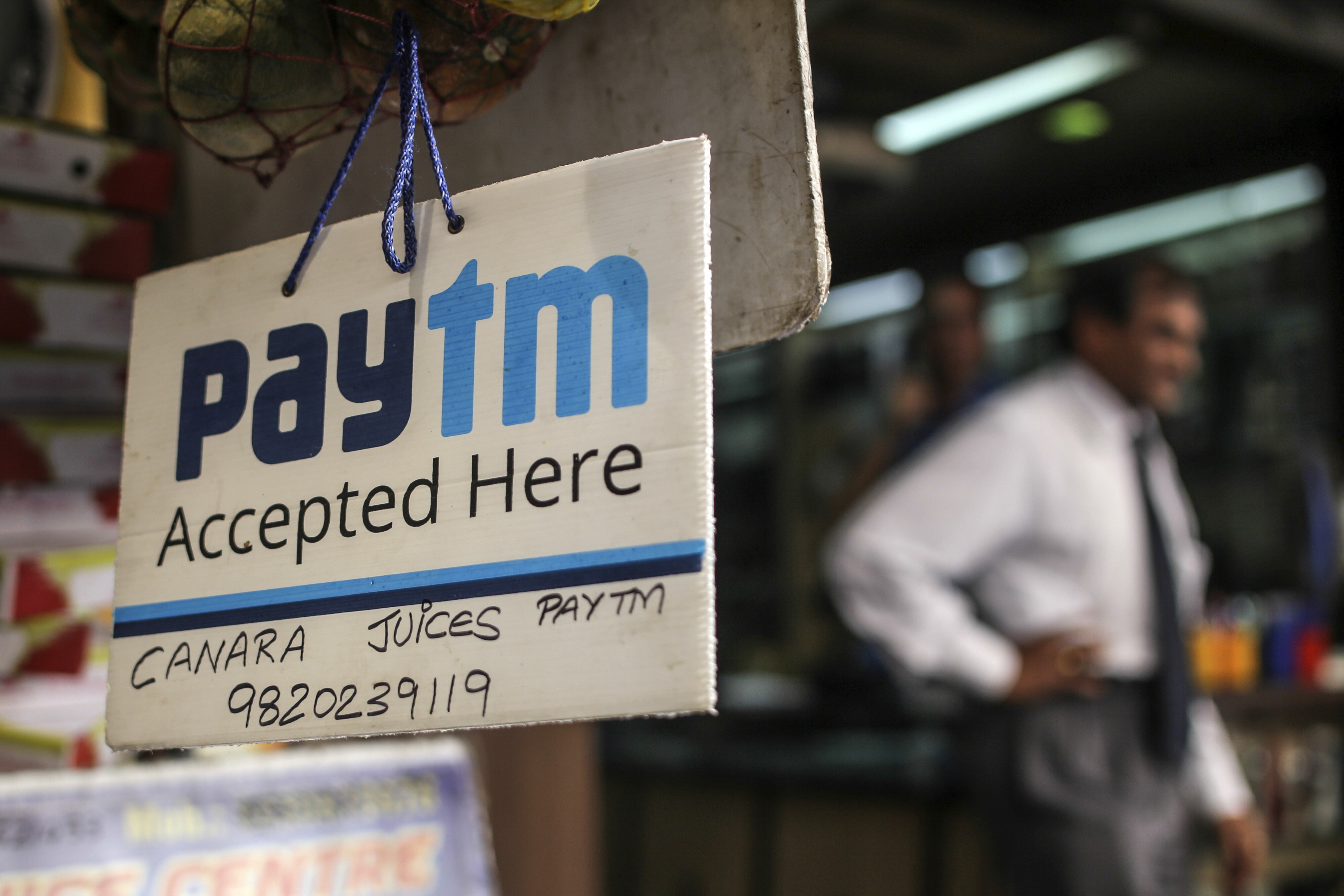
The net loss of One97 Communications Ltd., the parent of payments platform Paytm, widened in the third quarter.
Net loss stood at Rs 778.4 crore in the quarter ended December, according to its exchange filing. That compares with a net loss of Rs 535.5 crore a year earlier.
Revenue from payment services to merchants stood at Rs 586 crore, up 117% from a year ago. Revenue from payment services to customers rose 60% year-on-year to Rs 406 crore.
Total direct expenses rose 43%. Most of the rise was driven by a 51% year-on-year increase in payments processing charges, which stood at Rs 783.1 crore.
Gross merchandise value rose 123% year-on-year to Rs 2.5 lakh crore.
Paytm's contribution profit rose 74% sequentially to Rs 453.7 crore. Similarly, profit margin rose to 31.2% from 24% as of September 30.
The company disbursed loans worth Rs 2,181 crore during the quarter, up 73% over the previous quarter.
Earnings Call Highlights
Total expenditure jumped 44% sequentially, compared with a 34% rise in the second quarter.
Direct expenses rose 21% sequentially, driven by promotional cashback & incentives.
Indirect expenses jumped 23%, driven by marketing and employee costs.
Ebitda loss (before ESOP cost) narrowed to Rs 393 crore from Rs 426 crore in the previous quarter.
Payment processing charges have fallen from 0.34% in Q2 to 0.31%, helped by optimisation of transaction routing, a higher share of UPI, and improvement in transaction rates from banks.
Indirect expenses like employee costs and software costs fell to 7% and 30% of sales, respectively, in Q3 from 10% and 34% in Q2.
The company grated 2.6 crore ESOPs in the third quarter, creating an ESOP cost of Rs 366 crore compared with Rs 19.3 crore in Q2. That contributed to the wider net loss.
“The revenue growth in the third quarter is driven by an increase in processing merchant payments through MDR (merchant discount rates) bearing instruments like Paytm Wallet, Paytm bank account, other banks net banking, debit and credit cards, disbursement of loans, and recovery of e-commerce business”, Madhur Deora, president, and group chief financial officer at Paytm, said in the third quarter investor presentation.
“The growth in gross merchandise value was helped by greater retention and higher engagement of users” he said. The company's GMV grew 28% sequentially to Rs 2.5 lakh crore in Q3.
Most of the revenue growth from the quarter was supported by the 'payment services to the merchants', which grew 44% sequentially. That was aided growth in device merchant base and an increase in online and offline spending during the festive season.
The online segment grew due to the uptick in e-commerce festive sales, online gaming, and food ordering. On the other hand, new bank partnerships and brand integrations in EMI supported the offline segment.
The other driver of revenue from operations is the 'financial services & others' segment that grew 41%, driven by an increase in disbursements to merchant base, Paytm Postpaid, and personal loans. The company advanced loans worth Rs 2,181 crore, up 73% sequentially. Nearly 55% of such loans were offered through Paytm postpaid, 24% through personal loans, and 22% through merchant loans.
“Paytm Postpaid is gaining traction as the young population who otherwise find it difficult to start a credit journey with banks or non-banks finds Paytm Postpaid attractive,” Bhavesh Gupta, chief executive officer, lending at Paytm, said in the earnings call.
The other financial services segment was supported by growth in the Paytm Money and insurance business.
The commerce and cloud services segment grew 39% sequentially, helped by lower Covid interruptions during the quarter and increased advertising growth.
(With inputs from Sameer Bhardwaj)
Essential Business Intelligence, Sharp Market Insights, Practical Personal Finance Advice, Daily Fuel, Gold and Silver Prices and Latest Stories — On NDTV Profit.