In a short 25 days, an industry which was disbursing an estimated Rs 45,000-50,000 crore in consumer credit a year to 1.2 crore card holders, has come to a complete halt.
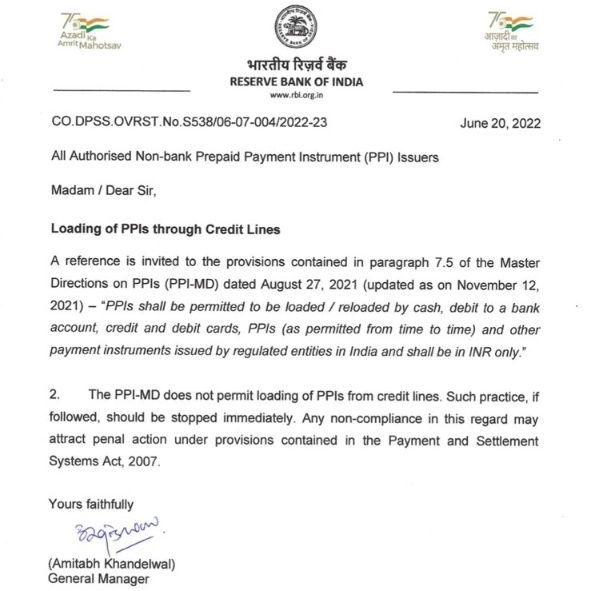
Less than a month after the Reserve Bank of India issued a clarification dated June 20, which directed non-bank prepaid payment instrument issuers to stop using credit lines to load their cards, most companies have stopped issuing these cards, which were masquerading as credit cards but were not.
In the weeks that have followed the RBI's clarification, companies like Slice, Uni Card and LazyPay have stopped issuing fresh prepaid cards to customers, as they try to find ways to continue their businesses, two people with direct knowledge of the matter said, speaking on the condition of anonymity.
For customers who have an existing card, companies are asking for quicker repayment of dues, so that the card can be discontinued soon, the people quoted above said.
In the month of May alone, prepaid card issuers had disbursed credit worth an estimated Rs 3,700 crore, said the first person quoted above, who is the founder of a non-bank prepaid card company. While most of this credit usually gets repaid over three months, it is likely that companies could take up to six months to recover the outstanding dues.
Slice declined to respond to queries. Mails sent to Uni Card, LazyPay and the RBI on Thursday did not elicit a response.
The Power Of A Missing Word
The RBI believes that these cards were issued in clear violation of its PPI guidelines, said a third person familiar with the regulator's thinking, who also spoke on condition of anonymity.
These guidelines, encased in an August 2021 master circular, read as follows: "PPIs shall be permitted to be loaded/reloaded by cash, debit to a bank account, credit and debit cards."
Since the RBI used the words "credit and debit cards" as opposed to saying "credit cards and debit cards", some in the industry believed that using "credit lines" to load PPI cards was kosher, said the third person quoted above.
That was clearly not the intent of the rules. The regulations do not allow any credit lines to be used for loading these instruments, so it was necessary to put an end to this business model, this person said.
Apart from the non-compliance with guidelines, the RBI is also concerned that customers were using the funds availed from these companies to invest on crypto platforms and online gambling portals, the third person said.
According to R Gandhi, former deputy governor at the RBI, there is an issue with the level of KYC checks being done by non-bank prepaid instrument issuers.
"The KYC checks done by these companies is at a preliminary level. With such basic KYC, if you are doing immediate credit sanctions to customers, then there is a problem," Gandhi said.
Fintech firms engaging in such businesses are effectively taking credit decisions, where the credit is actually being provided by a formal lender.
"Tomorrow, if the fintech is not there, the bank will be left holding the baby. Ideally, banks and NBFCs should engage these companies to acquire customers, but the credit decisions should always remain with the lender," Gandhi said.
What Next?
With the popular product now under suspension, non-bank prepaid instrument issuers are in talks with banks and non-bank finance companies to come up with alternatives.
Currently, there are three clear options for non-bank prepaid instrument issuers:
Working with banks to use their prepaid cards and continue offering credit through the same model.
Partnering with banks to open savings bank accounts for the borrowers and disbursing credit there.
Loading the prepaid instrument with a single loan amount, rather than offering them a credit line.
In the system that was prevalent before the RBI's June 20 clarification, a fintech firm would issue a prepaid card to the customer. An NBFC backing the fintech would then issue a credit line to the customer, which would be loaded on to the prepaid card.
While the customer could not immediately access the entire line, they could spend small amounts and repay them. Over time, depending on their repayment history, the fintech would continue to raise the amount that the customer can use from the credit line.
Under the first alternative being considered, the fintech firm would issue a partner bank's prepaid card to its customers. On the back-end, the NBFC funding the transaction would hold an escrow account with the concerned bank. On the directions of the NBFC, the bank would transfer a pre-decided amount into the customer's prepaid card, the three people quoted above explained.
According to the third person, the bank may consider providing credit to the customer over time, as it sees repayments coming in. But, for now, banks will likely only act as service providers for the ecosystem.
The second option would work on the same principles, but instead of the NBFC maintaining an escrow account with the bank, it would directly transfer the funds to the borrower's bank account, they said. The fintech firm would earn a fee on acquiring customers and a portion of the transaction fee would be shared with them.
There are some concerns with these alternatives though. After the initial customer acquisition, the fintechs have a limited role to play. Banks may eventually acquire the customer fully.
Banks, non-banks and prepaid instrument issuers are still awaiting clarity from the RBI if it would be comfortable with these options. Moreover, these options are not also as user-friendly as credit lines on PPIs, which could affect adoption, the first two people quoted above said.
While these alternatives are being explored, prepaid instrument issuers are still hoping that their engagement with the RBI can change the regulator's mind.
If the RBI were to officially clarify the exact risks involved in their business models, the prepaid industry could develop solutions for them, the first person quoted above said.
Essential Business Intelligence, Sharp Market Insights, Practical Personal Finance Advice, Daily Fuel, Gold and Silver Prices and Latest Stories — On NDTV Profit.