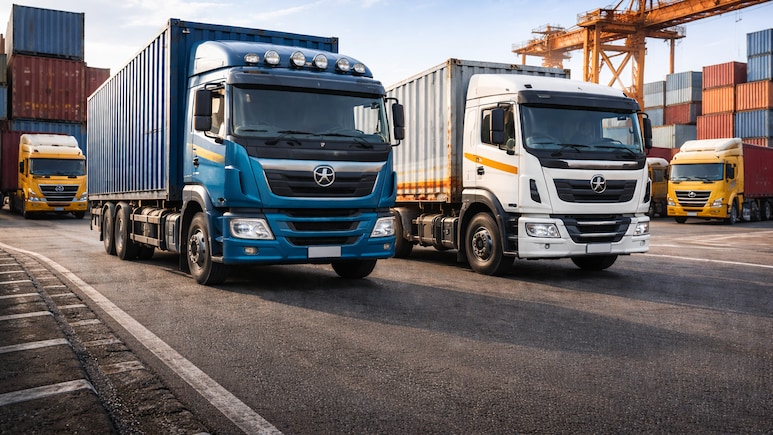
- India's commercial vehicle industry entering an upcycle after seven years of stagnation, says BofA
- Medium and Heavy Commercial Vehicles expected to grow at about 10% CAGR, according to BofA
- Growth driven by lower ownership costs, better freight profitability, and rising replacement demand, it adds
While there has been a massive focus on India's shift towards premiumisation, with leisure items and products gaining traction, another trend sweeping the domestic economy is trucking. After seven years of stagnation, India's commercial vehicle (CV) industry is finally entering an upcycle.
Medium and Heavy Commercial Vehicles (M&HCV) are expected to grow at around 10% CAGR, as pointed out by BofA Securities. Demand recovery is already visible with initial signs of a cyclical demand boost.
What's Leading The Growth?
Many of the green shoots have come from a lower cost of ownership for transport operators due to GST parity with large fleet operators. Another factor is improving freight profitability, which is driven by higher truck rentals and better fleet utilisation.
Moreover, there is a growing replacement demand emerging as the average age of trucks on Indian roads has crossed 10 years. This has led to a shift from used trucks to new models, thus supporting fresh demand.
Beyond domestic demand, the trucking ecosystem is benefiting from additional trends, including increased exports in regions such as the Middle East, SAARC and Africa.
Large electric bus orders under government programmes like PM e-Bus Sewa, as well as LCV growth being driven by rising e-commerce penetration, are some of the other key trends observed in the space, the BofA report notes. Speaking of buses, it is also worth pointing out that the bus replacement cycle is also kicking in, as India upgrades ageing public transport fleets.
How To Play The Sector
The BofA note suggests that the right way to play India's booming CV space is through big players, as the structure of the sector remains highly consolidated.
Therefore, the sector is dominated by Tata Motors and Ashok Leyland, with the two firms having a combined market share of around 80%. There are high entry barriers in this space thanks to brand stickiness, service networks and fleet efficiency requirements.
This is coupled with regulatory tailwinds, with increased policy focus on shifting towards driver safety, comfort and productivity. Features like ADAS and advanced cabins are becoming value additions.
Keeping that in mind, BofA has hailed Tata Motors CV as the top pick given its strong CV franchise and margin expansion potentia while Ashok Leyland, too, could be a key beneficiary of the M&HCV upcycle.
Both stocks trade at around 11.5–13x FY28 EV/Ebitda, a discount to global truck makers despite ROE above 25% through the cycle.
Essential Business Intelligence, Sharp Market Insights, Practical Personal Finance Advice, Daily Fuel, Gold and Silver Prices and Latest Stories — On NDTV Profit.