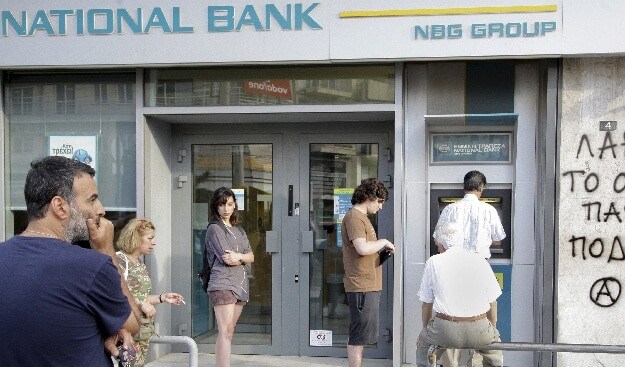
The Greece crisis deepened over the weekend after talks with its creditors broke down. Greece imposed capital controls and ordered banks to close temporarily. This has raised fears of the country's exit from the euro.January 1, 1999The euro was launched on January 1, 1999, it became the new official currency of 11 Eurozone member countries. Now, 19 member countries, including Greece, share the common currency, euro.January 1, 2001Greece becomes the 12th country to join the European single currency, ditching its former currency drachma. Greece had failed to join the euro in 1999 as it failed to meet the European Union's economic criteria.2004Greece admitted to misreporting financial data which showed its budget deficit to be much lower than it really was. Eurozone states are expected to have deficits below 3 per cent of GDP.December 2009Fitch downgrades Greece's credit rating to 'BBB+' from 'A-'. This was the first time in a decade that the Greece's rating fell below the 'A' status. Greece's government had revealed the budget deficit was twice as big as previously reported.2010The Greek government approved a tough austerity package, including public sector pay freeze, and tax hike on cigarettes and fuel, triggering violent protests.Greece gets a financial aid package around $146 billion from IMF and European member states. Since then, Greece has received two bailouts worth $268 billion.2011Private owners of Greek bonds accepted a 50 per cent write-down on their investment, enabling both a 100 billion-euro cut in Greece's sovereign debts.April, 2014Greece ends four-year exile from market borrowing. Greece returned to the bond market with investors hungry for high returns scooping up its debt in a 3-billion euro deal.January 2015Left-wing party Syriza wins elections, raising some concerns about the bailout program. Prime Minister Alexis Tsipras vows to end the tough austerity measures.February 2015Greece secured a four-month extension of its financial rescue when its euro zone partners approved a reform plan. The reform proposals included controlling public spending and cracking down on tax avoidance.June 4, 2015Greece delayed a key debt payment to the International Monetary Fund (IMF) and said that it will instead bundle four payments due in June into a 1.6 billion euro lump sum payment due on June 30. It was the first time in five years of crisis that Greece has postponed a repayment on its 240 billion euro bailouts from Eurozone governments and the IMF.June 27, 2015Greek Prime Minister Alexis Tsipras called a referendum on the cash-for-reforms proposal after negotiations with its creditors failed to make any headway. Without the cash from Euro member states, Greece is expected to default on repayment to the IMF. The referendum will be held on July 5.June 28, 2015To prevent a collapse of it financial system, Greece ordered closure of banks for about a week and restricted cash withdrawals from ATMs at 60 euros per day. This has led to expectations that Greece is heading towards an exit from euro.
Essential Business Intelligence, Continuous LIVE TV, Sharp Market Insights, Practical Personal Finance Advice and Latest Stories — On NDTV Profit.