Germany’s Fiscal Force Is Worrying Other European Nations
(Bloomberg) -- Germany's plans for a giant borrowing program to shelter firms and households from surging energy prices has got other European nations worried about reopening economic divisions the bloc had managed to bridge during the Covid crisis.
Launching the 200 billion-euro ($196 billion) plan last week, German Chancellor Olaf Scholz said measures including a lid on gas prices would put a “large protective umbrella” over Europe's biggest economy. But it would not shield other nations who will struggle to follow as they face higher borrowing costs and larger budget deficits after the pandemic.
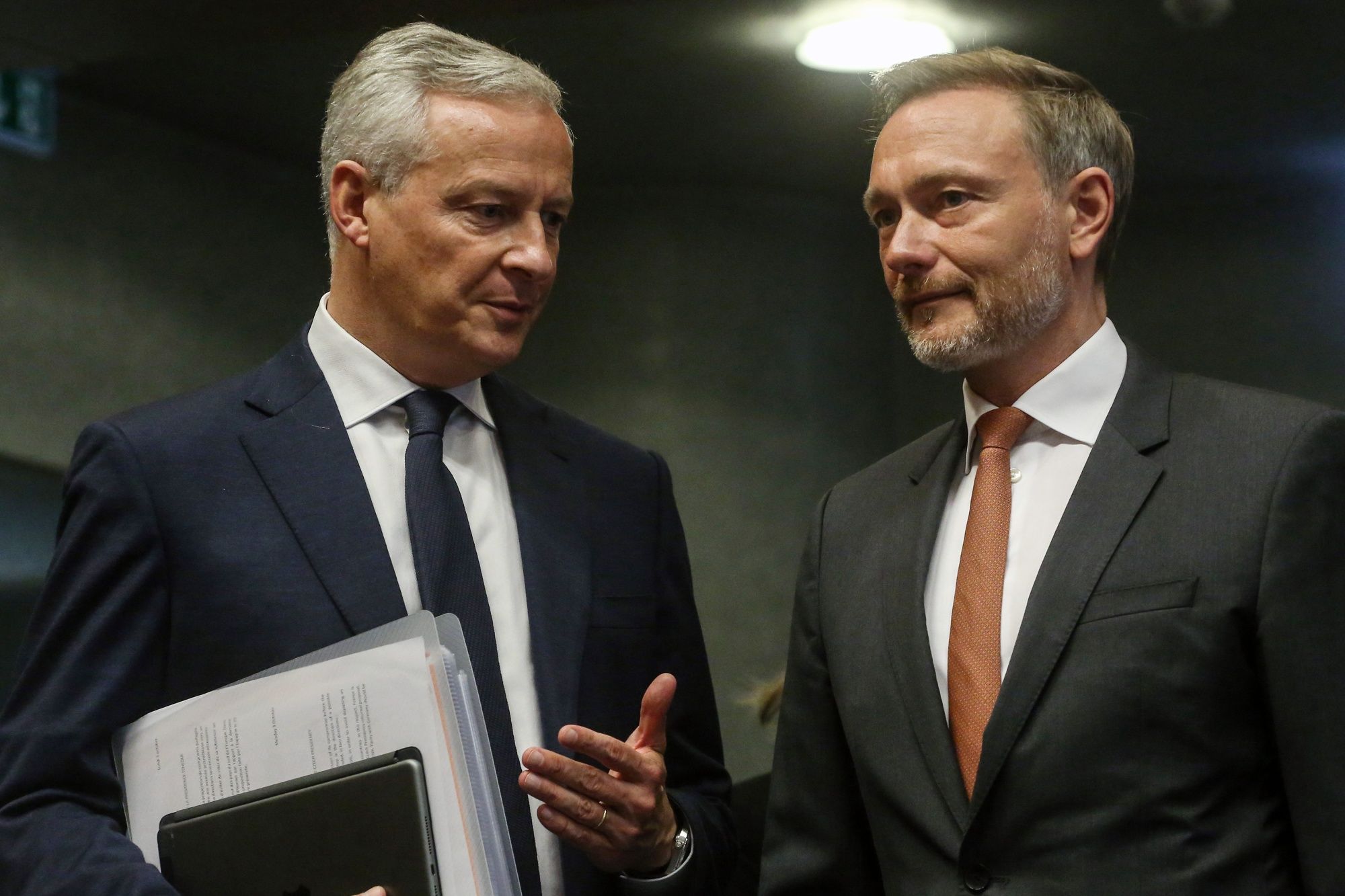
Finance ministers convening in Luxembourg on Monday will discuss how to act in a coordinated way and will have the opportunity to get more details from Germany's Christian Lindner. Arriving at the meeting, France's Bruno Le Maire said he would propose an economic strategy to ensure aid is better calibrated and that there is more solidarity and consultation between member states.
Read more: Germany Set to Borrow €200 Billion to Tackle Gas-Price Surge
“If there is no consultation, no solidarity, no targeted support and no respect of fair competition conditions, we risk a fragmentation of the euro area,” Le Maire said. “We can't just have episodic meetings once a month -- we need to define together a global economic response strategy.”
Greater divergence within Europe could further hobble an economy that is already at risk of falling into recession over the winter. Failing to work together would also contrast with the European Union's response to Covid, when governments issued debt for a massive recovery fund to benefit countries most in need.
“I have been urging member states to find all the means at their disposal to support their industries and businesses -- but I believe this should be carried out with great transparency, consultation and EU coherence,” Thierry Breton, European commissioner for internal markets, said in a message on Twitter. “While Germany can afford to borrow 200 billion euros on financial markets, some other EU member states cannot.”
Inflation Drivers
There are also concerns about how countries spend money in the energy crisis, with the European Central Bank warning that fiscal action must be targeted and temporary to avoid stoking inflation it is struggling to contain.
EU Executive Vice President Valdis Dombrovskis told reporters ahead of the meeting that ministers would discuss the bloc's “economic policy mix.”
“It's clear we cannot continue just with across-the-board fiscal support, so we need to be more targeted, more cautious on this, and also we have to make sure that fiscal measures we are taking are not contradicting the ECB's target to return to inflation of 2%,” he said.
Lindner said his country's package is proportionate to the size of its economy and that the government would use as little of the 200 billion euros as possible.
“Germany isn't putting forward an economic plan, Germany isn't stimulating demand, we're not providing economic aid, what we're doing is we're absorbing ruinous price spikes,” Lindner told reporters. “We're showing Putin clearly that we're using our economic strength to protect ourselves.”
Later Monday, Scholz will host French President Emmanuel Macron in Berlin for a working dinner. The two leaders will discuss solidarity measures between member states and reforming economic governance in Europe to better support growth and investment, an official at Macron's office said.
(Updates with comments from finance ministers arriving in Luxembourg)
More stories like this are available on bloomberg.com
©2022 Bloomberg L.P.

-
Love, Sex Aur Dhokha: The Audacious Plot To Spy On Jensen Huang

A Taipei dinner, a Singapore chip buyer and a suspected Chinese asset: inside the alleged spy operation that got close to NVIDIA's Jensen Huang.
-
Ten Things I Learnt This Samvat
Patience can be a trap. Cheap stocks can stay cheap. Leverage can wipe you out. What did Samvat 2082 teach us? Niraj Shah writes on 10 lessons from the year gone by.
-
Talking Points This Week: Tech Nerves, FII Buying, And A Faraway Banking Shock
The global markets are not shining this Diwali. The exception in the large markets is, India.
-
Midterm Rally Lasted A Day. The Hard Reality Of A Divided US May Last Two Years | Opinion
Between a contested AI boom, a debt ceiling that arrives in 2027 and a president with every incentive to act alone, the next two years may prove more volatile than the first day's rally suggests.
-
Blue Wave Will Derail the AI Trade but Won't Dismantle the AI Era | Unhedged Position
The Democrats' sweep of the US Congress will see politics collide with economic forces both over the long and short term.
-
It's Time To Take The GST Council's Bet On Trust Global
Payment records can prove India's services exports, and clear, proportionate rules can bring foreign digital sellers into the tax net.
-
Opinion | India at 38: From Innovation Overperformer to Innovation Powerhouse
India now has 453 VC-backed deep science startups, 18 of them late-stage, after 117 percent growth since 2020. Laurus Labs, at USD 9.3 billion, is the most valuable deep science company in any middle-income economy outside China.
-
Navigating Energy Crossroads: S Jaishankar's Call For Diversified Supply Chains At G20 Ministerial Meeting
As geopolitical fault lines continue to test maritime trade routes and commodity flows, Jaishankar's message remains pertinent: true economic resilience requires open markets, protected transit lines, and a genuine commitment to multilateral cooperation rather than coercion.
-
Indians Are Travelling, But Not Every Journey Is A Holiday | The Week In Whys
Pilgrims, patients and working women are the real travellers, and the system hasn't quite caught up with them.









