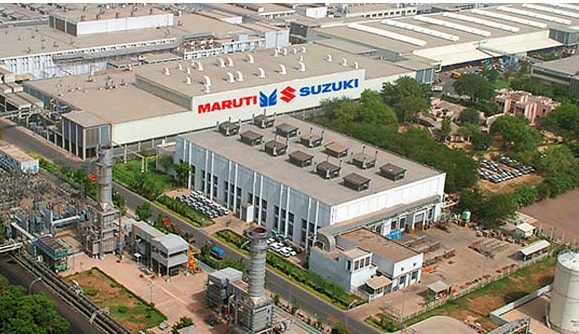
There is a history to Maruti Suzuki's Gujarat plant, which it plans to acquire in the current financial year from its parent Suzuki Motor Corp. Yet again, it has been proven that the market knows better!
The Gujarat plant was the first time institutional shareholder activism forced Maruti Suzuki and its Japanese parent to restructure the deal. It was the first time mutual fund investors came together to oppose such a transaction. Along with LIC, they could have rejected the transaction had it not been restructured.
In late 2015, Maruti Suzuki India sought shareholder approval for a related-party transaction with Suzuki Motor Gujarat, its parent's newly incorporated subsidiary, to sell cars manufactured at the new facility in Gujarat.
The objection was that the agreement would change the status of India-listed Maruti Suzuki to that of a trading company of the car manufacturer. Eventually, it was agreed that cars would be manufactured at cost-plus margin (contract manufacturing) so that the facility operated at no profit or loss. Maruti Suzuki will sell and distribute the cars through its network. Nearly seven years down the line, around 40% of the units Maruti Suzuki sells come from the Gujarat plant. Suzuki Motor Gujarat contributed nearly 2 lakh units in the first quarter of FY24.
At the time, the street wanted Maruti Suzuki to invest in the Gujarat plant as it safeguarded the manufacturing status of the company, which was majority controlled by the Japanese parent.
Now, Maruti Suzuki has terminated the contract manufacturing agreement with the Gujarat unit and will acquire the company to make it a wholly owned subsidiary. Maruti Suzuki will acquire 1,275.5 crore shares in Suzuki Motor Gujarat at a net book value of Rs 12,755 crore, according to the disclosure by Suzuki Motor Corp.
The transactions are subject to the approval of Maruti Suzuki's shareholders and the government of India.
Suzuki said this change to the manufacturing structure aims to further enhance competitiveness by improving the efficiency of production operations through the integration of automobile manufacturing in India for Maruti Suzuki.
Maruti Suzuki manufactured nearly 1.5 million units from its two plants at Manesar and Gurugram in Haryana. It plans to double the manufacturing capacity to 4 million units by 2030. Along with the Gujarat plant, the company will have a production capacity of nearly 2 million units. The deal will also provide Maruti Suzuki with the EV assembly line in Gujarat, though it will be dependent on Suzuki for batteries.
This will be done through the construction of new plants with a capacity of one million units, in addition to manufacturing at the existing plants. The new plants in Kharkhoda (Haryana) will start operations by the end of the financial year 2025.
Maruti Suzuki is also looking at further strengthening research and development on future technologies, using Suzuki R&D Centre India Pvt., a wholly owned subsidiary of the parent in India, to make investments in the development of technologies in advanced fields, the manufacturing of batteries for electric vehicles, and the biogas business, Suzuki said in its disclosure.
The acquisition amounts to nearly 4% of the market cap and the board of the Indian subsidiary will mostly acquire the shares in the Gujarat company in cash or equity. An equity issuance could lead to earnings dilution, but Maruti Suzuki will return to be a full-fledged manufacturing company, a price not so high to pay.
Sajeet Manghat is Executive Editor at BQ Prime.
Essential Business Intelligence, Sharp Market Insights, Practical Personal Finance Advice, Daily Fuel, Gold and Silver Prices and Latest Stories — On NDTV Profit.