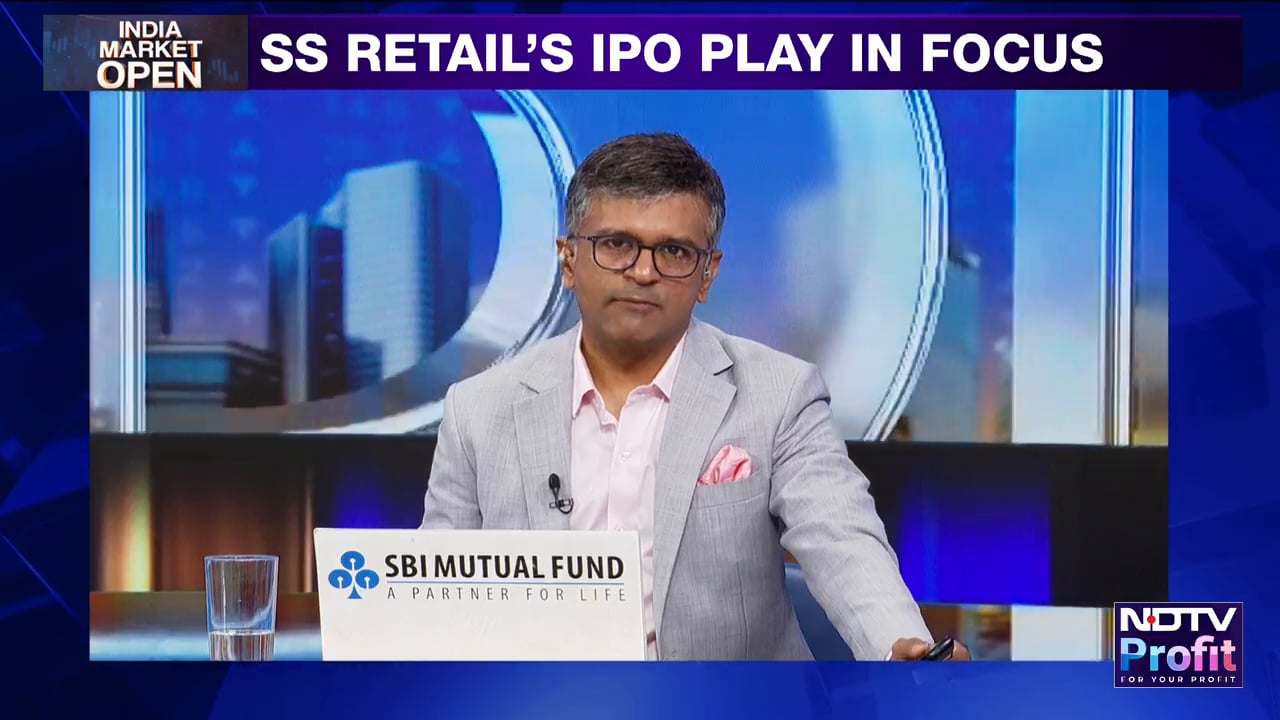
- Abhishek Manu Singhvi said Tata Sons dispute may lead to a legal battle beyond boardroom issues
- Tata Trusts hold 66% ownership of Tata Sons, central to the current conflict over control
- Singhvi emphasized the need for Tata Trust representation on the board to ensure decision concurrence
Amid the ongoing rift over N Chandrasekaran's reappointment and Tata Sons' listing, Abhishek Manu Singhvi, the lawyer representing Tata Trusts, said the issue had moved beyond the boardroom and could potentially lead to a legal battle.
"I have the privilege to be close to all the principal actors," Singhvi said in an exclusive interview with NDTV CEO and Editor-in-Chief Rahul Kanwal. "It is a matter of deep regret that something like this has moved out, but it's been brewing for a while. It appears now that it is irreversible, except a legal battle."
"I think the ideal situation would be to avoid it, but again, I am not the principal actor in the dialectics of it. And sometimes, the ideal solutions don't occur. I just hope the situation isn't too nasty, but it is definitely headed to be some kind of a legal fight," he said.
Also Read | Layoffs Are Rising In Tech, But These Skills Are Helping People Unlock Better Pay
Tata Group Structure Is Unique
Singhvi said the structure of the Tata Group was unique and linked to the vision of its founder, Jamsetji Tata. "Tata's architectural design is unique from Jamshedji Tata's time, who created the Tata Trust as a philanthropic trust, which then has a 66% shareholder ownership of Tata Sons, which in turn controls and runs a series of Tata operating companies, each of which is gigantic, including Tata Motors, Tata Steel, etc.
“The important point in this architecture is that in anything and everything that goes out of Tata Sons, it must go to a charitable philanthropic trust, unlike a normal shareholder. And from there, it must travel to the stated charitable work like hospitals and research.
“Therefore, one must understand the hyphenated relationship. To divorce this umbilical cord should be to strike at the very root and the vision of Jamshedji Tata. This cannot be ruptured in any casual manner. Hence, I feel everything should be done to let only the spirit promote their original hyphen and the umbilical cord," the senior lawyer said.
'66% Ownership Is At The Centre Of All This'
Singhvi said the issue was not about individual shareholders but about the Tata Trusts' 66% ownership of Tata Sons.
"Here, what has happened is that you cannot have a runaway board, which decides things with the active disagreement of 66% shareholders. It is a major principal issue of shareholder-owner privacy. It is not about Noel Tata. He isn't an individual shareholder and it's not even about Chandrasekaran," he said.
"The issue is about the privacy of a 66% collective called a trust. How is the runaway board allowed to run independently of its 66% owner? Then you would have disastrous consequences of corporate governance across the country," he questioned.
“The Supreme Court gave a very nice analogy. It said, 'Right or wrong, corporate majority has to prevail. The definition of corporate majority is he who owns the shares," Singhvi added.
On Tata Sons Listing
On the listing of Tata Sons, Singhvi said there was no connection between the listing issue and the appointment of the chairman. "I think the Red Herring issued in the middle of a Chairman appointment is the issue. There is no connection between the two," he said on the rejection of listing.
“It is not an issue of compliance. The Tata Sons have applied for deregistration more than two years ago. That application was rejected only now. If it happens, it will happen. But, if there is a challenge to the RBI action, we can go with a writ petition and the government will take action," Singhvi said.
On Tata Trusts' Representation On The Board
"The Tata Trust charitable vision and objective of Jamshedji Tata was unique. We are saying we want only a minimum of 1/3rd representative on the board. The other 2/3rd can be non-Tata nominees. But, in return for not exercising our full power, 66%, you must ensure that any decision of the board has the concurrence of the 1/3rd," he explained.
"Earlier it was three Tata nominees or you could concur, then it was changed in 2014 to say that only the majority of the Trust nominees have to," he said.
In short of a majority, the lack of an affirmative board acts as a veto. So, if two people are there, either both agree and if anyone disagrees, it's a veto, according to him. "A veto means, directly in Article 121, you cannot have any decisions by the board. So, there is no question of a casting vote."
"The validity of the affirmative vote was challenged," he said that the Supreme Court has already answered this.
Singhvi quoted the Supreme Court order: "They have fiduciary duties towards two companies. One of which nominates them, and the other is the board of the company upon which they are nominated. If this is understood, then there is no confusion."
On AGM And Chairman Appointment
“There are mysterious wheels in the government that are turning the board, as one of the two nominees is paralysed by the Charity Commissioner. Due to which the AGM cannot take place before December. Appointment of chairman has to have a process, for which they need an AGM to happen under Article 118," he told NDTV.
“The situation is like a state of suspended animation, as the company is not following the articles. Democratic principles must apply,” he added.
On challenging the matter in court, he said it was too early to talk about it, as each side had its own legal remedies and resources. “I wish there was some way to do this without the litigative path. But it appears that things have reached far beyond that. They have reached.
“Ratan Tata would have never wanted a rupturing or hyphen and this legacy link of 100 years between trusts created with the legacy of Jamshedji Tata and the Tata company holdings," he concluded.
ALSO READ: Tata Trusts Says N Chandrasekaran's Reappointment Is Legally Invalid
Essential Business Intelligence, Sharp Market Insights, Practical Personal Finance Advice, Daily Fuel, Gold and Silver Prices and Latest Stories — On NDTV Profit.