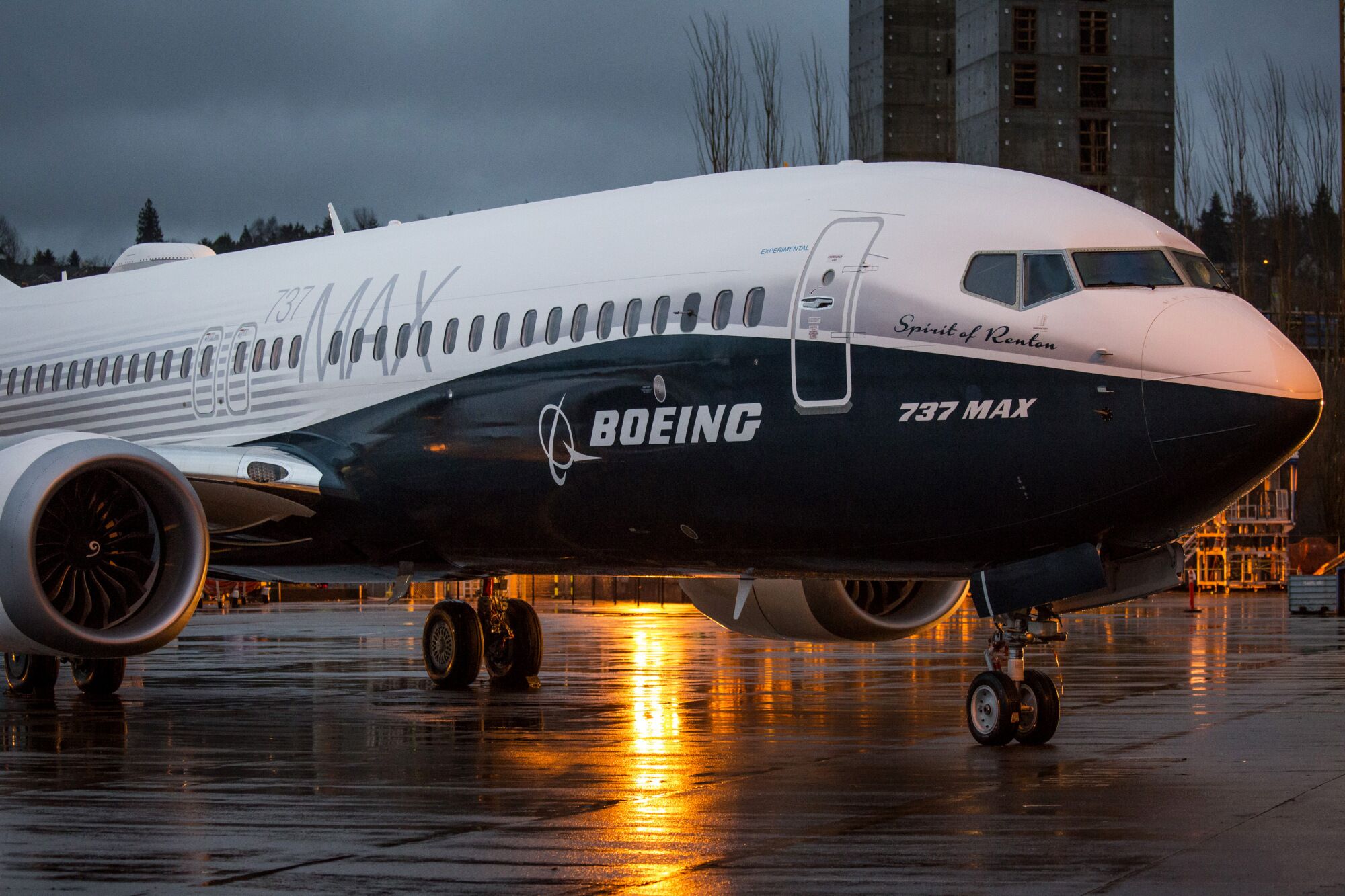
(Bloomberg) -- Boeing Co. accused the world's biggest oil companies of doing too little to produce sustainable jet fuel as frustration inside the aviation industry grows about the lack of supply.
Sustainable aviation fuel, made from waste oils and agricultural feedstock, can cut carbon emissions from air travel by as much as 80%, according to the airline sector. An enormous ramp-up in production is essential to give the industry a chance of reaching its target of carbon neutrality by 2050.
Global supply of SAF, as the sustainable fuel is commonly called, meets barely 1% of the aviation industry's requirements.
Major oil producers “need to lean in harder” and crank up production, Robert Boyd, Boeing's head of sustainability for the Asia-Pacific region, said in an interview at the Singapore Airshow on Tuesday.
Smaller and less-established green fuel producers such as Neste Oyj and SkyNRG BV are doing a better job of building out a sustainable aviation fuel industry than well-resourced giants like Exxon Mobil Corp., according to Boyd. “I don't think they're doing enough,” he said of the traditional energy sector.
The inadequate flow of SAF has been a major talking point at the air show. Lifting supply is also essential to making SAF more affordable for airlines. Conventional jet fuel is already one of the biggest costs for carriers, and SAF can be three to five times more expensive.
Aviation's transition to net zero will require an investment of as much as $5 trillion through 2050, much of it needed to increase sustainable fuel production, according to the International Air Transport Association.
IATA chief Willie Walsh on Monday implored oil producers to make more low-emissions aviation fuel. Every drop that's made will be bought, even at the current high price, Walsh said. Speaking at an aviation summit in Singapore, he described the airline industry's struggle to decarbonize as an “existential issue.”
Read More: Airlines' Chief Pleads for More Green Fuel to Save Air Travel
At the same event, Exxon's vice president for Asia-Pacific fuels, Ong Shwu Hoon, said the company is focused on making more low-emissions fuel for the transport industry, including aviation. The SAF supply chain requires more investment, she said. Exxon, she added, is learning to deal with the agricultural companies involved in the new process.
Still, Haldane Dodd, executive director of the Air Transport Action Group, a Switzerland-based nonprofit working with the aviation industry to map out a path to net zero, maintains the energy industry isn't doing enough. Major oil producers are capable of doing much more to support SAF production, Dodd said in an interview at the Singapore Airshow.
“If anybody has the capital, the expertise, the intelligence and the human resources to deliver this product, it's them,” he said.
More stories like this are available on bloomberg.com
©2024 Bloomberg L.P.
Essential Business Intelligence, Sharp Market Insights, Practical Personal Finance Advice, Daily Fuel, Gold and Silver Prices and Latest Stories — On NDTV Profit.