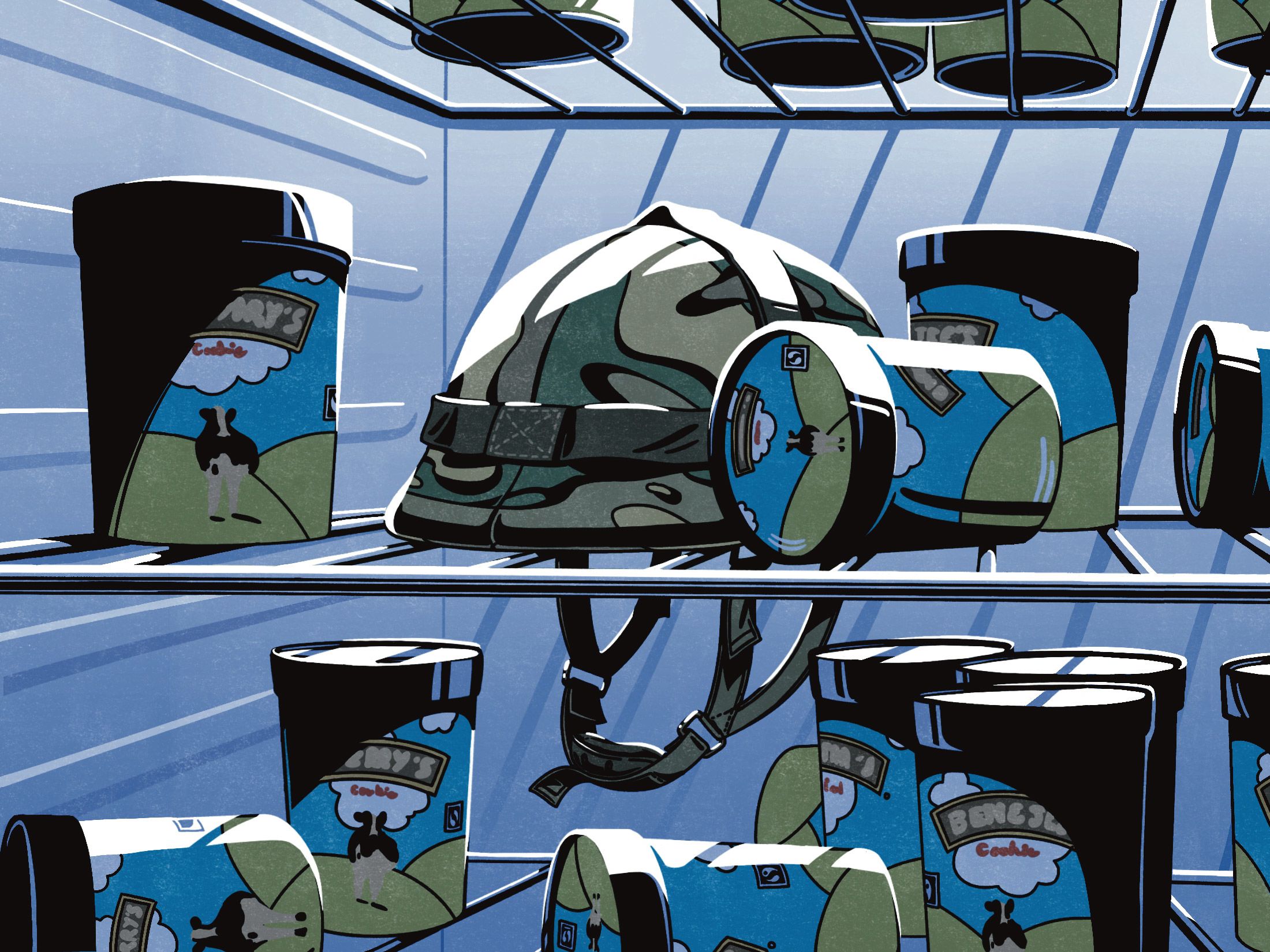
(Bloomberg Businessweek) -- Anuradha Mittal was the kind of person large corporations tend to avoid at all costs. She'd been politically awakened as a college student in India, working as a volunteer in Bhopal, where a leak at a Union Carbine Corp. pesticide plant in 1984 killed thousands of the city's poorest residents. She considered becoming a lawyer or a judge there but instead moved to the US, where she spent almost a decade at an organization in Oakland, California, that combated, as she once wrote, “corporate control of our food system.” In 2004 she founded the Oakland Institute, a think tank devoted to issues such as the environment and indigenous rights. She wanted her organization's name to invoke the birthplace of the 1960s-era Black Panther Party, and its research condemned what it referred to as “land grabs” by multinational corporations in Tanzania and Sierra Leone. The deemed her “an essential commentator” who could school media outlets in the destructive role often played by “free-trade absolutists, international lenders and speculators.”
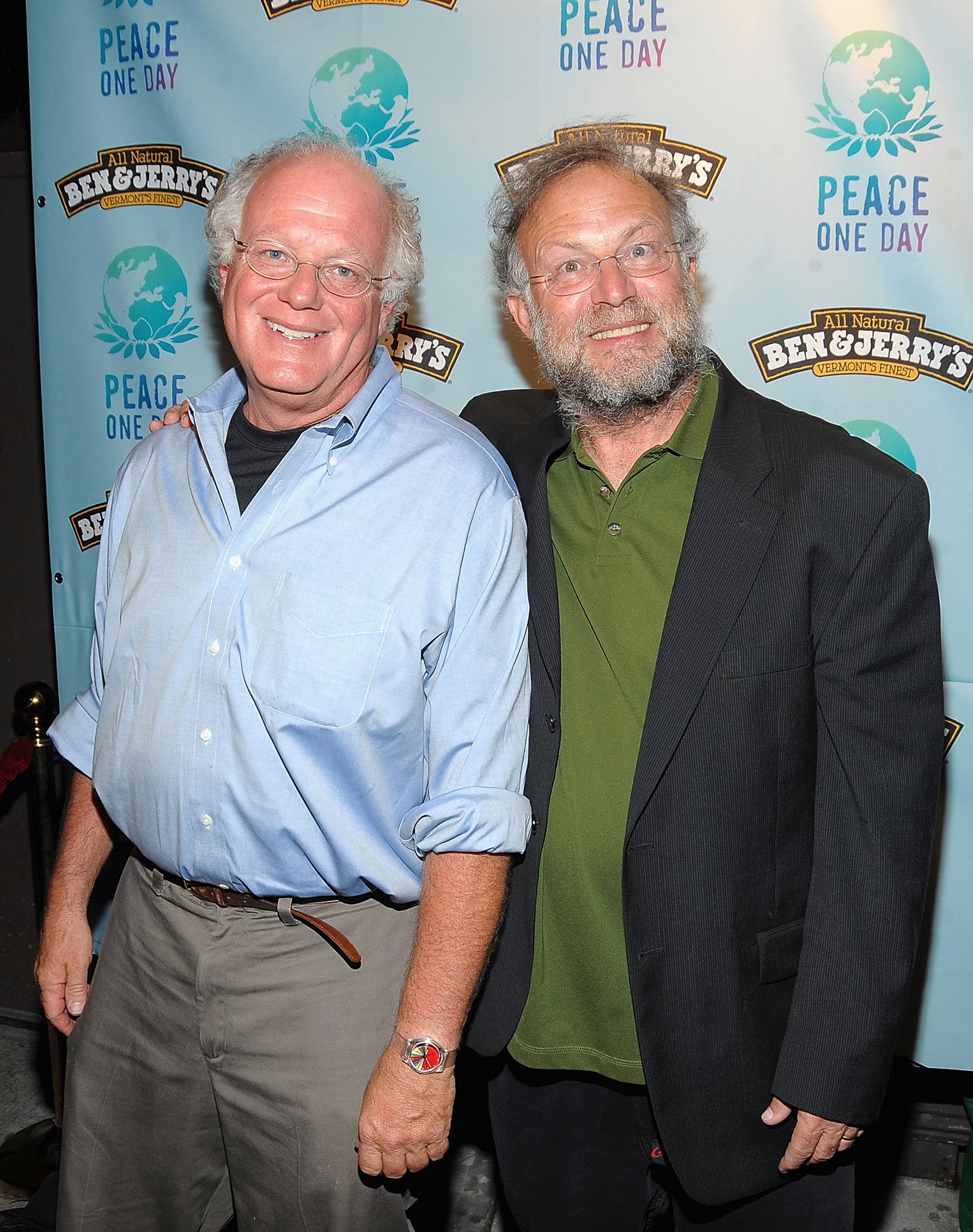
So in 2007, Mittal was surprised to get a call from Jeff Furman, a member of the independent board of Ben & Jerry's, the ice cream company in Burlington, Vermont. Furman wanted her to join the board, which, she learned, was an anomaly in the corporate world: an in-house group devoted to pressing the company to take positions on issues that would make others blanch. The board was created in 2000 at the urging of the company's founders, Ben Cohen and Jerry Greenfield, when Unilever Plc, the Anglo-Dutch consumer products conglomerate, purchased Ben & Jerry's for $326 million. The board was primarily responsible for safeguarding the brand and making sure the company stayed true to its subversive roots by promoting its unabashedly progressive social mission. Furman was specifically interested in Mittal because of her unorthodox résumé. “I wanted someone who had a strong sense of social justice,” he says.
Mittal joined the board thinking she wouldn't last long. Instead she became convinced that regardless of its corporate owner, Ben & Jerry's was serious about carrying on the company's radical legacy, like when the board endorsed Occupy Wall Street in 2011, and the company dished out ice cream at the protests. In 2018, Mittal replaced Furman as the board's chairperson, and Ben & Jerry's continued to patronize leftist causes, supporting migrant rights, opposing the Trump administration's “regressive” policies and calling for the dismantling of White supremacy after the murder of George Floyd. Its activism seemed to dovetail with the interests of Unilever, which has its own stated aspirations to be a force for good rather than merely a vehicle for shareholder enrichment. Unilever's chief executive officer, Alan Jope, even held up Ben & Jerry's as a role model for the company's brands, of which it currently has 400, including Hellmann's, Dove and Axe Deodorant Body Spray.
Also Read | Layoffs Are Rising In Tech, But These Skills Are Helping People Unlock Better Pay
But in 2021, Mittal and other board members decided it was time for Ben & Jerry's to take a stand on another issue that was consuming some progressives: the Israeli-Palestinian conflict. For decades, Ben & Jerry's had been available in the West Bank, occupied by Israel since it was captured from Jordan in the Six-Day War of 1967, which displaced an estimated 500,000 Palestinians, according to the United Nations. Mittal wanted the company to stand up for the human rights of Palestinians.
So on July 19, 2021, the board at Ben & Jerry's announced that the company would be ending sales of its ice cream in Israel's occupied territories. For Mittal it was a thrilling moment. How did she feel when the vote was taken? “Liberated,” she says.
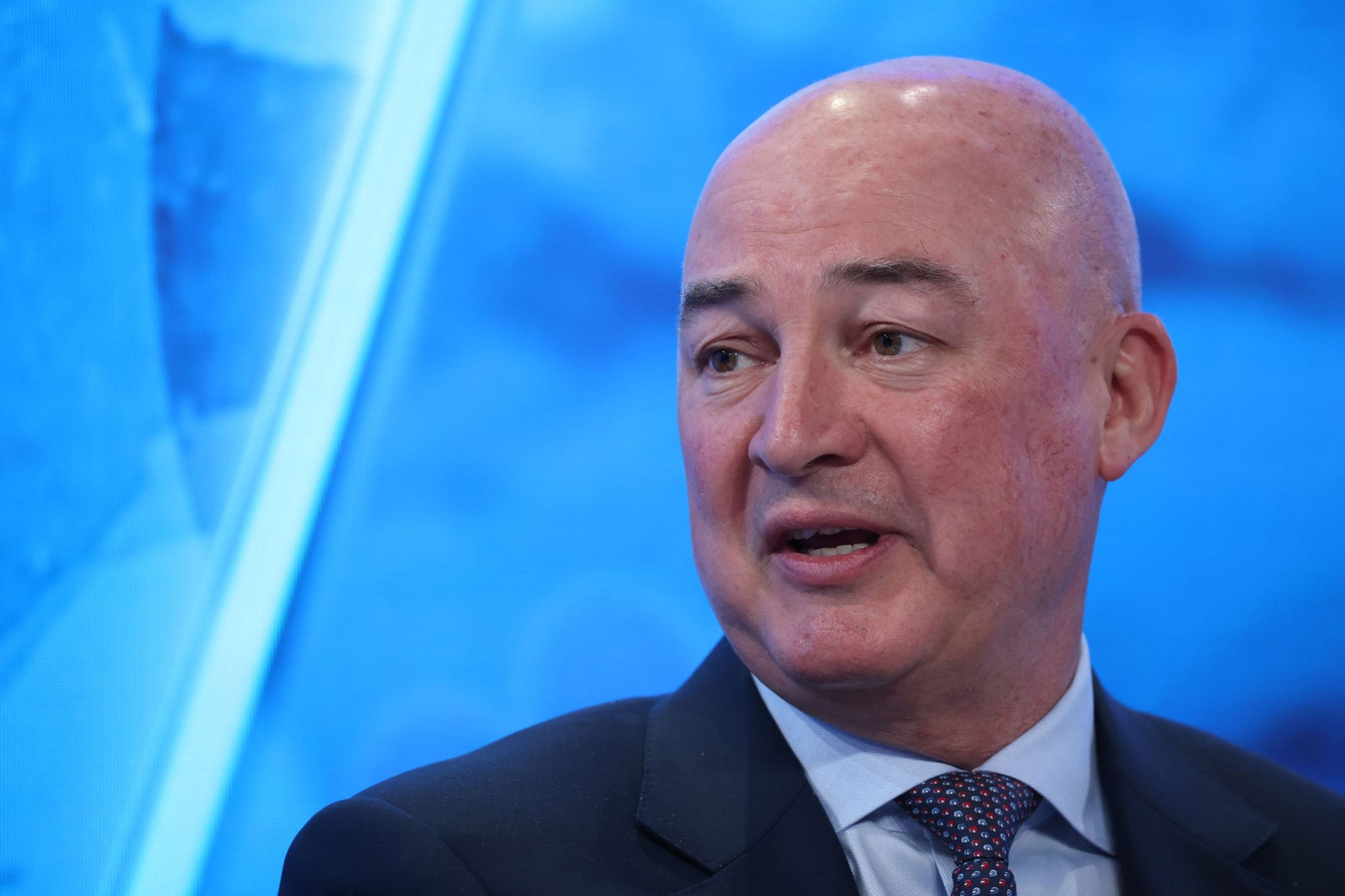
By the time Jope found out that the Ben & Jerry's board decision had triggered an international controversy, it was hardly the only crisis he was managing. Unilever's stock price had been heading south, and Jope's obsession with infusing the company's brands with social purpose was seen as a mounting distraction. The board's newest crusade had come after Ben & Jerry's had been targeted by members of the Boycott, Divestment, Sanctions movement, best known for its campaign to persuade governments, companies, pension funds and charities to withdraw financial support from Israel, pressuring the country to loosen its hold on the Gaza Strip and the West Bank.
Proponents say BDS is the moral equivalent to the fight against apartheid in South Africa; many Israelis and their supporters around the world say that the real intent of BDS is to delegitimize Israel and that it amounts to antisemitism. Dozens of states in the US also have anti-boycott rules for their pension funds, and within weeks of the announcement from Ben & Jerry's, they started to unload Unilever shares. “I will not stand idly by as woke corporate ideologues seek to boycott and divest from our ally, Israel,” declared Ron DeSantis, the Republican governor of Florida.
Initially, Unilever accepted the move by Ben & Jerry's. But when it tried to reverse the board's decision, Ben & Jerry's sued its owner for allegedly violating the 2000 merger agreement that gave the board say over its social mission. Unilever responded that it was the board's latest move that had actually tarnished the brands of both its corporate parent and Ben & Jerry's, the very thing it was singularly obligated to guard. “There is plenty for Ben & Jerry's to get their teeth into on their social justice mission without straying into geopolitics,” Jope said in a call with reporters more than a year after the ice cream brand announced its withdrawal plan.
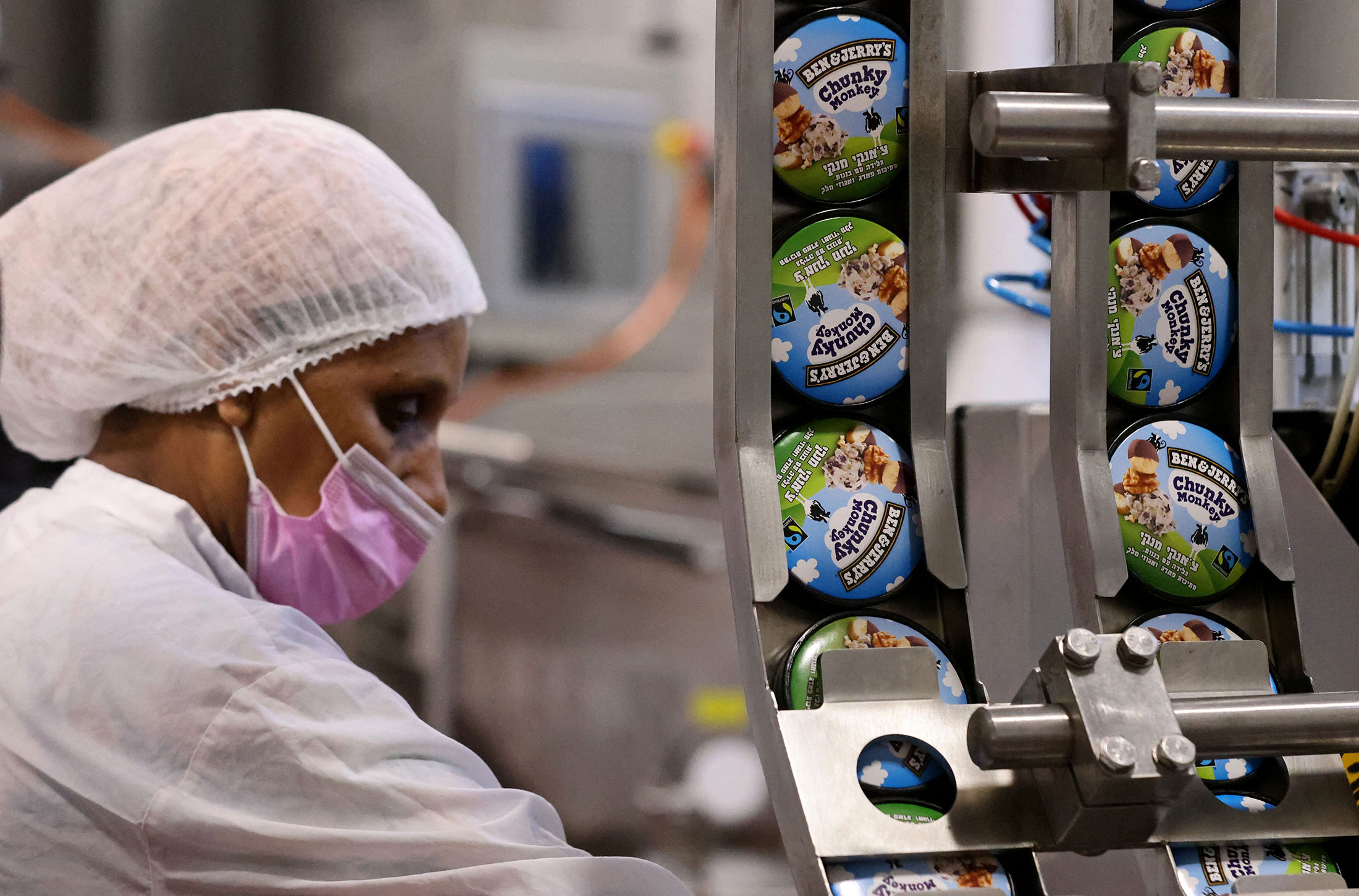
Many of the political positions of Ben & Jerry's over the years could be considered controversial, but not among progressives. The debate around Israelis and Palestinians was much thornier, and the brand taking a side on this divisive matter seemed to cross a line. As Ben & Jerry's and Unilever traded blows in court, the future of corporate activism—of which both companies had often been hailed as the leaders—seemed to hang in the balance.
In December we flew to Oakland to spend the better part of the day with Mittal to discuss the bizarre new terrain Ben & Jerry's was in: one part of a conglomerate suing its owner. In her office at the Oakland Institute, she had a Free Palestine placard perched on top of a bookshelf and a framed poster hung on the wall of two Palestinian men embracing by what appears to be a barbed wire fence. It says “Support the Intifada” in Arabic.
But the interview that we expected never happened. That morning, Ben & Jerry's and Unilever had announced they'd settled the lawsuit, providing no details about the terms. Mittal patched in the attorney for Ben & Jerry's on speakerphone to monitor the discussion, which he told us would be off the record. Instead of a candid interview with a boardroom radical eager to speak truth to power, it might just as well have been a routine encounter with a corporate executive.
Five days after the meeting, one of Ben & Jerry's law firms issued a statement boasting that the suit had been “favorably” resolved. Yet, by almost any measure, it appeared the board had lost.
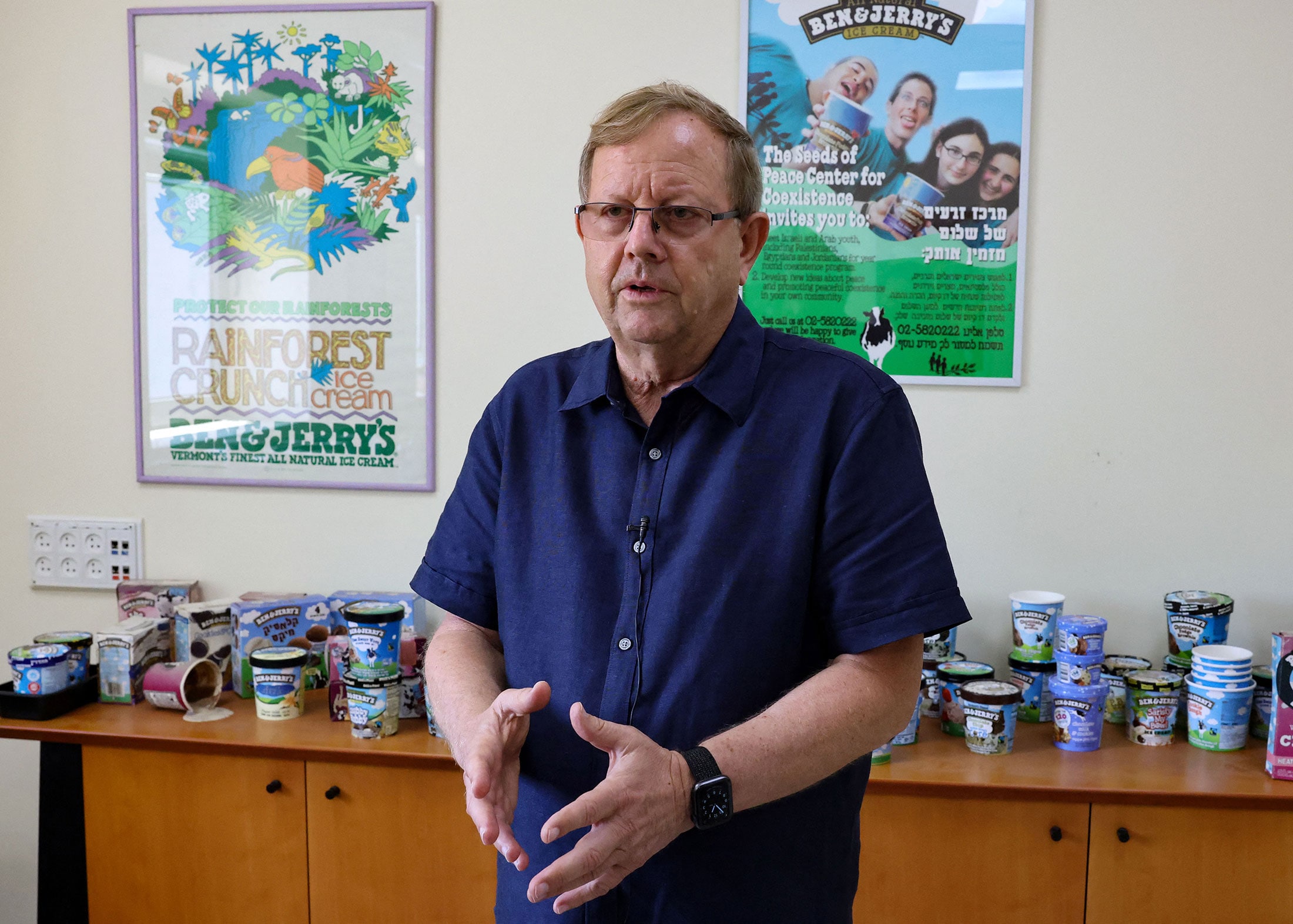
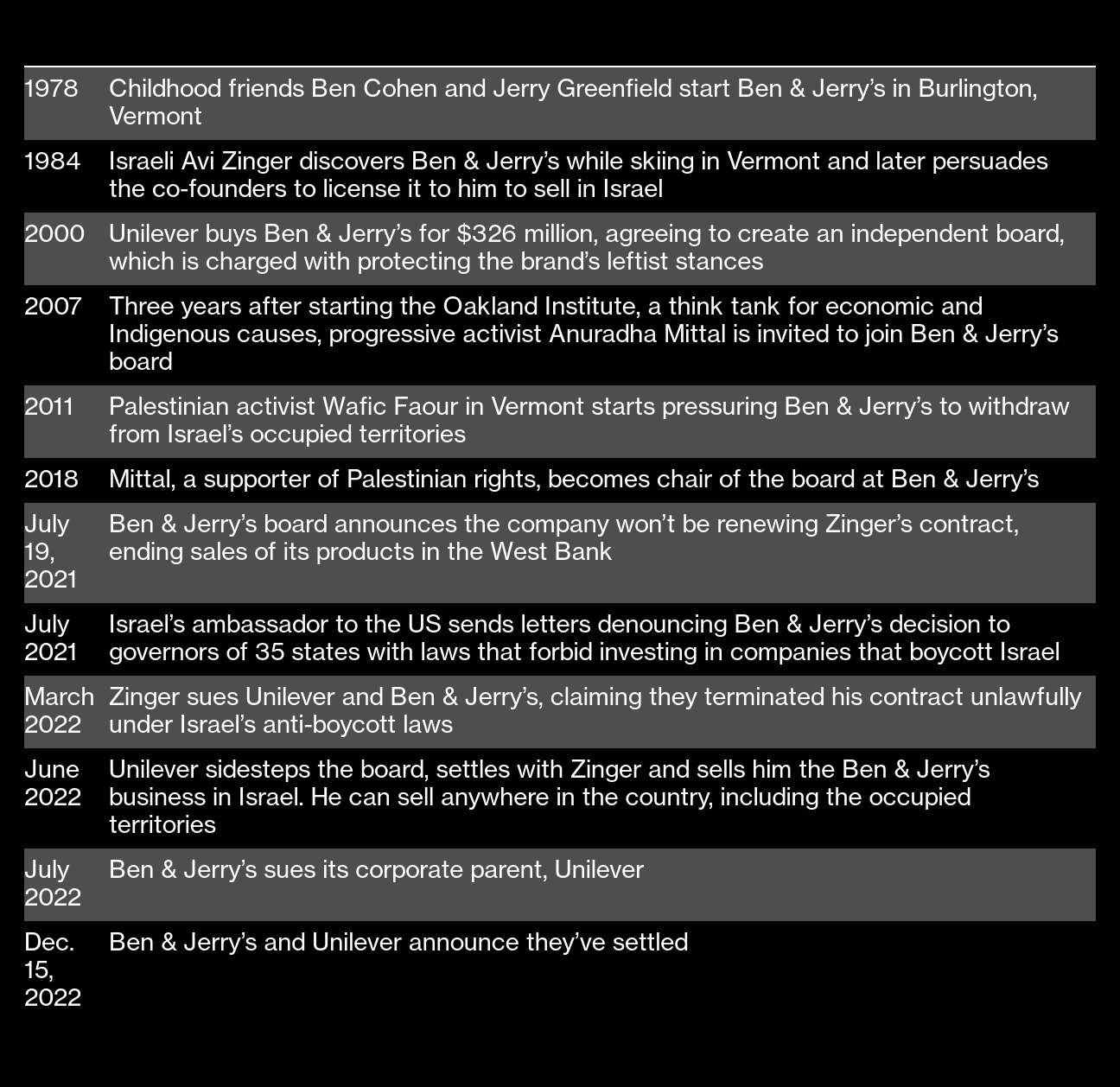
The saga of how Cohen and Greenfield, who founded Ben & Jerry's in an abandoned gas station in Burlington in 1978, has been told again and again, but how the ice cream brand made its way to Israel rarely figures into the lore. Its arrival there began with Avi Zinger, an Israeli running an appliance export business in New York, who first came across it while on a ski trip in Vermont in 1984. There was no ice cream like it in Israel, certainly none made with all-natural ingredients. “I figured, well, if I could bring such a good ice cream to Israel, it would be fantastic for everybody—and for me, of course,” Zinger, now 70, told an Israeli TV station two years ago.
Zinger approached Cohen about licensing the brand. Cohen didn't see why not. “Without giving the matter a great deal of thought, Ben said go ahead,” the founders wrote in their 1997 book, . “We'd never even contemplated the possibility of selling ice cream outside the United States.” (Cohen and Greenfield, who are still on the payroll at Ben & Jerry's but are no longer involved in its operations or with its board, declined to comment for this article.)
Zinger dropped by the Ben & Jerry's factory, got its recipes, along with a list of suppliers, and returned to Israel. He rented equipment from another ice cream company, and in 1988 he opened his first scoop shop in Tel Aviv, playing tapes of Vermont radio shows to simulate the New England vibe.
The decadent ice cream wasn't cheap. One customer carped to the about the “pisher” servings, but people were willing to wait in line for 40 minutes. Within a few years, Zinger had opened 14 more shops throughout the country, including one by the Dead Sea, and was distributing Ben & Jerry's to supermarkets and convenience stores throughout Israel and the disputed territories. By the late '90s, according to Cohen and Greenfield's book, Zinger was doing business to the tune of $5 million a year, and he promoted his version of Ben & Jerry's social ethos by supporting local environmental and children's groups.
By 2000, Unilever was already the world's largest ice cream manufacturer. It had Good Humor and Magnum in its portfolio. Still, it didn't have a premium brand, so it bid high on the Vermont company and agreed to that bold request by Cohen and Greenfield: Ben & Jerry's would create a board with as many as 11 members, 9 of whom would be independent. The other two would be Unilever representatives, including the ice cream company's CEO, whom the conglomerate would select. According to the agreement, Ben & Jerry's would also have the right to sue Unilever if it ever violated the terms of the agreement. People who study companies that meld purpose with profitability say they've never seen a business with these types of legal terms. “That has to be unprecedented,” says Antony Page, dean of the Florida International University College of Law.
Zinger wasn't sure what would happen after the merger, but his relationship with the company survived, even as new management came in. “Ben & Jerry's popularity was so high in Israel,” says Walt Freese, the company's Unilever-appointed CEO from 2004 to 2010. “Avi [Zinger] used to tell me that many people in Israel thought Ben & Jerry's was actually founded in Israel!”
The independent board was largely docile in the early years after the deal's closing, but by 2007, when Mittal joined, it was flexing its muscles. It almost sued Unilever after it discovered that the mother ship had changed the formula for Ben & Jerry's, lowering the product quality. After a surprise visit to London from Cohen and Greenfield, Unilever didn't just capitulate on the formula issue; then-CEO Paul Polman proved to be as big a promoter of stakeholder capitalism as the founders.
Under Polman's leadership, Unilever made moves that some would consider laudable and others might characterize as painfully contrived. It offered classes in proper hand-washing techniques to Vietnamese children and rewarded them with free samples of its Lifebuoy soap and P/S toothpaste. The company's workers installed toilets across India and Africa, both reducing the spread of infectious disease and increasing sales of its Domestos-brand toilet cleaner. But Unilever's stock rose under Polman's tenure, and the relationship between Ben & Jerry's and its parent flourished. By 2015, Unilever had scaled the heights of environmental, social and governance rankings, and the United Nations had awarded Polman the body's highest environmental accolade, Champion of the Earth.

In 2016, Wafic Faour was working out in a Burlington gym when he noticed that the guy sweating on the next elliptical machine was Greenfield. Faour, a Palestinian immigrant, belonged to a group that had been boycotting the company for allowing its ice cream to be sold in the occupied territories. He let Greenfield know how he felt about the presence of Ben & Jerry's there.
Greenfield was taken aback, explaining that Ben & Jerry's had started buying supplies from Palestinian farmers in an effort to defuse the issue. “He told me, ‘What do you mean? We're buying Palestinian almonds. We're practically giving you what you want.' ” Faour wasn't impressed. He told Greenfield he wouldn't be satisfied until Ben & Jerry's withdrew entirely from the West Bank. “We're not going to take it,” he warned Greenfield.
After growing up in a Lebanese refugee camp, Faour came to the US in 1978 to attend Northeastern University and later moved to a town bordering Burlington. He fell in with a small organization known as Vermonters for Justice in Palestine that embraced the nascent BDS movement. His group didn't have to look far for an ideal target: Ben & Jerry's was right there in Burlington flaunting its social justice street cred. The group had discovered from activists in the occupied territories that Zinger was selling ice cream in what it described as Jewish-only settlements there. What was the social justice in that?
Such complaints touched a nerve with certain board members at Ben & Jerry's. Furman, the chairman at the time, had recently visited the West Bank with civil rights activists and wanted to figure out what to do about the company's presence there. So did Mittal. Not everybody, however, was eager to get involved in the conflict. The board, around this time, also included an ex-Coca-Cola executive and a former head of Unilever's European business. As a compromise, Ben & Jerry's announced the almond-buying plan and created a fund to support the peace process in the Middle East.
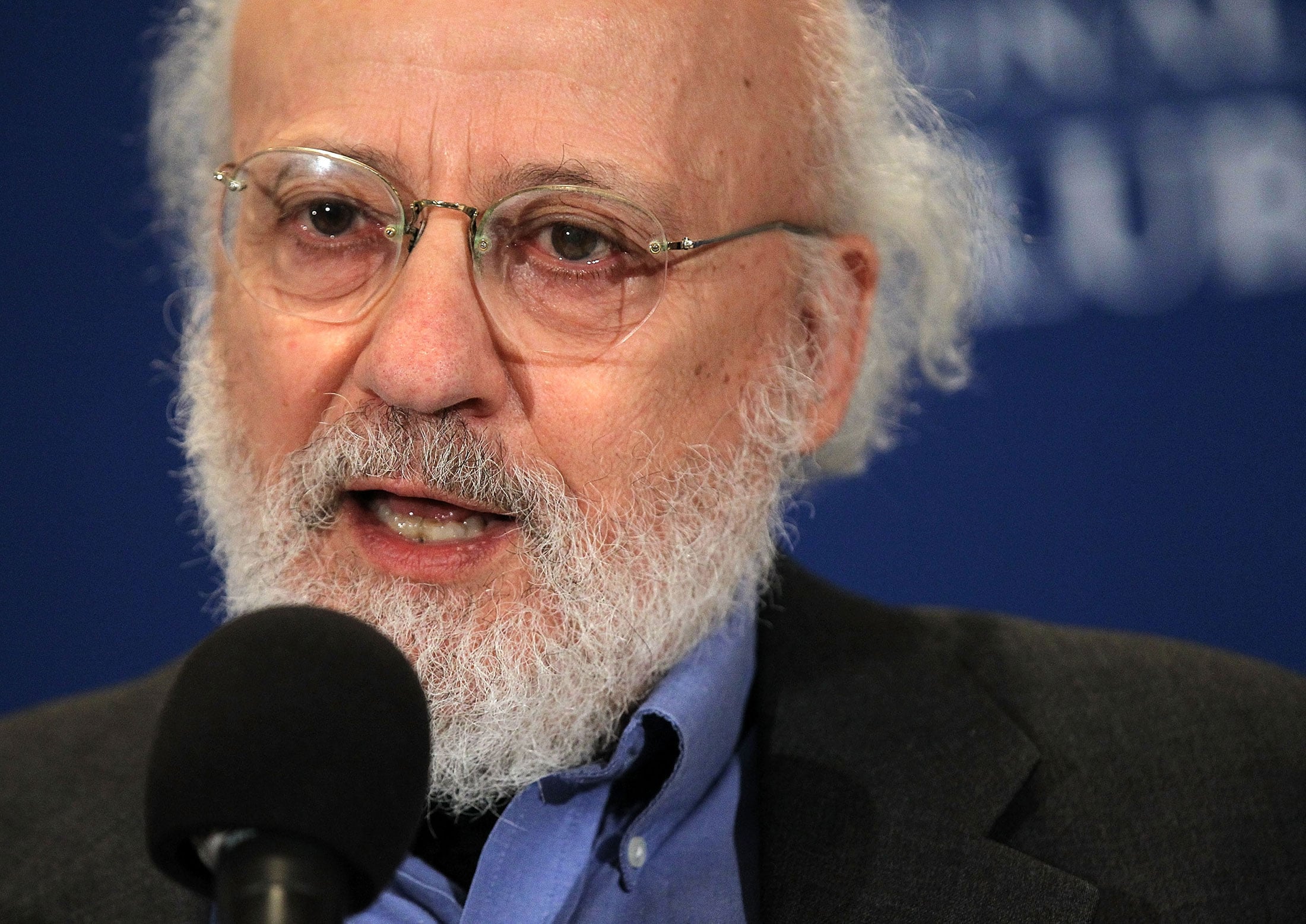
In 2018, Faour says he got a call from Furman, who told him he was stepping down as chair and his successor would be Mittal, who was sympathetic to the Vermont group's cause. (Furman doesn't remember this call.) Under her leadership, the board began pressuring the CEO of Ben & Jerry's, Matthew McCarthy, who was also on the independent board, to come up with a plan to stop selling ice cream in the occupied West Bank, where more settlements were springing up. With his overgrown beard and flowing hair, McCarthy didn't look out of place at Ben & Jerry's. But he was a Unilever lifer appointed by the company. As he tried to come up with a solution to satisfy Mittal, McCarthy was also praising Zinger, telling him he wanted to renew his contract in Israel, according to records that would later surface in court. (Ben & Jerry's declined to make McCarthy available for an interview.)
Zinger tried to explain to the company that most of his sales in the West Bank were to Palestinians and that pulling out of the disputed area wasn't so simple: Israel had laws forbidding businesses from discriminating against customers based on where they lived. Still, he tried to come up with his own solutions. As the pressure grew, he created a flavor called Fruits of Peace, made with figs and dates purchased from Palestinian farmers. But the farmers stopped working with him when BDS activists objected. Then Zinger enlisted a Palestinian businessman to distribute his ice cream in the West Bank and Gaza. Unfortunately, his prospective partner saw a good money-making opportunity and wanted to increase the sales of Ben & Jerry's in the territories, not curtail them, which flew in the face of the board's agenda.
It didn't help Zinger's case that a new generation of activists who'd embraced the Black Lives Matter movement had taken up the Palestinian cause. In May 2021, Faour's group held its annual candlelight vigil in downtown Burlington commemorating the Nakba, an Arabic term meaning “catastrophe,” referring to the creation of Israel in 1948 and its ensuing war with surrounding Arab countries that led to the exodus of numerous Palestinians. In the past, 5 or 10 people might attend. This time hundreds of younger demonstrators showed up to protest the Israeli army's shelling of the Gaza Strip as Islamic militants there fired rockets into the country, some of them reaching Tel Aviv.
Faour was elated and even more so when the newcomers focused their ire on the downtown Ben & Jerry's. “They stopped in front, and they started shaming them,” he recalls in a Burlington coffee house in early December, leaning over from his bench. “They just started screaming, ‘Shame, shame, shame!' ” He was further delighted later that month when Ben & Jerry's inquired on Twitter if fans were up for a new flavor, Thick Mint, and BDS activists twisted it into a political moment. “I love mint, but I won't be buying any @benandjerrys until you stop sales in illegal Israeli settlements on the West Bank #FreePalestine,” read one of the more temperate tweets.
With the company losing its credibility with social justice types, the board made its fateful decision, announced in July 2021, not to renew Zinger's contract. Doing so would halt any sales in the occupied territories. “We have informed our licensee that we will not renew the license agreement when it expires at the end of next year,” Ben & Jerry's said in an announcement. “Although Ben & Jerry's will no longer be sold in the OPT [occupied Palestinian territory], we will stay in Israel through a different arrangement. We will share an update on this as soon as we're ready.” The board also had the support of Cohen and Greenfield. “In our view, ending the sales of ice cream in the occupied territories is one of the most important decisions the company has made in its 43-year history,” the co-founders wrote in an op-ed for the .
Zinger couldn't help but take the decision personally. “He viewed Ben Cohen and, honestly, Anuradha [Mittal] as family,” says his lead attorney, Alyza Lewin, president of the Louis D. Brandeis Center for Human Rights Under Law in Washington. Many of the top people at Ben & Jerry's had personally liked their partner of more than three decades, but Mittal says the board decision wasn't about “individuals.” She compares the situation to a South African businessperson whose livelihood was disrupted to make way for apartheid's demise. (Lewin says Mittal's comment about Zinger is “disingenuous” and that “comparing Israel to South Africa is a false analogy spewed by BDS supporters.”) Zinger, it seemed, was collateral damage in the pursuit of justice.
On the day the board vote at Ben & Jerry's was announced, Gilad Erdan, then Israel's ambassador to the US, sent letters to 35 governors in states with laws that forbid them from investing in companies that boycotted his country, and he denounced the ice cream maker's decision. “We view this decision very severely as it is the de facto adoption of antisemitic practices and advancement of the delegitimization of the Jewish state and dehumanization of the Jewish people,” he wrote. Many state officials in the US agreed, and not only in red ones such as Florida. Tom DiNapoli, comptroller in New York, said his state's pension fund was unloading $111 million worth of Unilever's shares because Ben & Jerry's was “engaged in BDS activities.”
Mittal tried to dispel the idea that Ben & Jerry's was practicing BDS. After all, the company had stated that it planned to remain in Israel, though it didn't explain how. “We never talked about boycotting Israel,” she said during an August 2021 webinar that Americans for Peace Now was hosting. “That was never on the table.” Later that year, the self-described watchdog group StopAntisemitism crowned Mittal its “Antisemite of the Year.” Mittal says she was also subjected to death threats, along with racist and misogynistic emails and letters. A conservative group, the National Legal and Policy Center, asked the IRS to examine whether Mittal had improperly abused her position as a trustee and later vice president of the Ben & Jerry's Foundation, a company-supported charity, to funnel more than $100,000 to her Oakland Institute in 2017 and 2018. “It's horrendous what she's doing,” says Tom Anderson, director of that group's Government Integrity Project. Mittal at the time said “false allegations” were spread about the foundation and her institute. She and the IRS declined to comment.
Cohen and Greenfield found themselves being similarly denounced. “I mean, what, I'm anti-Jewish?” Cohen said in disbelief on an episode of on HBO. “I'm a Jew. All my family is Jewish. My friends are Jewish, you know?” Greenfield, also Jewish, added, “I understand people being upset. It's a very emotional issue.” But the co-founders struggled when pressed by 's Alexi McCammond to explain why Ben & Jerry's wasn't also pulling out of Texas, where one of the country's more stringent anti-abortion laws—which Ben & Jerry's had called “racist”—had recently gone into effect. “I don't know,” Cohen said. “You ask a really good question.”
In Israel, Zinger faced his own backlash. Vandals destroyed his company's equipment. Competitors poached his drivers and pressured supermarkets to give them valuable freezer space that his products had enjoyed. His employees started to bail. Finally, in March 2022, Zinger sued Unilever and Ben & Jerry's in federal court in New Jersey, saying his contract had been unfairly terminated because he refused to take measures that would have violated his country's laws. (Zinger declined to speak to . This account is based on a 17-page declaration he made in his lawsuit and on conversations with his attorney and others familiar with his business.)
Jope, who'd replaced Polman as Unilever's CEO in 2019, was in a delicate position. The affable Scotsman had tried to go even harder than his predecessor on the socially conscious approach to business. Early in his tenure, Jope told that if a Unilever “brand can't find its purpose,” he'd consider putting it on the chopping block. Yet as the conglomerate's share price wilted, Jope's do-gooding became the subject of ridicule. “A company which feels it has to define the purpose of Hellmann's mayonnaise has in our view clearly lost the plot,” said fund manager Terry Smith in January 2022.
That same month, news leaked of Jope's botched attempt to buy the consumer health arm of GlaxoSmithKline for $68 billion had failed. Soon after, activist investor Nelson Peltz entered the picture. As chairman of the board of governors of the Simon Wiesenthal Center, a Jewish human rights organization, he'd already spoken to Jope about the Ben & Jerry's decision. Now his hedge fund took a 1.5% stake in Unilever, and Peltz himself would join the board in July. Two months later, Unilever would announce that Jope would be retiring at the end of 2023.
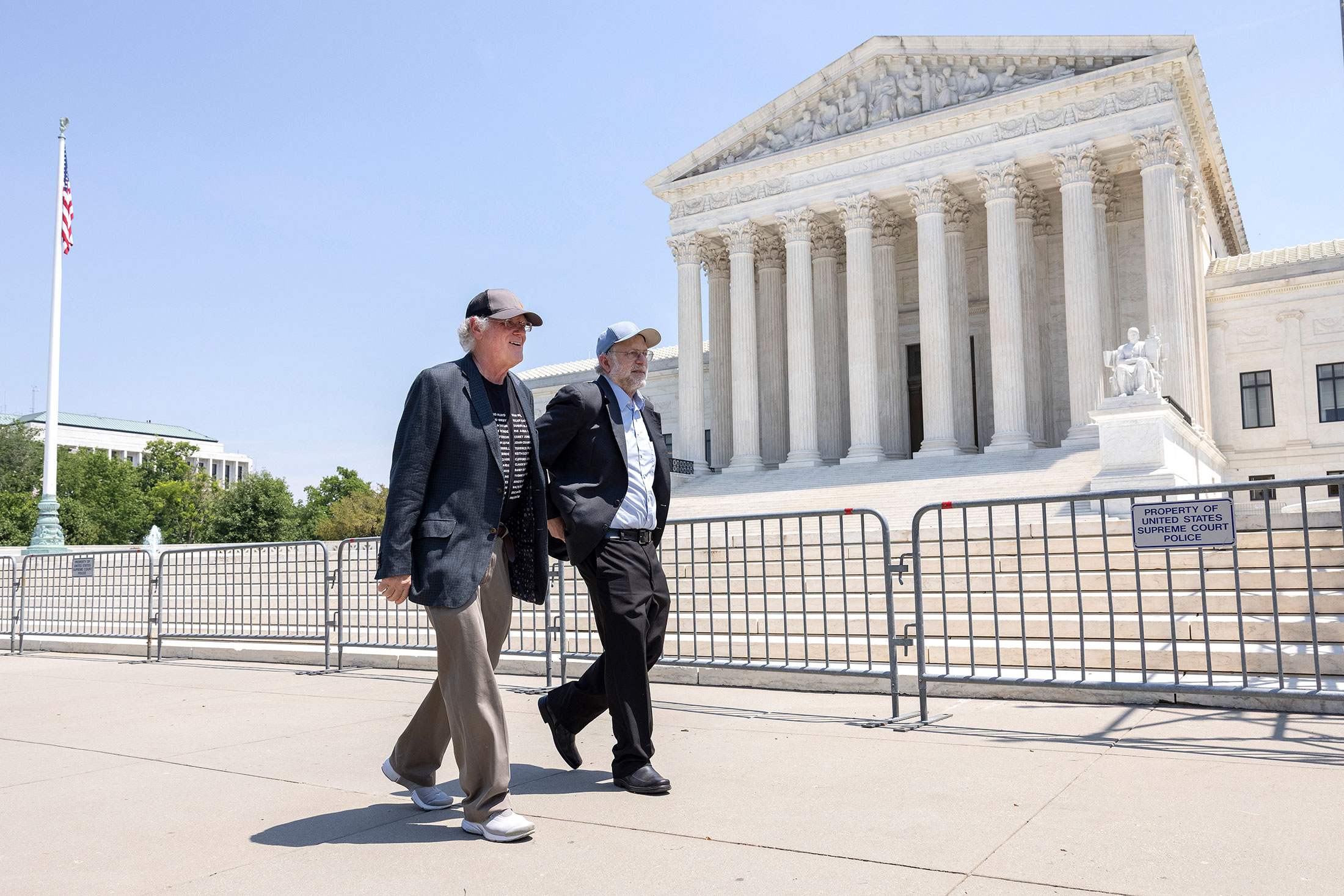
Unilever stunned Mittal in June 2022 by informing her that it would settle the lawsuit with Zinger and sell him the Ben & Jerry's business in Israel. The agreement stipulated that Zinger would be able to do pretty much whatever he pleased with the brand, the only caveat being that the Ben & Jerry's logo couldn't be in English, only Hebrew or Arabic. “The cow, the background, everything else remains,” a triumphant Zinger told the Israeli newspaper .
Unilever apparently considered the matter resolved. Not long after the deal with Zinger was announced, Tzipi Hotovely, Israel's ambassador to the UK, met with Jope and members of his team at the company's headquarters in London. Hotovely says the Unilever execs told her they were relieved that their company had extracted itself from politics, and they planned to keep it that way. “Unilever understands it's bad for business,” she says.
The Ben & Jerry's board begged to differ. It voted for Ben & Jerry's to file a lawsuit against Unilever in the US District Court for the Southern District of New York. The dissenters, not surprisingly, were Unilever's two representatives. Attorneys for Ben & Jerry's argued in the complaint that the deal with Zinger breached the 2000 agreement because it had been struck without the approval of the directors who were the guardians of the Ben & Jerry's “brand and social integrity.” Unilever's lawyers responded that it had the responsibility under the merger agreement for the “financial and operational aspects” of Ben & Jerry's and that included being able to conduct asset sales without the board's interference.
At a hearing in August, a lawyer for Ben & Jerry's argued that the ice cream maker's rich history of embracing causes was now in jeopardy. “There is customer confusion as to who owns Ben & Jerry's social mission,” said attorney Joseph Ahmad. “We need relief from the court so that our customers know that Unilever cannot just unilaterally change our social stances.” US District Court Judge Andrew Carter Jr. seemed unmoved. He denied the request from Ben & Jerry's for a preliminary injunction, saying it hadn't provided proof that consumers were bewildered.
Ben & Jerry's filed new claims, including one that Unilever was trying to undermine Mittal and her fellow independent directors by withholding their compensation. The board also ramped up its publicity campaign, disavowing Zinger's ice cream in a statement to Bloomberg News, saying “the sale of products bearing any Ben & Jerry's insignia in the Occupied Palestinian Territory is against our values.” The implication was that without its social mission, his ice cream was nothing but a knockoff, not unlike an imitation Gucci bag. “The ownership of the brand is different, but the Ben & Jerry's product is no different to what's been enjoyed in Israel for many years,” Unilever responded.
Then Ben & Jerry's and Unilever abruptly disclosed on Dec. 15 that they'd settled the suit. Unilever, which declined an interview with , would say only that it respected the merger agreement and the board's primary responsibilities. The board was even less forthcoming, and its lack of transparency seemed out of character considering how it had previously reveled in publicly taking subversive stands.
But perhaps this response spoke volumes. Mittal and her fellow dissident board members seemed to have come up short. They'd tried to pull Cherry Garcia and Chunky Monkey from the West Bank only to be summarily overridden by Unilever, which had handed off the entire business in Israel to the guy who'd been selling it there all along. The Ben & Jerry's directors had invoked the supposedly sacrosanct merger agreement in the lawsuit seeking to overturn the deal, but it didn't change a thing. Unilever, it seemed, was in charge of the social mission of Ben & Jerry's after all. “Ben & Jerry's lost big time,” says Hotovely, Israel's ambassador to the UK.
That didn't stop the law firm for Ben & Jerry's from releasing a statement several days later implying it was a victory. “This was a David versus Goliath dispute centering on respecting the parties' carefully negotiated merger agreement,” said attorney Shahmeer Halepota. “The independent board's resolve to protect that agreement in the face of intense public pressure, salary freezes and personal threats was remarkable.” (Mittal says the reference to a “favorable” resolution means that the settlement was amicable. The law firm has since removed the statement from its website.)
Was the statement simply a face-saving exercise? Perhaps not completely. Some legal observers suspect that Ben & Jerry's and Unilever settled because neither wanted to leave the case to be decided by a judge who might completely disempower the board. It was the board, after all, that gave the company its radical chic, which was as vital to the brand as its inventive flavors. “It's profitable up to a point for Ben and Jerry's to have that glow,” says Ann Lipton, associate professor of the Tulane University Law School in New Orleans. “Unilever didn't want to nuke it entirely.”
In January, Ben & Jerry's Twitter feed was pulsing with its typical calls for justice: reparations for Black people, halting America's addiction to fossil fuel, demanding reproductive rights. Noticeably absent was any mention of the violence between Palestinians and Israelis flaring up again, with Israel's new far-right government in power. By the end of the month, Jope would learn that his time at Unilever was coming to an end sooner than he'd planned. Rather than retiring at the end of the year, he would be replaced by Hein Schumacher, head of Dutch dairy group Royal FrieslandCampina NV, in July.
Schumacher may be less enamored by the prospect of dealing with the board at Ben & Jerry's and its willingness to embroil its parent in politics. Already, there's talk about a major restructuring of the unwieldy conglomerate with a possible sell-off of its food unit or less profitable ice cream division. “Big changes are on the table,” says Tineke Frikkee, a fund manager at Waverton Investment Management.
What would Ben & Jerry's become under a new owner? Perhaps Mittal and her board allies could line up a wealthy buyer to take the company private or block the sale altogether. She wouldn't discuss either possibility. What seems more likely, though, is that Unilever will sell Ben & Jerry's to another large conglomerate less interested in indulging the brand's activist impulses. What would Ben & Jerry's be then? Just another brand like Good Humor? That's a future that former Ben & Jerry's CEO Freese doesn't want to contemplate. “It would be a tragedy,” he says.
More stories like this are available on bloomberg.com
©2023 Bloomberg L.P.
Essential Business Intelligence, Sharp Market Insights, Practical Personal Finance Advice, Daily Fuel, Gold and Silver Prices and Latest Stories — On NDTV Profit.