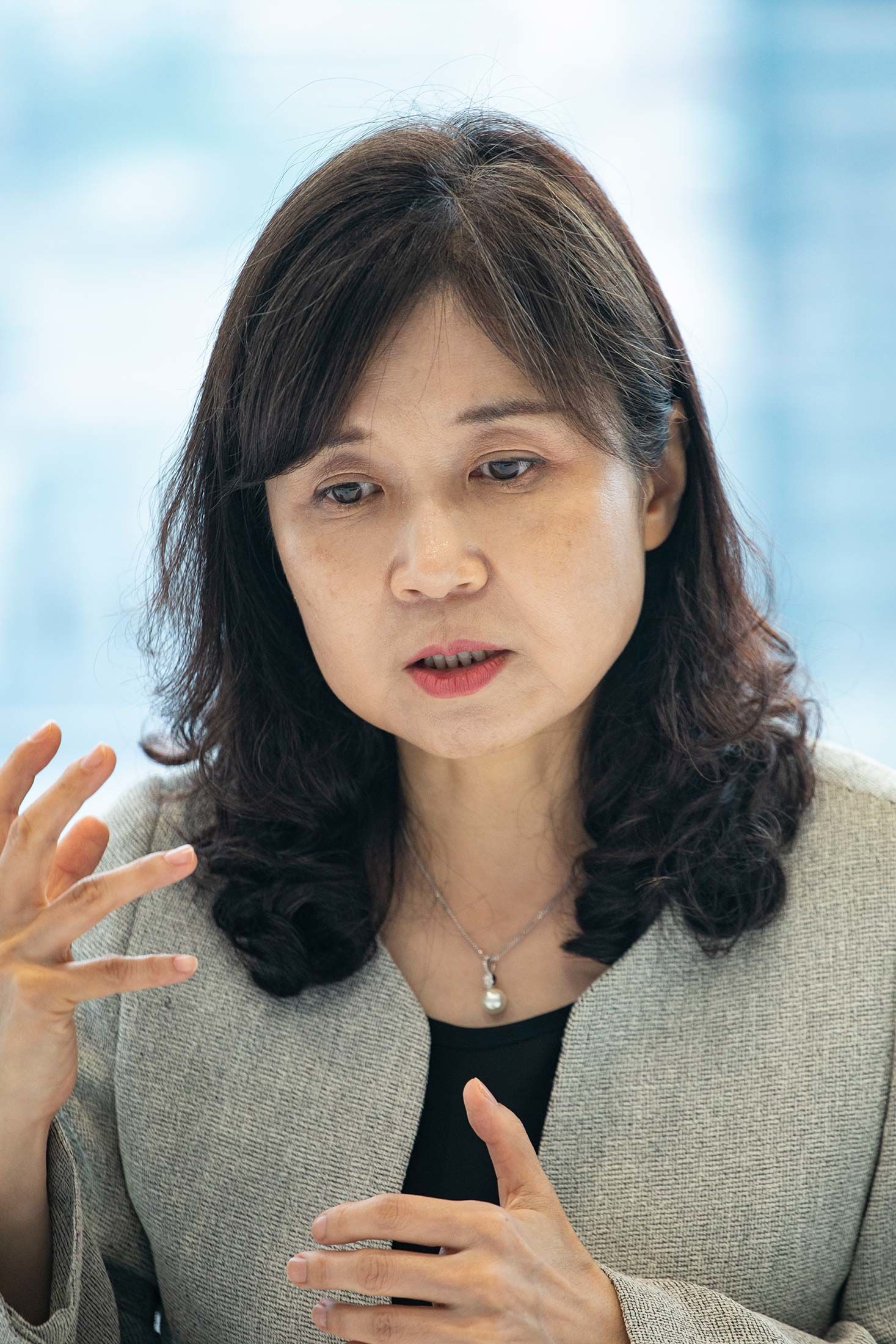
(Bloomberg Markets) -- Jiwon Lim, 57, has been a path-breaker for women in Korean finance roles, most recently in her four-year term on the Bank of Korea's board, which ended in May. Lim spoke with in early July about her career in market economics, women's progress in Korea, and how working in a bank differs from policymaking. The interview has been edited for length and content.
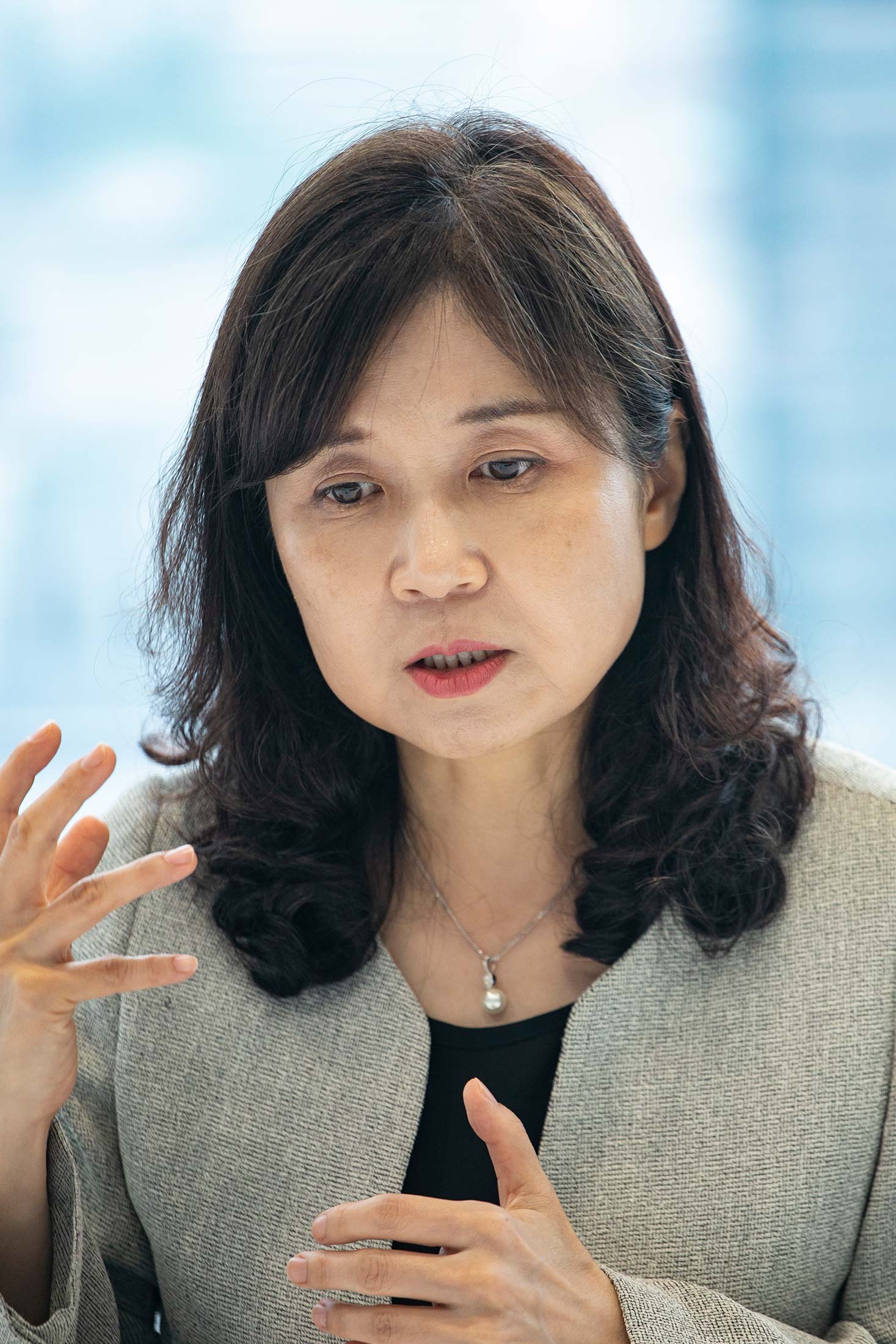
WHANWOONG CHOI: What made you decide to switch from studying piano to banking?
JIWON LIM: When I started learning the piano at the age of 6, my hope for the future, though vague, was to become a pianist, a wish of my parents. After entering a music and art high school, I started to think about my aptitude in earnest.
At university, I started out as an English major. But after many trials and errors, by the time I graduated, I turned myself to a major in economics. While English literature is a discipline that constantly asks questions about people and society and looks into problems, I thought that economics was more focused on answers. When I joined JPMorgan, I was asked about my career plan in an interview, and I honestly said that I wanted to go back to a research institute or university after experiencing the financial markets for about three years. However, I ended up working for JPMorgan for over 20 years. I was grateful, as working in the financial markets made me feel that my learning curve continued upward.
WC: Why did your mother want you and your two sisters to study piano?
JL: In her opinion, the best way for a married woman to lead an economically independent life was to study music. My mother was a schoolteacher before marriage, but after marriage, she quit her job. It was common at the time.
As my mother gave up her job and raised her children as a housewife, she realized the importance of financial independence. Although my father was a very generous person, my mother said the fact that she did not have an income for herself was a source of great stress. So, in raising three daughters, my mother wanted to help them become financially independent after marriage.
WC: What was it like to work in a bank in Seoul for two decades?
JL: After I received my Ph.D., I started my first job at an economic research institute. It was a large research institute with about 100 people with doctoral degrees, and I was the first female with a doctoral degree. Of course, there were women research assistants with bachelor's or master's degrees. At the time, my colleagues were very kind, and there was no intentional attempt to demean women. But basically they had no experience working with women, so when I was in meetings talking about serious work, they felt uncomfortable with my presence. In the year I first joined, the institution received external evaluations for projects, and a project I participated in took first place. However, this caused rumors that it was evaluated as first because it was a team with a woman.
At JPMorgan it seemed that the gender issue was not so significant. However, after working in Hong Kong for about a year, I applied for relocation when JPMorgan's Seoul branch opened. I had a bit of trouble at first. In the late 1990s there was a big gap between Hong Kong and Korea in the perception of working women, so there were quite a few people who expressed concern about my relocation. Market economists were not common in Korea at the time, and women economists had never been seen before. Because of this, even some of my colleagues were skeptical about my relocation. Their main concern was: “Will the words of a female economist be trusted in the male-dominant Korean society?”
With external customers there were often situations in which they were somewhat uncomfortable in the beginning. However, an economist's job is often to serve customers through reports. Since my name can be used for both men and women, I was able to free myself from the prejudice to some extent. Once a reputation is established, the position of a woman is not necessarily unfavorable. I worked in a more favorable environment than the previous generation, because the demand to improve the gender issue in society as a whole gradually increased.
WC: Did you have good mentors, and what did you learn from them?
JL: I learned a lot because there were so many good people around me, but I remember the advice of a co-worker when I first joined JPMorgan. In Korea, education is based on the assumption that there is a fixed answer to most problems. As a result, I also focused on finding the most correct answer, or the answer that most people think is correct, in writing my reports. I took a very passive approach in writing my reports for the first two to three months after joining the company. Then a colleague said, “What we want from you is your opinion, not the absolutely correct answer. Show us what you think, and we'll put together different viewpoints to make our own decisions. Therefore, there is no need for you to give the most correct answer.” And from then on, I became very free. It was really nice to have the freedom to be wrong.
WC: How has the banking sector in Korea changed over the past two decades, including the position of women in the industry? What still needs to change?
JL: When I started my career in the late 1990s, the number of female workers was small. As a result, men often saw female co-workers as women rather than colleagues. However, as the proportion of women increases, they naturally come to be viewed as colleagues. In this respect the situation is improving to some extent. In particular, I remember that women's entry into the financial industry increased markedly from the mid-2000s onward. Therefore, in 10 years it is expected that quite a number of women will advance to senior positions. However, the pace of improvement in the private sector and the public sector may be different.
WC: How was the transition to becoming a Bank of Korea board member?
JL: The focus of the market economist is “What will happen?” For policymakers the key is “What is to be done?” In this sense, the area covered by policy is a little larger. The second difference is the speed of feedback. For market economists, feedback on forecasting and analysis is clear and fast. Performance is measurable. In the case of policies, feedback on whether decisions were appropriate is not clear and takes a long time. As a result, I think I tried to look at most issues from a more diverse perspective and from a longer perspective than when I was working in the market.
WC: As a policy board member with a market economics background, do you think that helped you add insight to the board's discussions?
JL: The Bank of Korea is both a policy institution and a part of the market. Since many policies operate through the market, it is hoped that people with a financial market background will be more involved in policy. People at central banks tend to be very cautious. In predicting an uncertain future, policy decisions are often made based on already available data rather than actively considering various scenarios. On the other hand, as a former market economist, I was trained for a forward-looking perspective. While I was a member of the Monetary Policy Board, I tried to discuss and understand how Korea's economic and price situation was different from that of other countries. I think this approach helped Korea to start raising interest rates after the coronavirus while major economies, including the US and EU, kept policy easy.
WC: What was it like to be one of the only female board members?
JL: First of all, when I became a member of the Monetary Policy Board, there were no female assistants. So I appointed a woman as my assistant. The assistant I worked with did a good job, and other members of the Monetary Policy Board gradually became interested in selecting female assistants. In the end, when I finished my tenure, 3 out of 5 assistants were women. The increase means that 10 years from now there is a higher probability that women will be in the group that makes policy decisions.
WC: What's next for you?
JL: Right now, I want to take a break and focus on the things that I neglected. Because of conflict-of-interest regulations, I cannot get a job in the same industry for three years. Of course, there are no restrictions on employment abroad, but schools and research institutes are the only places in Korea where I can use my professional knowledge. In any case, I'm taking a break for the time being, looking back on things I've personally missed, and at the same time trying to think about how my learning curve can keep moving upward and what more I can contribute to society.
More stories like this are available on bloomberg.com
©2022 Bloomberg L.P.
Essential Business Intelligence, Sharp Market Insights, Practical Personal Finance Advice, Daily Fuel, Gold and Silver Prices and Latest Stories — On NDTV Profit.