(Bloomberg Businessweek) --
Leon Romero is all in on Javier Milei, the outsider presidential candidate in Argentina whose radical proposals to revive the economy have made him the favorite heading into this weekend's vote.
“I want to bet on something different,” Romero, a 23-year-old accounting assistant at a local bakery chain, said recently at a packed campaign rally.
But asked about the details of Milei's signature plan to scrap the peso and replace it with the dollar, Romero concedes he's fuzzy on exactly how it would work — how much he'd get for his pesos, when his salary would be converted, how prices would change or whether it will be safe to store money in the bank.
That's the rub for many Argentines, eager to embrace Milei's pledges to revive what was once one of the world's wealthiest nations but not entirely sure how it will all play out. Milei says dollarizing would force the government to rein in its spendthrift ways, tame inflation and unleash some $250 billion in pent-up investment. But such a high-risk reimagining of South America's second-biggest economy would be an incredibly complex undertaking.
That Argentines are seriously considering scrapping their national currency — an extreme step that few countries have ever tried — is a testament to the havoc that inflation has wreaked across the globe in the aftermath of the pandemic. If annual inflation shot up to 10% or more in much of the developed world, shocking younger generations who had never experienced spiraling prices, it soared over 130% in perennially crisis-torn Argentina, breaking even a people who have forged their financial survival tactics during decades of crises.

“I'm not scared to try something different. I am scared of what I know doesn't work, which is what we've been living with for years,” said Romero, whose 150,000 peso monthly salary has been decimated by inflation since his last raise three months ago. In July, his paycheck was worth about $300 per month — today it's half that. “In dollars, my salary will be safe.”
Voters on Sunday will pick among Milei, a libertarian congressman who has vowed to “burn down” the central bank; Patricia Bullrich, from a business friendly coalition; and incumbent Economy Minister Sergio Massa. Although polls are notoriously unreliable in Argentina, Milei won August primaries with about 30% backing, with his competitors just a few percentage points behind. If no one meets the thresholds to win Sunday's contest outright, the top two finishers will face off in a second round Nov. 19.
Read More: Argentina Voters Are on a Collision Course With Hyperinflation
Even if they don't fully understand it, Milei's supporters say his go-for-broke dollarization plan — which involves freezing the exchange rate, lifting capital controls, allowing pesos and dollars to circulate freely for a while and transferring central bank debt to an offshore fund — is the best shot at normalizing the economy. They see it curtailing the spiral of price hikes that happen so fast nobody is sure how much things cost, putting a lid on interest rates that top 100% and ending the need to tote around wads of cash for daily transactions. Things have gotten so bad that some merchants are suspending sales ahead of the vote, fearing a major decline in the currency in the days after.
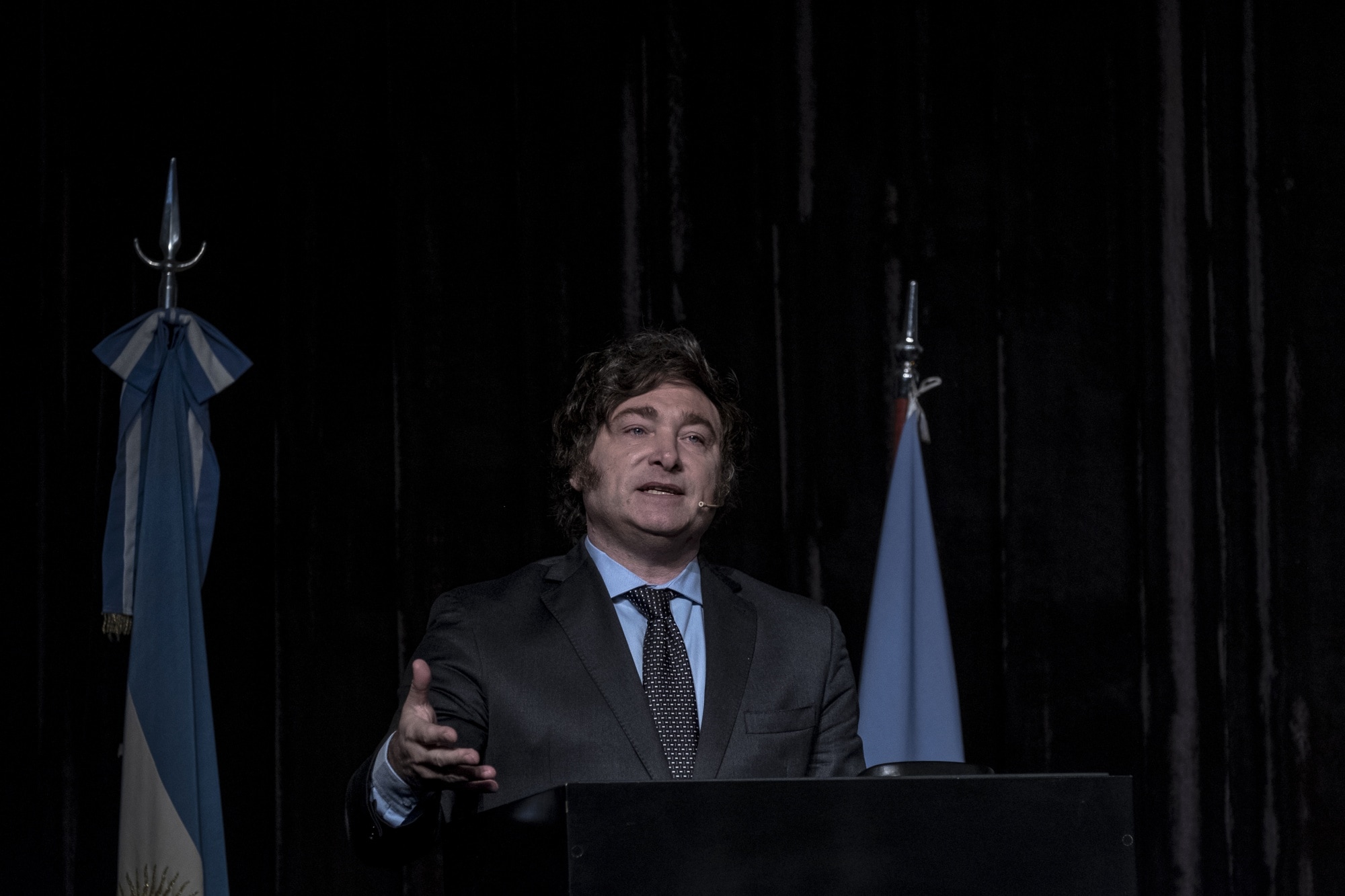
Milei's detractors say the plan is too risky, and that if he pulls it off the country will have ceded control over monetary policy to the Federal Reserve — it won't be able to adjust interest rates, devalue the currency or print money in response to an external shock. Of course Milei says that's exactly the point — he wants to take these decisions out of the hands of Argentine policy makers, who he says have a horrible track record in managing the economy.
Milei's political opponents say his ideas go too far. Bullrich is offering up a suite of orthodox reforms that she says will bolster the economy without requiring dollarization while Massa, a member of the current leftist government, promises to stabilize the situation while preserving the government's largesse.
Hidden Dollars
The biggest challenge for replacing the national currency is coaxing Argentines to move the billions of dollars they hold in cash back into traditional bank accounts, a necessary component to making the switch. A mishap, perhaps caused by trying to dollarize the economy with not enough dollars, could spark a spiral into hyperinflation, potentially even bank runs reminiscent of the economic collapse in 2001, the event that led millions of Argentines to distrust the financial system in the first place.
Read more: What Dollarization Offers Countries Like Argentina: QuickTake
Other countries in the region dollarized after undergoing their own crises. Since Ecuador and El Salvador scrapped their local currencies about 20 years ago, both nations have enjoyed moderate inflation and stable financial systems, and the decisions remain extremely popular even as their governments swung between conservative and progressive leaders. That said, the change hasn't been a panacea for either country — they both still suffer from sluggish economic growth. Ecuador has defaulted on its debt several times over the past two decades, and El Salvador has roiled bond investors by adding Bitcoin as an official legal tender.
The closest Argentina ever came to adopting the dollar was when it pegged the peso in the 1990s at a 1-to-1 exchange rate and pledged to back each peso it printed with a dollar it held in reserves. That tamed inflation for a while but ultimately unraveled, leading to the 2001 crisis.
With Argentines' dollars existing largely outside of the formal financial system, the central bank is estimated to have more dollar debt than dollars — its balance sheet mostly consists of credit lines from international lenders like China and the International Monetary Fund. Economists say Milei's government would need roughly $40 billion on hand to begin the process of dollarizing the economy. It's unclear where he might get that amount, with capital markets shut to the nation as investors price in defaults on existing bonds.
It's a great irony that while the government is devoid of dollars, the country is awash in them.
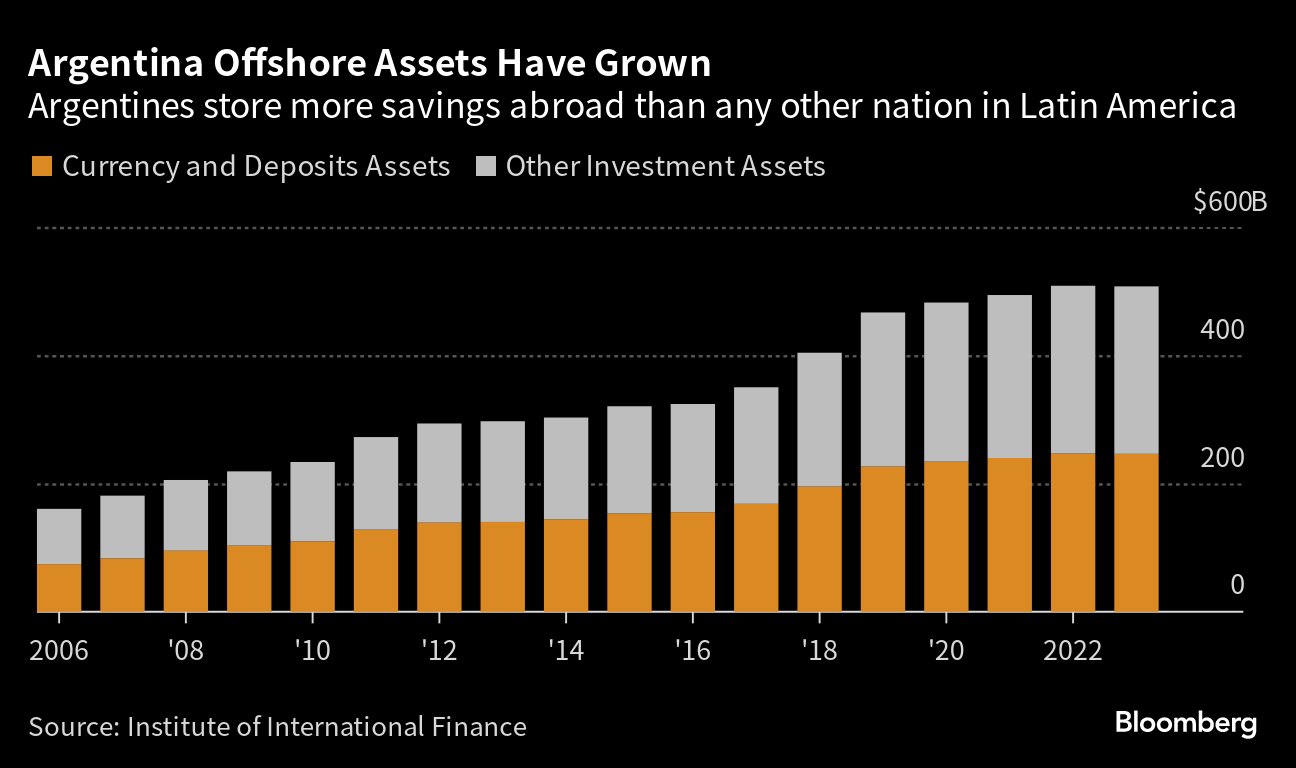
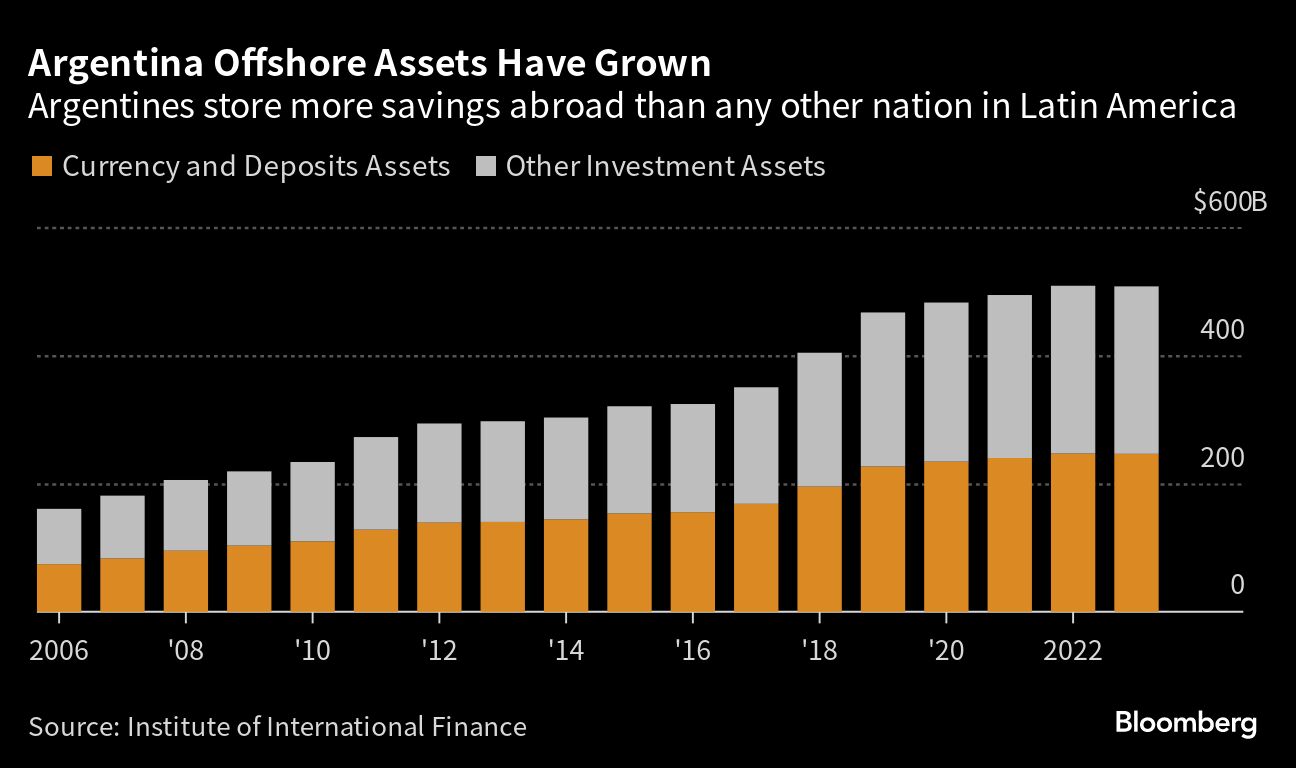
Argentina's national statistics agency estimates its citizens hold about $250 billion in foreign currency outside of the banking system, “under the mattress” and in lock boxes within the country. That would account for more than 10% of bills in circulation globally. Argentines also hold another $250 billion in liquid assets in offshore accounts, according to data from the International Institute of Finance.
Perhaps nobody has a better view into the country's hidden dollars than Juan Piantoni, the founder of INGOT, a company that sells space to stash the greenbacks savers hoard outside of banks.
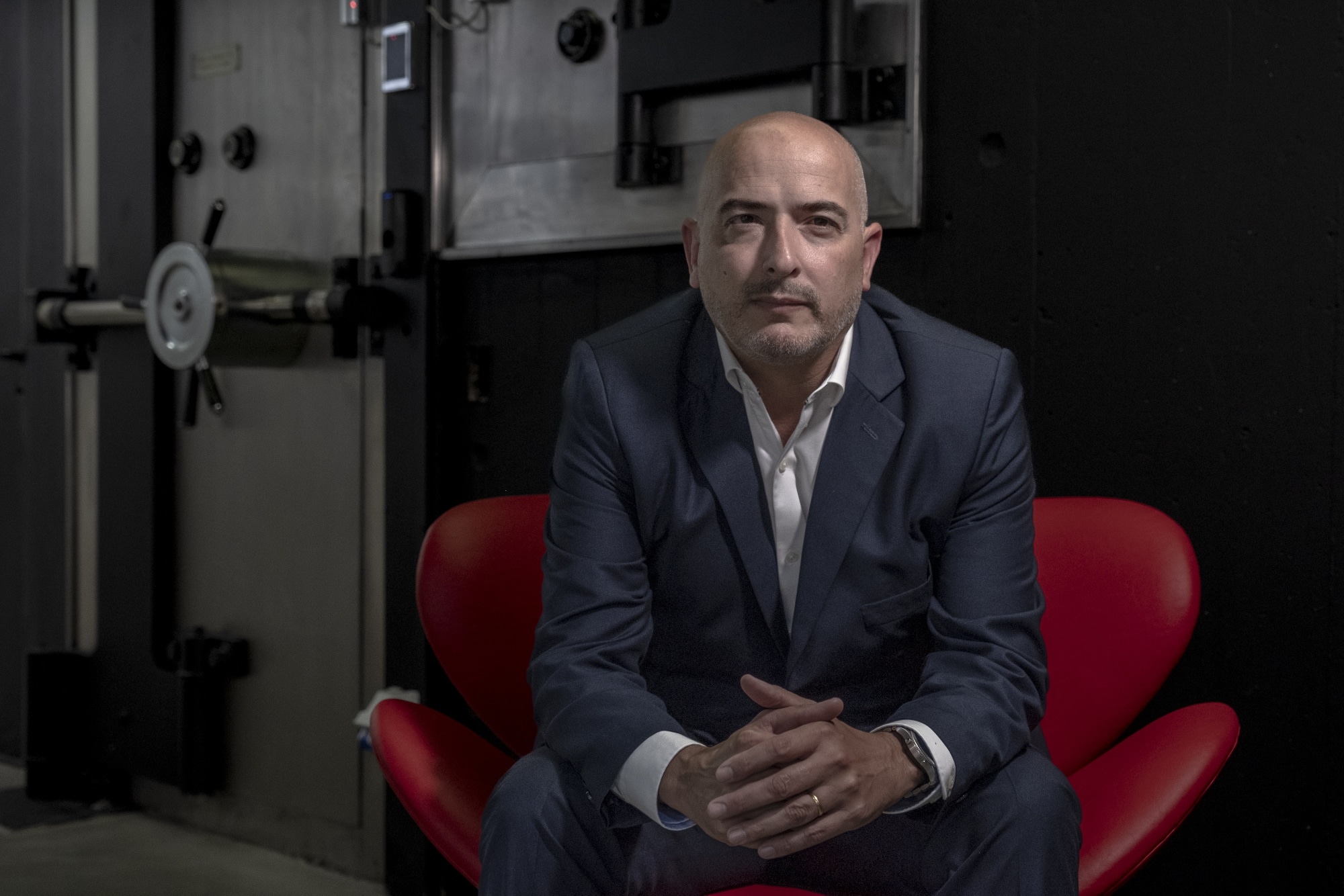
In a nondescript building in Buenos Aires, down four flights into a subterranean bunker, past a metal detector, biometric eye scanner and then bulletproof doors, Piantoni shows off a room lined floor to ceiling with safety deposit boxes. They're mostly filled with cold hard cash — the total amount he insures is at least $225 million for clients across INGOT's branches in Argentina and Uruguay.
“Money should be at the bank. The logical thing would be for it to generate interest in a normal country,” Piantoni said. “Sadly, we have a long way to go before we're a normal country.”
Poverty levels have climbed past 40% in Argentina, up 5 percentage points in four years. After years of budget deficits funded by printing money, confidence in the government and banking system are in the tank. The peso has lost more than 92% of its value since 2019.
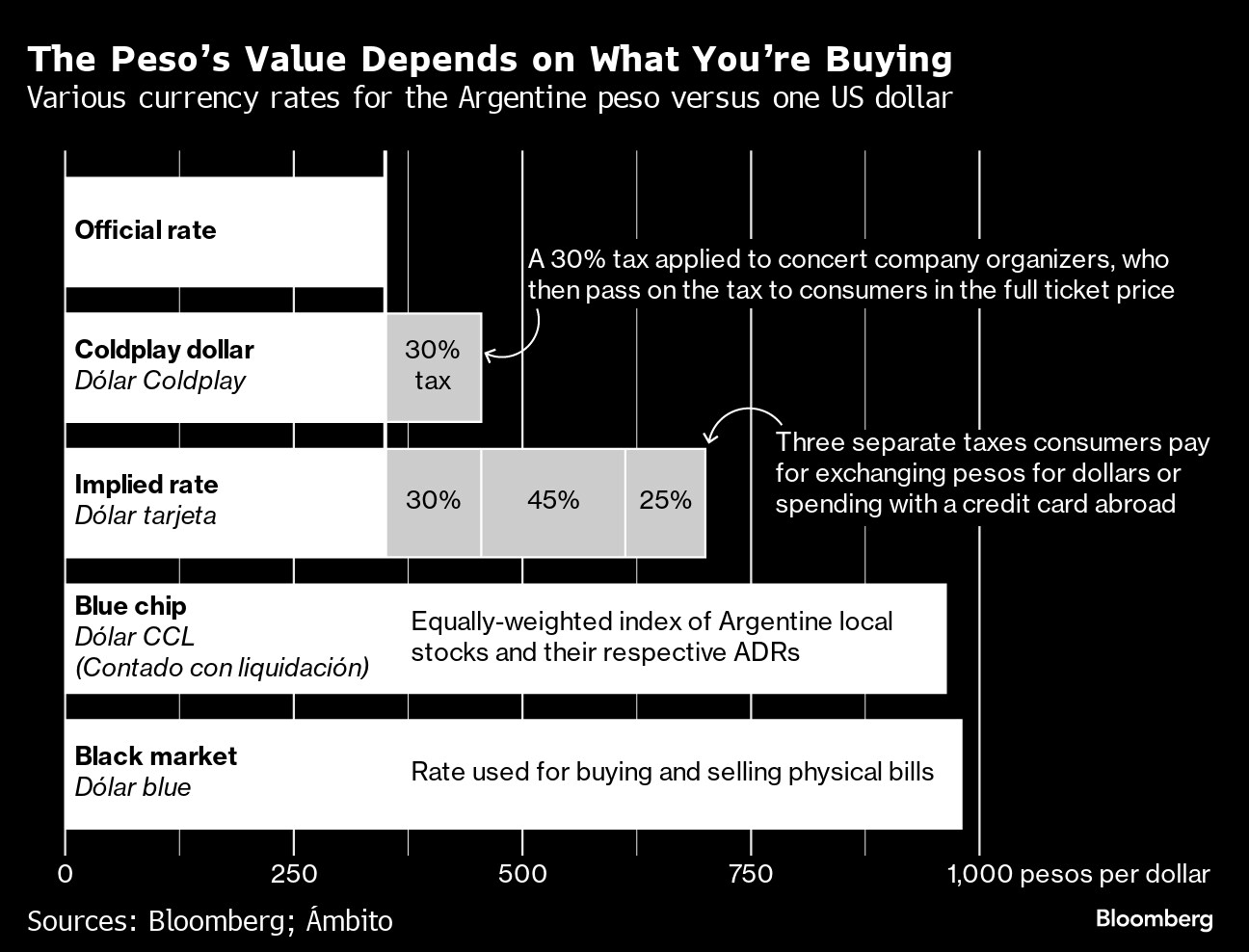
The exact decline depends on which exchange is used to measure the collapse. While the government holds the official level at 350 pesos per dollar, currency controls make it almost impossible to access that rate. So other methods to transact have cropped up, creating over a dozen parallel rates.
Some aspects of daily life already operate in dollars. Real estate, high-end restaurants and most imports are priced in greenbacks now. Because transactions take place in cash — Argentines tell tales of walking through the streets carrying backpacks loaded down with hundreds of thousands of dollars — robbers are on the hunt for anyone who might be transporting wads of money.
“Ninety percent of transactions are done exclusively in cash,” said Maximiliano Gotz, a real estate agent. “I mean literally bags of money with dollar signs on them.”
Read More: Milei Must Dollarize at Once, Says Man Who Did It in Ecuador
The peso's plunge on parallel markets has accelerated since Milei's victory in the primaries, and the lower it goes the easier dollarization may be because it will require fewer greenbacks, a dynamic Milei acknowledges is advantageous for his plan, even if it hurts Argentines without dollars.
But there's also a risk that the peso will fall sharply, stay low, and dollarization never comes to pass. That would almost certainly lead to hyperinflation — defined as prices rising at a monthly rate of at least 50%. Argentina's most recent reading was 12.7%.
Dollarization requires moving swiftly, according to Claudio Porcel, founder of Balanz Capital, a local brokerage.
Avoiding “hyperinflation is like being in the middle of the African savannah and there's a lion coming at you and you only have one bullet,” Porcel said. “You better put the bullet between the eyes.”
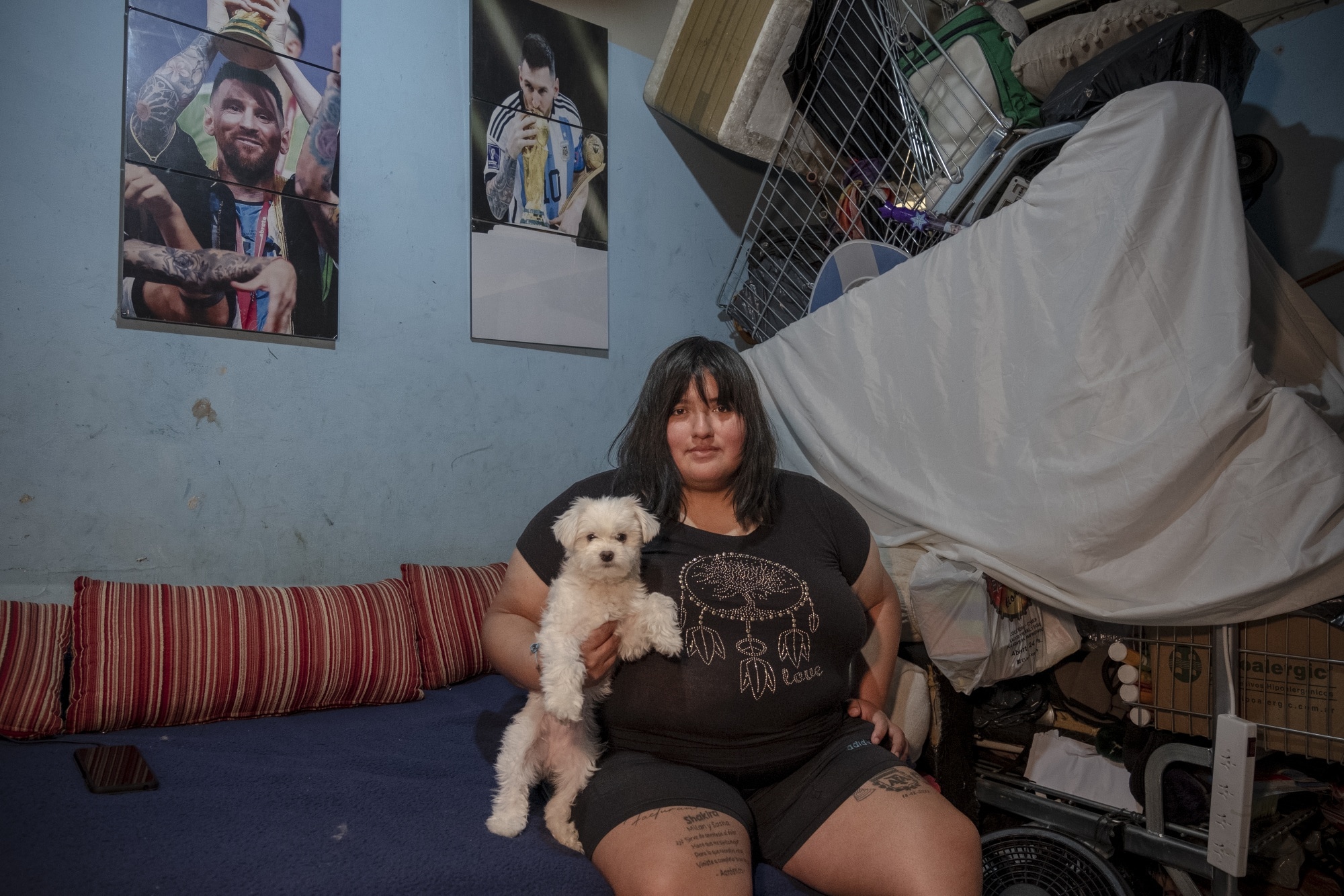
All Noelia Zuniga wants is dollars.
For years, Zuniga, a 27-year-old immigrant from Peru, has been converting nearly every spare peso she earns from selling coffee on the streets of Buenos Aires into dollars and then squirreling them away in a hiding spot in her cluttered, windowless apartment. A thief walked off with a chunk of them one day, setting her back more than a year as she saved up for a little Fiat sedan she finally bought in July last year.
So Zuniga, just like Romero, the accountant, is unfazed when she hears about the risks associated with dollarization. It's also risky, and a headache, not to be able to simply put money in a bank and trust it will maintain its value.
At one point in the conversation, Zuniga starts gushing about Lionel Messi and the way he led Argentina to its first World Cup championship in three decades last year. Like many people here, she is obsessed with soccer and Messi. And now, she sees Milei (and his economic plan) the same way — the savior who will magically fix the country's problems.
“He's like Messi and the ball,” she says. “I just know he's going to pull it off.”
--With assistance from Mathieu Benhamou, Ignacio Olivera Doll and Patrick Gillespie.
More stories like this are available on bloomberg.com
©2023 Bloomberg L.P.
Essential Business Intelligence, Sharp Market Insights, Practical Personal Finance Advice, Daily Fuel, Gold and Silver Prices and Latest Stories — On NDTV Profit.