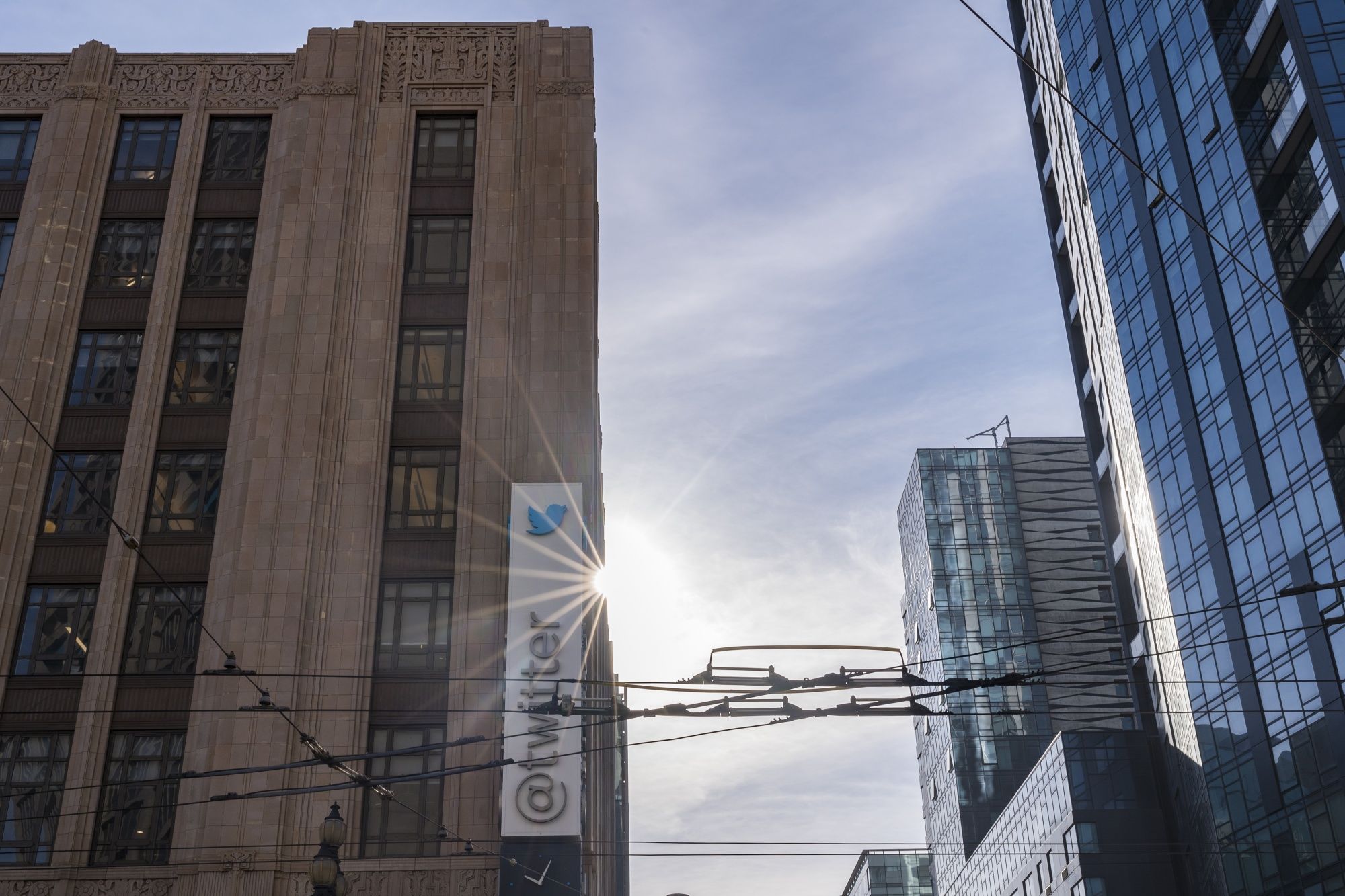
(Bloomberg Businessweek) -- San Francisco has become perhaps the primary example for what happens when a city's economic and creative opportunities no longer outweigh the costs and inconveniences of living there. It's struggled more than any major US city to recover from the pandemic, leaving critics to gleefully predict that its decline could be irreversible.
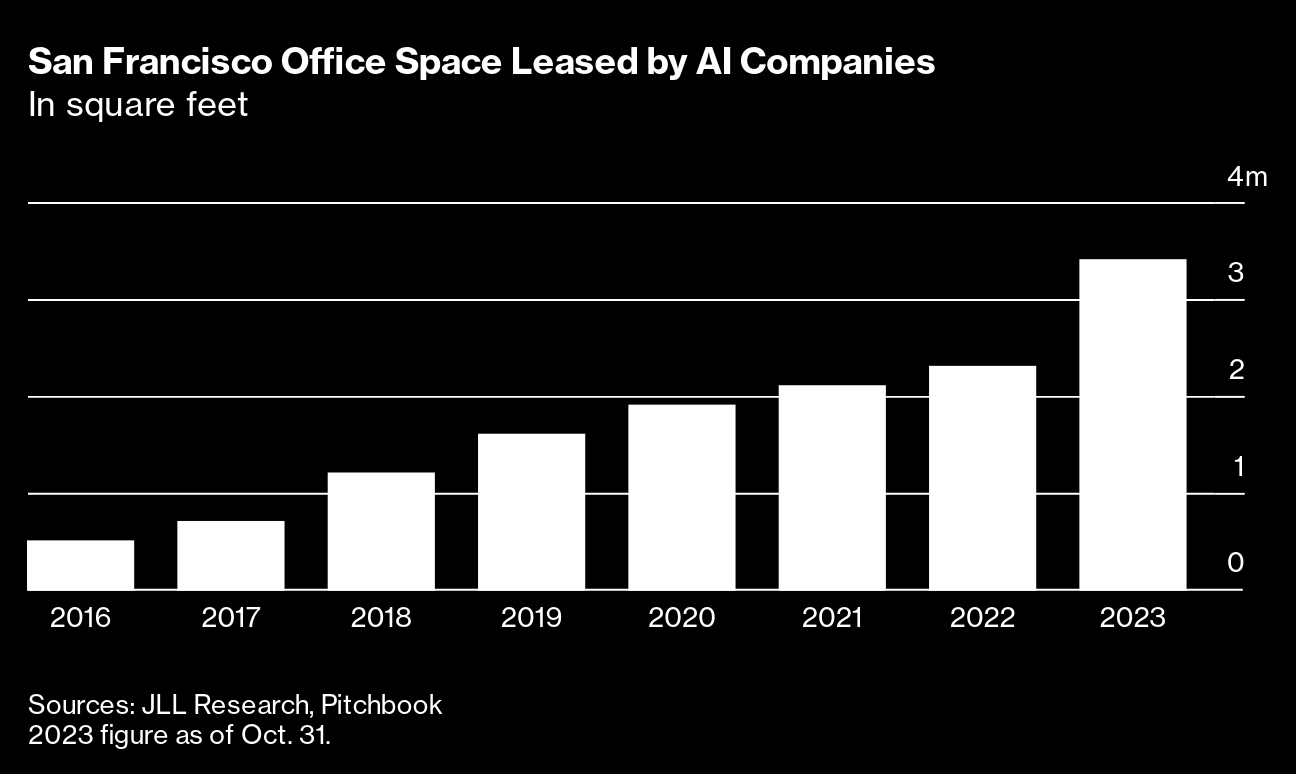
Artificial intelligence companies apparently haven't gotten the memo. They're flocking to San Francisco, and many are asking workers to show up in person most of the time. The city's office vacancy rate reached a record 34% in the third quarter, according to the real estate brokerage CBRE Group Inc., yet AI companies have signed deals for more than 1 million square feet of San Francisco office space so far this year. That brings the industry's total footprint to 3.4 million square feet, according to the real estate services company Jones Lang LaSalle Inc., up from 2.3 million square feet last year and seven times what it was in 2016.
OpenAI, which set off the current AI craze with last year's release of ChatGPT, has a full office of employees in its Mission District headquarters most weekdays. Cohere, a Toronto-based AI startup, is setting up a second headquarters in the city. Anthropic, another multibillion-dollar AI upstart, is taking over Slack Technologies Inc.'s old headquarters, a 230,000-square-foot space in the city's South of Market, or SoMa, neighborhood, according to the .
Charlie Cutler, a real estate agent at Innovation Properties Group, describes a “gold rush” in the eastern corner of the Mission, bordering Potrero Hill and SoMa. This slice of the Mission has been dubbed “Area AI.”
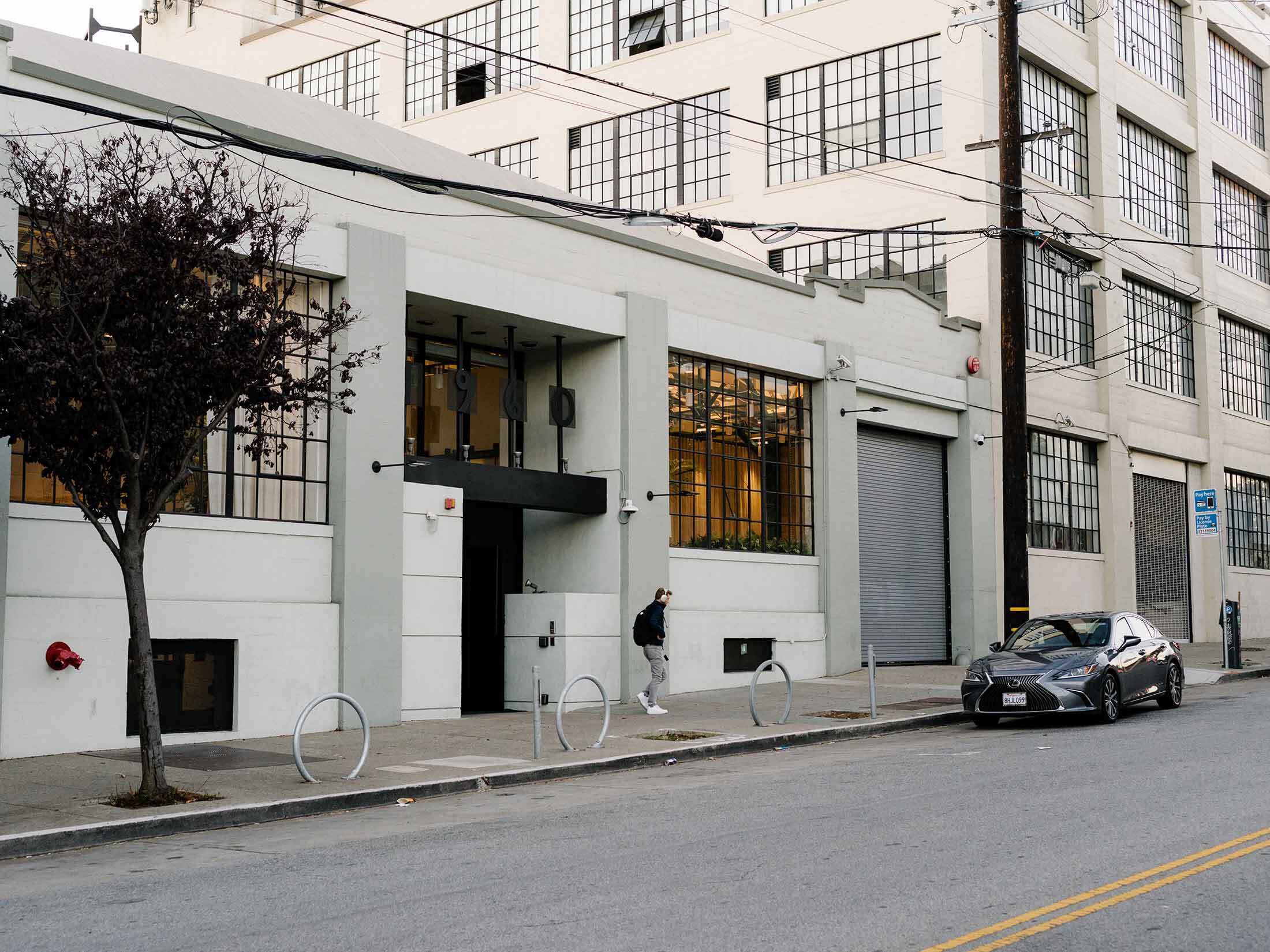
All year, people have been referring to Hayes Valley, another nearby neighborhood, as “Cerebral Valley,” because of the recent reemergence of so-called hacker houses—spaces where people involved in tech live communally and work on their startups, often in repurposed homes. Although Cutler's clients are looking for more conventional offices, he says some have certain unusual features. “A lot of offices in San Francisco have showers and 24-hour access. People work at all different times and are coming from all over the world,” he says. “They're 24-hour properties.”
Cleanlab, a startup that makes software to help improve datasets used by AI companies, opened an office in the Mission in June. It's equipped with hotel-style rooms that have bathrooms with showers, which the company keeps stocked with towels, says Curtis Northcutt, its co-founder and chief executive officer. These rooms are occupied “most of the time,” he says, often with remote staffers who are visiting and considering a move to San Francisco.
Cleanlab is planning to double its staff to about 40 people in the next year, most of whom will be based in San Francisco. “We need people to come live in SF,” Northcutt says. He asks his staff to come in at least twice a week.
Konstantine Buhler, a partner at Sequoia Capital, calls AI a “creative discipline” that requires in-office work, because much of the industry is still in its infancy. “When you're going from zero to one, we don't know what ‘possible' is,” Buhler says. “This type of work is best done with small teams in person. That's how breakthroughs happen, when something highly technical or scientific has a clustering of people trying to figure it out together.”
As of early November, San Francisco's office workers were showing up to work at about 44% of their pre-pandemic rates, according to Kastle Systems, which gathers data on how often employees check into their offices using key fobs or other devices. New York's occupancy average was 51%, while Chicago's was 55%. People in tech see AI as a way to bring San Francisco back to life. Kim-Mai Cutler, a partner at Initialized Capital, says AI is offering “promising green shoots” for a city that's suffered deeply over the past three years. “The crater left by the pandemic is very large,” says Cutler. “But the Bay Area is at the forefront of the most important field in the world right now.”
The AI boom has also been a boon to other businesses whose success relies on San Francisco's biggest industry. Mickey Du, CEO of BrewBird, which makes a single-serve coffee maker, began placing its machines in offices in February. He says at least one-third of BrewBird's potential clients have a strong AI component. “Max productivity means you need to invest in the infrastructure, the culture and the experience that drives people in office,” Du says.
More stories like this are available on bloomberg.com
©2023 Bloomberg L.P.
Essential Business Intelligence, Sharp Market Insights, Practical Personal Finance Advice, Daily Fuel, Gold and Silver Prices and Latest Stories — On NDTV Profit.