Farmers Face Debts As Banks Turn Risk-Averse During Pandemic
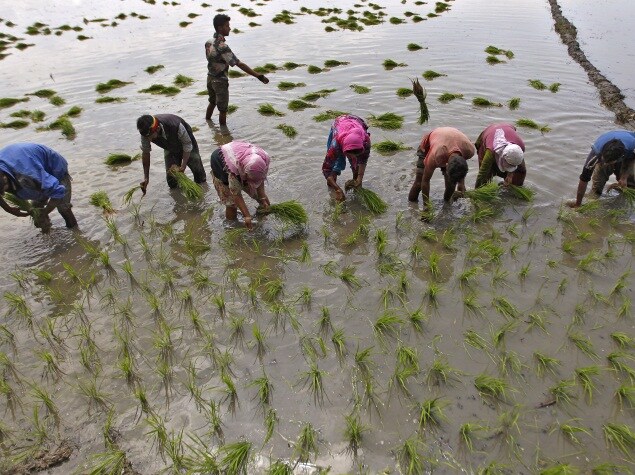
Last month, Dnyaneshwar Siddhanth, a farmer from Maharashtra, was in desperate need of money to buy seed and fertilizer as the monsoon sowing season approached. But after being rejected by his bank for a loan despite several attempts, Siddhanth finally borrowed Rs 1.5 lakh from a moneylender at a rate of 60 per cent annually. Amid India's worst economic slowdown in decades due to the novel coronavirus pandemic, millions of farmers like Siddhanth are being shunned by banks as lenders turn cautious due to rising bad loans.
That is forcing them to turn to illegal moneylenders who are charging increasingly exorbitant rates, according to over a dozen farmers and bankers that Reuters spoke to.
Agriculture accounts for near 15 per cent of India's $2.8 trillion economy and is a source of livelihood for more than half of its 1.3 billion people. Higher interest rates will reduce farm earnings, impacting overall rural incomes which are key to reviving the economy.
"Most of the profit goes to paying interest to a private moneylender," Siddhanth said.
"Everything now depends on monsoon rains. If the crops fail, then I will have to sell land to repay the loan."
Lenders Hamstrung
Till last year private moneylenders were charging 24-36 per cent interest, but are now asking for 48-60 per cent as more farmers seek loans, said Prashant Kathe, another farmer who has borrowed Rs 3 lakh rupees at a 60 per cent interest rate.
Typically, banks charge anywhere between 4-10 per cent for crop related loans.
The government has been instructing banks to increase lending, but bankers say they are choosing to be cautious.
Economists forecast India's economy to shrink by 5.1 per cent in the current fiscal year, the weakest performance since 1979.
Lenders also complain that they are caught up by farm loan waiver schemes announced by several governments to win over farmers ahead of elections.
"Even though some of the states announced the scheme years ago, the money has still not reached the bank so technically the farmer's account is a non-performing asset for us and we can't give more loans till the outstanding is cleared," said the head of agriculture lending at a large state-owned bank.
Last year, the government in India's richest state, Maharashtra, had announced that banks will write off loans of up to Rs 2 lakh to distressed farmers.
Siddhanth, who already owed a bank Rs 1.78 lakh from a previous loan, was covered under the scheme. However, the state government is yet to provide funds to repay it, and nearly one-third of the loan remains outstanding.
As of October 2019, 10 states that had announced farm loan waivers since 2014-15 had yet to complete the promised loan write-offs, according to local media reports.
"Only about 30-35 per cent of the promised amount by the various state governments has been sanctioned to the bank," said a senior banker who didn't wish to be identified.
The high level of bad loans in the agriculture sector is another deterrent to more lending.
The share of soured loans in the segment has risen from 8.4 per cent as of September 2018 to 10.1 per cent as of March 2020, at a time when the overall share of bad loans in the banking sector has been going down.
"There is reluctance to lend in the agri segment due to poor asset quality, as a result banks are more keen to lend if there is gold as collateral, but otherwise fresh lending in the segment has been tepid," said Anil Gupta, analyst at credit rating agency ICRA.
Between March and June this year, lending to the agriculture sector contracted 1.8 per cent, according to the Reserve Bank of India. During June 2019-2020, lending to the sector grew by 6.7 per cent compared to 11 per cent in the same period the previous year.

-
We May Need Another Tukaram Mundhe To Fight Air Pollution | The Reason Why

Developers may install basic measures such as sprinklers and green nets, resume work, and continue violating rules when this equipment stops working.
-
Extracting Value From Battery Scrap Could Be Challenging For India | The Reason Why
A discarded lithium-ion battery still contains valuable materials such as lithium, nickel and cobalt. These can be recovered and reused. When such batteries are crushed and shredded, they produce a dark powder called black mass.
-
One El Nino, India Can Handle. Two Could Break The Granary
India's grain stocks can absorb one bad year, but a second El Nino could drain the buffer in two to three years, economists say.
-
India's Troika Of Good Luck | Joining The Dots
As Jensen Huang's exit drags Nvidia down, a cooling AI trade and resilient earnings have revived investor interest in India. A likely RBI rate hike looms.
-
Talking Points This Week: Leadership Shock At Nvidia, Earnings Strength, And The Fog Over Hormuz
The Anthropic IPO pricing and first trading day, Nvidia's upcoming earnings, and any fresh signals from Iran will set the tone for the following week.
-
Signature Play: The Classic Cocktail Is Dead. Or Is It?
Classic cocktails are disappearing from India's cocktail menus. But they're still being ordered, taught to bartenders and borrowed from. So, who's really having the last drink?
-
A New Samvat Wishlist: Inclusive Prosperity And Human Development
India has strengthened its economic foundations through infrastructure, digital access and enterprise. Its next growth chapter must deepen productivity, create better livelihoods and widen participation in prosperity.
-
Love, Sex Aur Dhokha: The Audacious Plot To Spy On Jensen Huang
A Taipei dinner, a Singapore chip buyer and a suspected Chinese asset: inside the alleged spy operation that got close to NVIDIA's Jensen Huang.
-
Ten Things I Learnt This Samvat
Patience can be a trap. Cheap stocks can stay cheap. Leverage can wipe you out. What did Samvat 2082 teach us? Niraj Shah writes on 10 lessons from the year gone by.
-
Talking Points This Week: Tech Nerves, FII Buying, And A Faraway Banking Shock
The global markets are not shining this Diwali. The exception in the large markets is, India.









