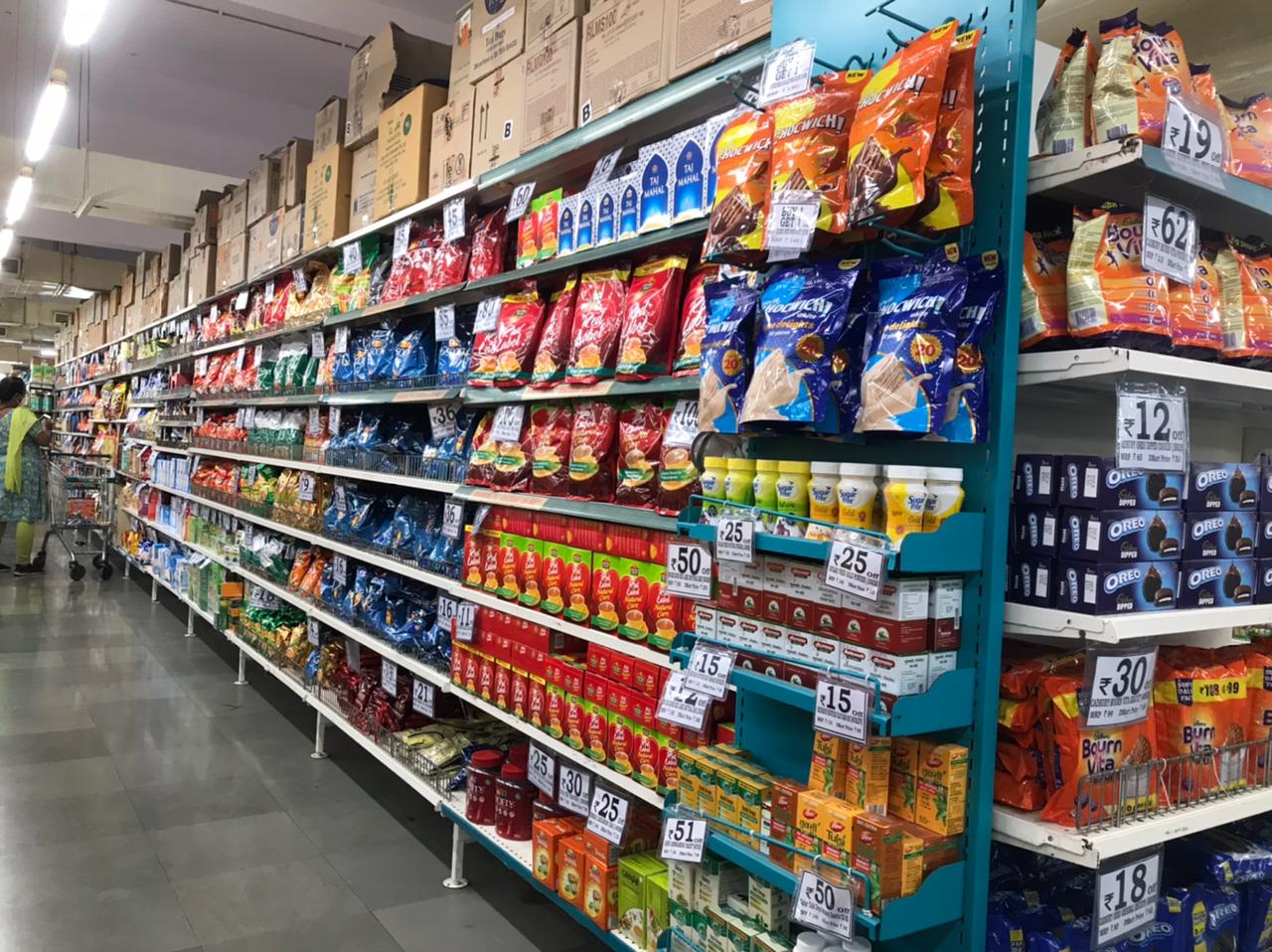
India's fast-moving consumer goods industry is rooting for the upcoming pre-election interim budget to enhance low-income customer's buying power in order to reverse the year-long slowdown.
The country's consumption story has remained a baffling tale of contrasts after Covid-19 pandemic, exacerbated by inflation and patchy monsoons.
Companies are still not seeing uniform growth across consuming classes, as indicated in the quarterly earnings of Hindustan Unilever Ltd. and Colgate-Palmolive India Ltd. While the premium segment is growing despite inflation, the low rural offtake reflects income stress among households.
This has caused HUL, whose performance is seen as a proxy for the broader consumer sentiment, to report muted volume expansion. The Surf Excel maker also reported flat revenue growth on account of price cuts it had taken to counter downtrading to lower-priced regional brands.
Colgate, however, displayed strong pricing power amid input cost deflation and a focus on premiumisation. But that's not driving a pick-up in the volume trajectory, which remains a concern, especially in rural markets.
One needs the entire income pyramid, and not just the affluent class, to spend to jumpstart growth for the consumer goods sector, which analysts have begun to call 'slow-moving', with persisting volume woes.
The Finance Minister's declaration that it will be a vote of account suggests that significant policy announcements are unlikely in this interim budget. Yet, the significance of this budget should not be understated in the run-up to the 2024 general elections, according to the soaps-to-staples makers.
While the key expectation from the government is to foster rural demand, the $110 billion industry is also seeking higher thrust on capital expenditure, a reduction in corporate tax rates, and incentives to facilitate exports.
"Urban growth continues to outpace rural, and we see premium segments doing better than mass," said HUL's Managing Director and Chief Executive Officer, Rohit Jawa, during the post-earnings media briefing. Notwithstanding high competition from local peers, rural demand weakness is a bigger concern that requires "stronger support" from the government, he said.
Continued investments in rural areas that will provide jobs and improve the non-farm income of households are needed to ensure demand recovery, he said.
"The upcoming interim budget is expected to navigate the immediate challenges faced by sections of the economy while fostering a vision for sustained economic growth," said Aasif Malbari, chief financial officer at Godrej Consumer Products Ltd. Malbari's wish list includes proactive measures aimed at future control of inflation and stimulating consumption in the larger economy, rural job creation, incentives for capital expenditure, and incentivising innovation, research and development.
Rural markets account for 40% of the country's total FMCG consumption.
Adani Wilmar Ltd. Manging Director and Chief Executive Officer Anghsu Mallick, too, hopes for measures that will drive sustainable growth, especially in the rural sector.
"We recognise the vital role rural economies play in India's economic growth and emphasise the need to introduce schemes that would boost rural consumption as we look forward to a market that is less volatile in 2024," he said. New policies that safeguard the interests of oilseed farmers and the oleochemical industry are anticipated, Mallick said. "This will have a positive ripple effect on industries connected with the rural landscape."
The Union Budget 2024 should foster investments to balance economic recovery across markets, according to Krishnarao Buddha, senior category head, Parle Products Pvt. "Enhanced focus on programs that aim to increase employment opportunities will give a boost to the rural economy and, in turn, increase their purchasing capacity," he said, adding that a balanced rural growth is "crucial for the FMCG sector for inclusive development.".
Another challenge facing the FMCG industry is the lack of adequate liquidity, which is impeding the growth of the traditional general trade channel.
"With higher disposable income and a continuous cycle of job creation, there will be increased consumer confidence and access to credit, essentially furthering the FMCG growth engine," Buddha said.
Growth in infrastructure and technology are also key areas to focus on in order to recover from the effects of the pandemic, he said.
Continuation of policies, such as increasing minimum support prices for agricultural produce, sustained investments in rural infrastructure projects, efficient implementation of direct benefit transfer schemes, and promoting robust crop sowing practices, are the key recommendations, and the focus should be on the local implementation of government policies, said Anand Ramanathan, partner and consumer industry leader- consulting, Deloitte India,.
"This creates a conducive environment for good crop production to match demand, helps keep prices in check, and strengthens rural demand," he said. Furthermore, the government's thrust on capital expenditure and private-sector manufacturing and service activity should also support income generation and bolster economic activities, Ramanathan said.
"The FMCG industry is hopeful for a positive change after a tough 2023," said Manish Aggarwal, director-Bikano, Bikanervala Foods Pvt. He expects the government to "invest adequately" in boosting the rural economy.
He recommended increased funding for the agriculture accelerator fund to improve farming practices by utilising new technology, particularly enhancing storage facilities. "This could contribute to better storage solutions, benefiting farmers and the overall FMCG sector," Aggarwal said.
Vikram Agarwal, managing director of Greendot Health Foods Pvt.—known for its nacho crisps brand Cornitos—is seeking budgetary measures that enhance the competitiveness of the food sector in the international market.
"We request the government to allocate funds for export incentive schemes, coupled with subsidies, to facilitate overseas participation in major food shows. These initiatives will play a pivotal role in promoting the sector's global presence as well as stimulating innovation at home.
The Union Budget 2024 will be presented by Finance Minister Nirmala Sitharaman on Feb. 1.
Disclaimer: NDTV Profit is a subsidiary of AMG Media Networks Limited, an Adani Group Company.
Essential Business Intelligence, Continuous LIVE TV, Sharp Market Insights, Practical Personal Finance Advice and Latest Stories — On NDTV Profit.