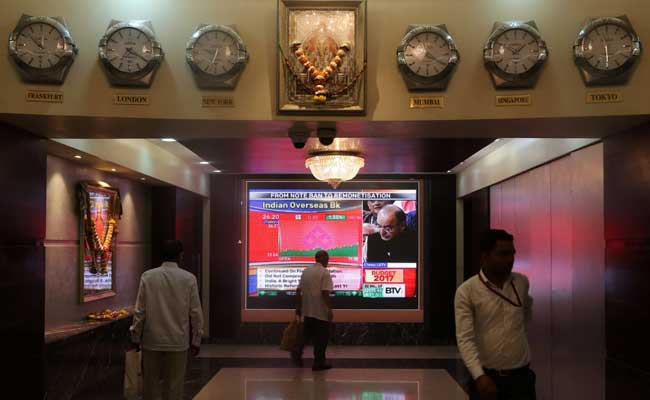
Finance Minister Arun Jaitley announced increases in spending on rural areas, infra and fighting poverty.
The Union Budget for financial year 2017-18 offers hikes in government spending and cuts in taxes as Prime Minister Narendra Modi promises to help the poor and to win back the votes of those hit by his crackdown on black money.
Finance Minister Arun Jaitley, while presenting Union Budget in Parliament on Wednesday, announced increases in spending on rural areas, infrastructure and fighting poverty, and sought to assure lawmakers and voters that the economic impact of the government's cash crackdown would wear off soon.
The following sectors/companies look set to benefit or be hurt by the Budget proposals:
LIKELY WINNERS
Real estate: Giving infrastructure status to affordable housing is meant to help developers raise money easily and cheaply, thereby reducing construction costs. PM Modi has promised housing for all by 2022.
Affordable housing developers like Mahindra Lifespace, Ashiana Housing, Tata Housing and Value and Budget Housing Corporation look set to benefit.
Long-term capital gains tax on property sales will be levied two years after the asset's purchase, reduced from three years previously. This should boost home sales, benefiting developers like DLF Ltd, Oberoi Realty, Godrej Properties and Prestige Estates.
Infrastructure: Mr Jaitley plans to spend Rs 3.96 lakh crore ($59 billion) on infrastructure projects in 2017-18, including Rs 64,000 crore on national and state highways. The plan is already boosting infrastructure companies and should also benefit tourism and real estate.
Companies such as IRB Infrastructure Developers, Larsen and Toubro and Gammon Infrastructure Projects look set to benefit.
Consumer goods and retail: Mr Jaitley aims to put more money in the hands of India's middle class by halving the individual tax rate for those earning between Rs 2.5 lakh and Rs 5 lakh to 5 per cent, and cutting corporate tax paid by small and medium enterprises to 25 per cent.
This is likely to boost spending and therefore consumer goods companies like ITC Ltd, Hindustan Unilever Ltd and Godrej Industries, Marico Ltd and Dabur India.
Agriculture: Allocated spending on rural, agriculture and allied areas is set to rise 24 per cent to Rs 1.87 lakh crore in 2017-18. Agriculture credit has been fixed at Rs 10 lakh crore and a long-term irrigation fund has been allocated Rs 40,000 crore. This will boost farm incomes and outputs, and the rural economy.
Companies that supply agricultural equipment and seeds, such as Jain Irrigation, Mahindra and Mahindra and Monsanto India are likely to benefit.
Gas importers: Mr Jaitley has halved import tax on liquefied natural gas (LNG) to 2.5 per cent to boost the use of cleaner fuel largely used by the power and fertilizer sectors.
This should help companies such as Petronet LNG and Gail (India) will benefit.
POTENTIAL LOSERS
Autos: The auto sector received no clarity on incentives for manufacturing electric and other clean fuel vehicles and scrapping old vehicles. Limiting cash transactions to Rs 3 lakh is likely to hurt car sales, especially luxury vehicles. The auto component sector had hoped to have tax incentives on research and development reinstated.
This is likely to disappoint carmakers like Tata Motors, Maruti Suzuki and Mahindra & Mahindra. Major auto part makers are Bharat Forge, Motherson Sumi Systems and Bosch Ltd.
Oil industry: Development levies for oil and gas companies were expected to come down but did not, a potential blow for Oil and Natural Gas Corp and Oil India Ltd.
Electronics: Mr Jaitley levied an additional duty of two percent on populated printed circuit boards, which account for up to 50 per cent of a smartphone's manufacturing cost. The aim is to push assembly of such boards in India and cut imports. This is likely to push up prices of imported mobile phones that are assembled in India.
Large corporates: The finance minister reduced corporate tax only for small and medium businesses, giving little benefit to India's large conglomerates. He has also levied a 10 per cent surcharge on individuals earning between Rs 50 lakh and Rs 1 crore.
Manufacturing: The manufacturing sector was hoping for a boost from a cut in rate of the minimum alternative tax and incentives for capital investment but there was no reduction.
($1 = Rs 67.5625)
© Thomson Reuters 2017
Essential Business Intelligence, Sharp Market Insights, Practical Personal Finance Advice, Daily Fuel, Gold and Silver Prices and Latest Stories — On NDTV Profit.