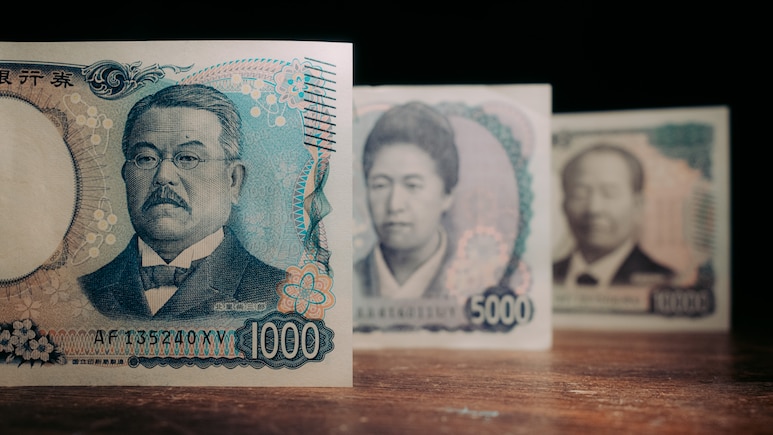
- The yen fell 1% against the dollar, leading losses among Group-of-10 currencies in New York.
- US economic data boosted Treasury yields, reducing bets on Federal Reserve rate cuts.
- Fed minutes showed officials may raise rates if inflation stays high, pressuring the yen.
The yen had its worst day this month amid a broader selloff in major currencies as US economic data supported higher Treasury yields and reduced bets on Federal Reserve interest-rate cuts in the months ahead.
The yen led losses among the Group-of-10 after the New Zealand dollar, falling 1% versus the greenback to 154.81 in New York. The Bloomberg Dollar Spot Index gained 0.5%, while the 10-year Treasury yield rose two basis points to 4.09%.
The release of minutes from the Fed's latest meeting, which showed several officials suggested the central bank may need to raise rates should inflation remain stubbornly high, further weighed on the yen.
Also Read | Layoffs Are Rising In Tech, But These Skills Are Helping People Unlock Better Pay
The Fed also confirmed that its trading desk in New York had requested quotes on the dollar-yen on behalf of the US Treasury.
“The recovery in US yields is weighing on the yen,” said Shaun Osborne, Scotiabank's chief currency strategist. “Near-term risks center on the broader market's tone, and the path for oil prices as market participants assess the situation in the Middle East.”
A reading of private payrolls Tuesday underscored investors' perception that the labor market remains on solid footing, while a slew of solid economic indicators Wednesday, including industrial production and business equipment orders, supported US yields. Higher US interest rates relative to peers around the world tend to boost the dollar against foreign currencies.
Rate Check
Speculation mounted last month that Japanese authorities, perhaps with rare assistance from the US, were prepared to directly step in to currency markets to support the yen. That culminated in a rapid rise in the Japan's currency in New York trading on Jan. 24 amid reports that the New York Fed had performed the so-called rate check. Such a move, when conducted by Japanese officials, has often been a prelude to actual intervention.
Treasury Secretary Scott Bessent said days later that “the US always has a strong dollar policy” and added that it was “absolutely not” intervening in the Japanese currency markets. Still, focus remains on a volatile market for Japanese government bonds and the yen, which earlier this year weakened toward levels last seen in 2024, when Japan stepped in to buy its currency.
What Bloomberg Strategists say...
“What has been clear year to date is that investors have been looking for reasons to sell the dollar. However, as fundamentals increasingly turn in its favor, those short positions are likely to become fatigued. The bias for the dollar from here is skewed to the upside.” -Skylar Montgomery Koning, Markets Live Strategist.
“It tells you how focused the administration is on stable US interest rates that they want to ensure stability in Japanese government bonds,” said Paresh Upadhyaya, a strategist at Pioneer Investments. "To do that they need a less volatile yen."
The Federal Reserve Bank of New York's contact of financial institutions this January to ask about the yen's exchange rate was done “solely” on behalf of the US Treasury, minutes of the Federal Open Market Committee's Jan. 27-28 meeting released Wednesday showed.
“In the days leading up to the meeting, the dollar had depreciated markedly after reports that the Desk had made requests for indicative quotes, known as ‘rate checks,' on the dollar– yen exchange rate,” the minutes said. "The manager noted that the Desk had requested those quotes solely on behalf of the US Treasury in the Federal Reserve Bank of New York's role as the fiscal agent for the US."
Essential Business Intelligence, Sharp Market Insights, Practical Personal Finance Advice, Daily Fuel, Gold and Silver Prices and Latest Stories — On NDTV Profit.