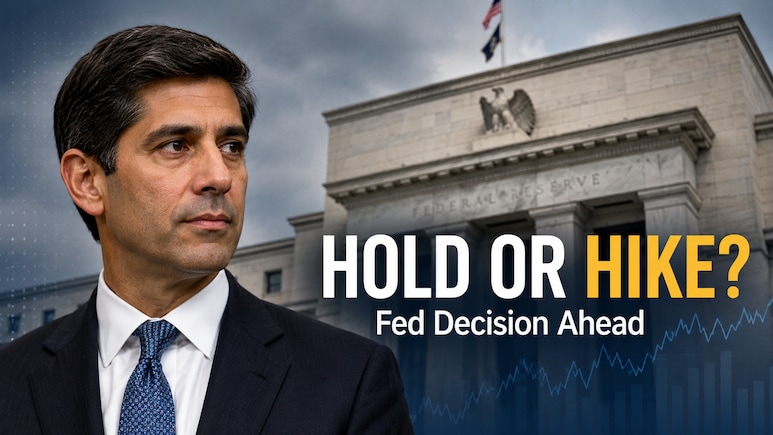
The U.S. Federal Reserve is widely expected to leave interest rates unchanged when it wraps up its two-day policy meeting on Wednesday. But unlike previous meetings, there's far less certainty about what comes next.
While most investors still expect the Fed to stay on hold, some policymakers have argued that inflation remains stubborn enough to justify another rate hike. Others believe it's still too early to tighten policy further.
That uncertainty has stemmed from Federal Reserve Chair Kevin Warsh, who has broken with the Fed's long-standing practice of signalling its next move well in advance. Instead, he has repeatedly said policy decisions will depend on incoming economic data, leaving markets with fewer clues about where rates are headed.
Also Read | Layoffs Are Rising In Tech, But These Skills Are Helping People Unlock Better Pay
Hold Or Hike? A Divided Fed
The Fed has kept interest rates unchanged throughout the year while assessing whether inflation driven by tariffs and higher energy prices following the Iran conflict would calm down on its own. That hasn't entirely happened.
Inflation has remained above the Fed's 2% target, prompting several policymakers to argue that interest rates may need to stay higher or even rise further to keep price pressures under control.
Recent projections also showed more officials expecting at least one rate hike this year, suggesting the debate within the central bank is becoming more evenly split.
Even so, Warsh has offered little indication of where he stands. Since taking over as Fed chair, he has argued that the central bank should stop signalling policy decisions months in advance and instead respond to economic data as it evolves.
Also Read: Hike Or Hold? Fed's Warsh Has Markets Unsure
Why Warsh May Choose To Wait
Even with some Fed officials leaning toward higher rates, analysts believe Warsh has several reasons to keep policy unchanged for now.
He recently suggested that one-off increases in energy prices or AI-related investment costs do not necessarily translate into persistent inflation. Instead, he argued that supply responses could eventually ease those pressures, reducing the need for immediate monetary tightening.
Warsh has also launched multiple task forces to examine whether artificial intelligence, productivity gains and broader changes in the economy require the Fed to rethink how it measures inflation and growth. Delivering a rate hike before those reviews are complete could undermine those longer-term policy initiatives.
What Markets Will Watch
The biggest focus may not be the rate decision itself but what Warsh says afterwards.
Investors will closely parse his comments for any indication of whether the Fed is becoming more comfortable with another rate hike later this year or still believes inflation risks can be managed without further tightening.
They will also watch for dissent within the Federal Open Market Committee. If more officials vote in favour of raising rates despite a decision to hold, it could signal that the Fed is moving closer to tightening policy in the coming months.
Whether rates stay unchanged or the Fed delivers a surprise hike, Wednesday's meeting is expected to provide the clearest picture yet of how Warsh intends to steer monetary policy as inflation remains above target and uncertainty over the U.S. economy persists.
Also Read: US Fed Prepping For Rate Hike This Week? What Bond Market Activity Suggests
Essential Business Intelligence, Sharp Market Insights, Practical Personal Finance Advice, Daily Fuel, Gold and Silver Prices and Latest Stories — On NDTV Profit.