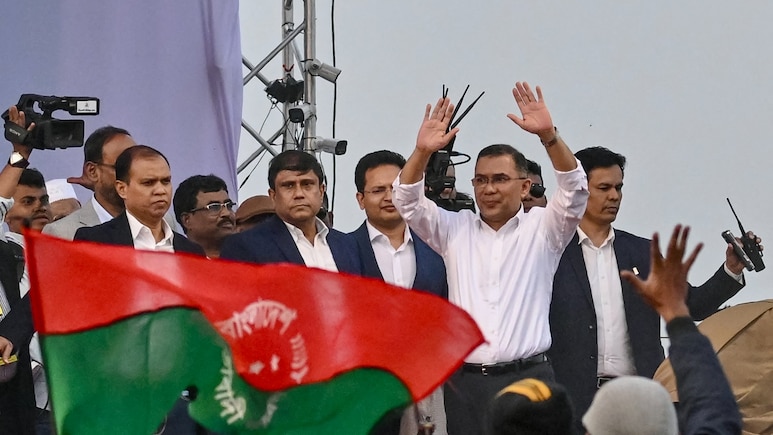
The Bangladesh Nationalist Party (BNP), led by Tarique Rahman, claimed victory on Friday in Bangladesh's first election since the 2024 student uprising, according to a New York Times (NYT) report.
As per reports, the BNP appears to have taken a clear lead over its erstwhile partner, Jamaat-e-Islami. Preliminary results show BNP nominees are leading in more than 175 seats, while Jamaat candidates are ahead in only 30. The Jatiya Sangsad, Bangladesh's national legislature, consists of 300 seats, meaning 151 are required for a majority.
Rahman, 60, made his return to Bangladesh in December 2025, ending almost two decades in Britain. From a distance, he has witnessed the nation's turbulent growth, a country established in 1971 with significant contributions from his father and long led by his mother.
Also Read | Layoffs Are Rising In Tech, But These Skills Are Helping People Unlock Better Pay
Also Read: Bangladesh Election Results: Tarique Rahman's BNP Set To Form Government
Who Is Tarique Rehman?
As the eldest son of former Bangladesh President Ziaur Rahman and ex-Prime Minister Khaleda Zia, who held office three times, Rahman's return coincides with widespread turmoil, ongoing clashes, and contentious debate over the interim administration.
He is currently the Chairman of the BNP. Tarique Rahman's party entered the nation's first election since the 2024 student-led uprising with strong expectations of victory.
General Ziaur Rahman established the Bangladesh Nationalist Party (BNP) on Sept. 1, 1978. A prominent figure in Bangladesh's liberation, he set up the first civil administration in Roumari after the area was reclaimed from Pakistani forces.
Following the death of Khaleda Zia, Rahman formally assumed the role of BNP chairman in December 2025, having previously served as the party's acting leader.
Nicknamed the “dark prince,” Tarique Rahman wielded considerable influence from 2001 to 2006, during the BNP–Jamaat-e-Islami coalition government led by Khaleda Zia. Based at Hawa Bhaban, a two-storey building known for its ‘wind tunnel', the office effectively functioned as a “shadow PMO.”
In the early 2000s, Tarique Rahman rose to prominence within the BNP, widely regarded as the heir to his mother's political legacy. After serving 18 months in jail and being released on Sept. 3, 2008, he moved to the United Kingdom.
Under the Sheikh Hasina administration, he faced convictions in multiple cases, which the BNP claimed were politically driven against the opposition at the time. Even from the UK, he remained actively involved in party affairs and stayed influential in BNP politics.
Between 2006 and 2008, Bangladesh was engulfed in violent unrest as the BNP and Awami League clashed over elections originally scheduled for mid-November 2006.
The turmoil prompted the establishment of a military-backed caretaker government, which faced allegations of curbing basic freedoms and trying to engineer a political alternative excluding both Zia and Hasina. The elections were finally held in 2008, resulting in an Awami League victory.
In May 2007, the caretaker government detained Rehman, who remained in custody for 17 months, facing multiple charges. Later, he was convicted in absentia for offences that reportedly included money laundering and involvement in a purported assassination plot against Hasina.
According to an Al Jazeera report, these convictions were annulled after Sheikh Hasina was removed from office during the student-led uprising of August 2024. Following his release, Rahman travelled to London for medical treatment, claiming he had been tortured while in custody.
Essential Business Intelligence, Sharp Market Insights, Practical Personal Finance Advice, Daily Fuel, Gold and Silver Prices and Latest Stories — On NDTV Profit.