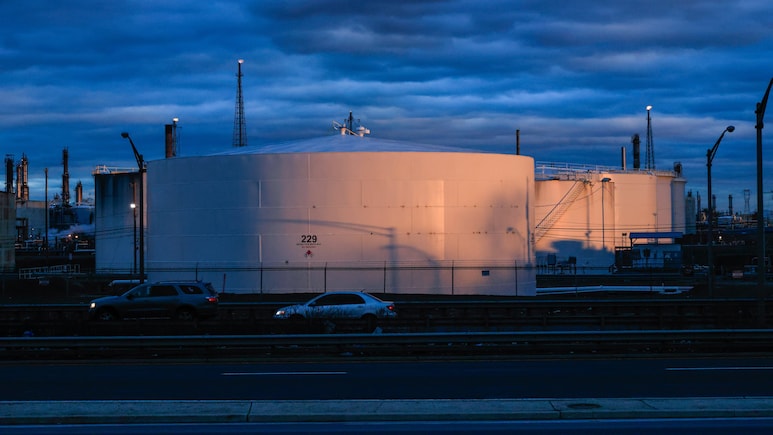
- Venezuela's legislature will discuss reforms to end the state oil monopoly
- Reforms allow private firms to produce and sell oil with lower taxes
- Oil royalties to drop from 33% to 20%, income tax from 50% to 30%
Venezuela's legislature on Thursday is set to discuss oil reforms that, if implemented, will unwind the state monopoly of the industry and let private companies produce and sell crude from the country's vast reserves.
The proposed changes to the country's landmark hydrocarbon law would loosen the role of state-run Petroleos de Venezuela SA, giving private businesses greater leeway to drill and market oil while lowering their taxes. The reforms, described by four people with knowledge of the matter, also would let companies settle legal disputes through international arbitration proceedings, rather than local courts.
Oil royalties would be reduced from 33% to 20%, while income tax would drop from 50% to 30%.
Venezuela's acting President Delcy Rodríguez announced on Jan. 15 her intention to reform the hydrocarbon law without providing details. The changes are designed to lure international oil companies back to Venezuela following the US capture of President Nicolás Maduro in a military raid this month, and their details could still change, the people said.
"This will allow investment flows to be directed to new fields, to fields where no investment has ever been made and where there is no infrastructure" Rodríguez told the National Assembly last week.
Although she was careful to frame the step as a "partial reform,” the changes would profoundly alter a 2001 law enacted under the late socialist leader Hugo Chavez that amounted to a nationalization of the industry and prompted most foreign oil producers — including ConocoPhillips and Exxon Mobil Corp. — to leave.
That law requires Petroleos de Venezuela (PDVSA) to hold a majority stake in joint ventures with private or foreign partners, while granting the state-run company a monopoly on oil production and sales. It also bans international arbitration.
As Venezuela's oil production shrank in recent years, Maduro's regime sought ways to skirt the hydrocarbon law without gutting it. In 2020, the country adopted a law allowing production partnership contracts that didn't require firms to take a minority stake in a joint venture with PDVSA. But the new rules appeared to conflict with the older hydrocarbon law, and most international companies chose to stay away.
Now, Maduro's sudden removal has changed the political calculus. National Assembly President Jorge Rodríguez said on Tuesday that “We should not be worried” about adapting the hydrocarbons law to the “new economic reality."
ALSO READ: US Captures Seventh Sanctioned Oil Tanker Linked To Venezuela
Essential Business Intelligence, Continuous LIVE TV, Sharp Market Insights, Practical Personal Finance Advice and Latest Stories — On NDTV Profit.