US Fed Meeting Highlights: Divided FOMC Officials Hold Rate; Inflation Is 'Misbehaving', Says Powell
US Fed FOMC Meeting April: Markets anticipate no immediate rate cuts as policymakers weigh elevated energy prices and global uncertainties.

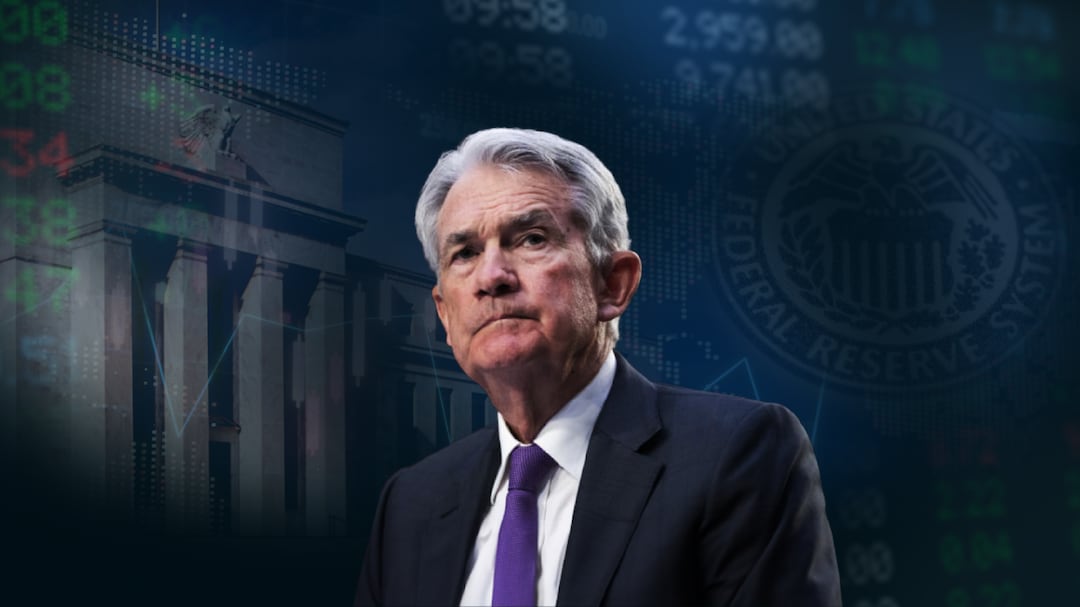
The US Federal Reserve has kept its key lending rates on hold, as the US-Iran war and resultant strain in energy supplies as sparked inflation concerns.
Accordingly, it has retained the benchmark lending rates, or the federal funds rate, in the range of 3.5%–3.75%. The decision was in line with estimate, as the CME FedWatch tool had projected a 99% probability of the Fed sticking to status quo.
"Inflation is elevated, in part reflecting the recent increase in global energy prices," said the statement issued by the Federal Open Market Committee (FOMC) following the conclusion of its two-day meeting on Wednesday.
Read more here.
US Fed Meeting Live: Key Highlights
That's all for today folks however before we part here are few points to note:
- Fed Holds Rates: The US Federal Reserve has kept its key lending rates on hold, as the US-Iran war and resultant strain in energy supplies as sparked inflation concerns. Accordingly, it has retained the benchmark lending rates, or the federal funds rate, in the range of 3.5%–3.75%.
- Divided Decision: Four officials voted against the decision, including three who objected to language in their post-meeting statement that suggested the central bank would eventually resume cutting rates. The 8-4 vote marked the first time since October 1992 that four officials dissented against a Federal Open Market Committee decision.
- Powell's Last Press Conference: While this was his last press conference as the Fed Chair, he said he will continue to hold the position of Governor.
- Slight Change In Statement on Middle East War: Officials made a slight change to their statement, adding some emphasis to a line describing uncertainty emanating from the war in the Middle East. The new wording referenced the “high level” of that uncertainty.
- Inflation: Fed Chair Jerome Powell said that inflation is 'misbehaving' and a little restriction is the right place to be. He also added that inflation has moved up recently and is elevated compared to our 2% long-run goal. Powell further added that he expects tariff inflation to recede in the next two quarters.
US Fed Meeting Live: Stock Market Check
After Powell ends his speech markets continue to decline. Dow Jones falls 0.69%, S&P 500 slumps 0.15% and Nasdaq trades 0.04% lower.
US Fed Meeting Live: Energy Inflation Should Go Through Fairly Quickly, Says Fed Chair
Energy inflation should go through fairly quickly, said Fed Chair Powell.
US Fed Meeting Live: Fed Committed To Bringing Inflation To 2% With Least Damage
Fed committed to bringing inflation down to 2% sustainably over time with least damage possible said Fed chair Powell.
Jerome Powell To Exit As Fed Chair But Retain Board Seat — 'Will Leave When Appropriate'
Federal Reserve Chair Jerome Powell on Wednesday confirmed that he would be exiting as the chief of the monetary policy authority, thereby indicating a smooth transition as President Donald Trump has picked Kevin Warsh as his successor.
Powell, while briefing the press following the conclusion of the Federal Open Market Committee (FOMC) meeting, said this was his "last" FOMC meeting as its chair. He, however, noted that he plans to stay on the Fed board till an appropriate time.
Read more here.
US Fed Meeting Live: Higher Gas Prices Means Less Disposable Income
Powell further added that higher gas prices mean less disposable income and it will hit GDP.
US Fed Meeting Live: Every Supply Shock Can Drive Up Inflation, Unemployment, Says Powell
Every supply shock can drive up inflation and unemployment says Powell.
US Fed Meeting Live: Powell On Impact Of Oil Shock
Powell said that impact on oil shock on US is less in comparison to Asia and Europe. He added that US is close to the neutral.
US Fed Meeting Live: Inflation Is 'Misbehaving', Says Powell
Fed Chair Jerome Powell said that inflation is 'misbehaving' and a little restriction is the right place to be.
US Fed Meeting Live: Powell On Policy Language
Powell on Wednesday said that policy stance is in a very good place to wait. He also said that there is no urgency to decide on policy language at this stage. Powell further noted that developments over the next 30 to 60 days could significantly change the outlook.
US Fed Meeting Live: Gold Price Plunges 1.5% As Fed Keeps Rates Steady, Cites War-Triggered Inflation
Spot Gold Prices plunged 1.5% after the US Federal Reserve decided to hold key interest rates steady for the third time.
As of 2:15 p.m. EST (11:46 p.m. IST), Gold traded 1.50% lower at $4,527.94 an ounce.
Fed has decided to hold rate steady in the 3.5%-3.75% range on elevated inflation triggered by spiking energy prices due to the Iran war.
Read more here.
US Fed Meeting Live: Labor Market Not Source Of Inflation Now
Jerome Powell on Wednesday said that he does not feel labor market is the source of inflation now.
US Fed Meeting Live: Will Consider Rate Cut After Energy & Tariff Shocks Pass
Jerome Powell said the Federal Reserve will wait for both energy and tariff shocks to pass before considering rate cuts, adding that the ongoing energy surge has not yet reached its peak.
US Fed Meeting Live: Inflation Elevated Compared To Goal, Says Powell
Inflation has moved up recently and is elevated compared to our 2% long-run goal, says Powell.
US Fed Meeting Live: Tariff Inflation To Recede In The Next 2 Quarters
Jerome Powell said he expects tariff inflation to recede in the next two quarters.
US Fed Meeting Live: Jerome Powell To Continue As Governor
While Powell confirmed this will be his last press conference as the Chair, he added that he will continue as the Governor for the time.
US Fed Meeting Live: Labor Demand Softened, Says Jerome Powell
Labor demand has clearly softened says chair Jerome Powell. He further added that estimates based on CPI suggest PCE rose 3.5% in March.
US Fed Meeting Live: Powell Confirms This Is His Last Press Conference As Chair
Fed Chair Jerome Powell on Wednesday confirmed this will be his last press conference as the chair.
US Fed Meeting Live: Energy Prices To Impact Inflation, Says Powell
Higher energy prices will push up inflation said Jerome Powell.
US Fed Meeting Live: US Economy Expanding At Solid Pace, Says Jerome Powell
US Economy is expanding at solid pace, consumer spending has been resilient and housing sector has remained weak.
US Fed Meeting Live: Dollar Rises
- The Bloomberg Dollar Spot Index rose 0.3%
- The euro fell 0.2% to $1.1690
- The British pound fell 0.2% to $1.3492
- The Japanese yen fell 0.4% to 160.18 per dollar
US Fed Meeting Live: Bond Yield
- The yield on 10-year Treasuries advanced five basis points to 4.39%
- Germany’s 10-year yield advanced four basis points to 3.11%
- Britain’s 10-year yield advanced seven basis points to 5.07%
US Fed Meeting Live: First Time Since 1992 That Four Officials Dissented Against FOMC Decision
The 8-4 vote marked the first time since October 1992 that four officials dissented against a Federal Open Market Committee decision.
Source: Bloomberg
US Fed Meeting Live: S&P 500, Dow Jones Down
After the Fed's FOMC held its rate for the third time, here's how Wall Street is reacting:
- S&P 500 down 0.25%
- Dow Jones down 0.74%
- Nasdaq fell 0.26%
US Fed Meeting Live: Fed Swaps Price 50% Of 25 bps Rate Hike By April 2027
Federal Reserve swapped price 50% of 25 basis points rate hike by April 2027.
US Fed Meeting Live: Developments In Middle East Contributing To High Level Of Uncertainty
"The Committee seeks to achieve maximum employment and inflation at the rate of 2 percent over the longer run. Developments in the Middle East are contributing to a high level of uncertainty about the economic outlook. The Committee is attentive to the risks to both sides of its dual mandate," Fed said in its statement on Wednesday.
US Fed Meeting Live: Job Gains Remain Low
Job gains have remained low, on average, and the unemployment rate has been little changed in recent months, the Fed said in its statement on Wednesday.
US Fed Meeting Live: What FOMC Said On Inflation
Inflation is elevated, in part reflecting the recent increase in global energy prices.
US Fed Meeting Live: Decision Split
Eight of the 12 FOMC members voted to hold rates. One voted to lower the rate, three supported maintaining the target range for the federal funds rate but did not support inclusion of an easing bias in the statement at this time.
US Fed Meeting Live: FOMC Holds Interest Rate At 3.50%–3.75%
The US Federal Reserve's FOMC decided to hold interest rate at 3.5%-3.75% target range.
Read more here
US Fed Meeting Live: Where To Watch Jerome Powell's Speech
Powell's press conference following the meeting will be streamed live on NDTV Profit's YouTube channel. The Federal Reserve will also livestream the press conference on its official platforms, allowing the public and investors to tune in. You can watch the streaming on Federal Reserve YouTube channel here.
US Fed Meeting Live: Inflation Numbers To Be Elevated
“The inflation numbers are going to be elevated, and at the same time, the higher we stay elevated, it comes out of growth,” Gregory Faranello, head of US rates trading and strategy for AmeriVet Securities told Bloomberg.
US Fed Meeting Live: Points That Will Impact FOMC Decision
Consumer prices surged in March by the most in nearly four years, driven largely by gasoline and diesel prices. At the same time, readings on the labor market and consumer spending remained robust. Retail sales soared in March by the most in a year, while job growth rebounded and the unemployment rate unexpectedly fell.
SOURCE: BLOOMBERG
US Fed Meeting Live: Fed Likely To Hold Rates
The April 2026 meeting of the United States Federal Open Market Committee (FOMC) is expected to end with rates unchanged at 3.50%–3.75% as questions linger over inflation and the labour market. Fed Chair Jerome Powell, possibly in his final meeting before successor Kevin Warsh takes over, is likely to emphasise caution.
US Fed Meeting Live: US Markets Decline Ahead Of FOMC Decision
US markets fell with Dow Jones down 0.60%, S&P 500 down 0.25% and Nasdaq down 0.36% ahead of Federal Reserve's rate decision.
US Fed Meeting Live: Oil Rates Spike: Brent Nears $120 As Trump Rejects Iran Offer On Solving Hormuz Gridlock
Brent Crude rose over 7% on Wednesday to touch $119.20 as US President Donald Trump rejected Iran's offer to loosen its chokehold on the Strait of Hormuz, reported Axios. The rising oil prices have raised concern that a prolonged closure of the Striat of Hormuz could fuel inflation and weaken the global economy.
US crude rose 6.61% to $106.58 a barrel, and Brent rose to $119.20 per barrel, up 7.14%.
US Fed Meeting Live: US Treasury Yields Hit Highest Levels Since March as Oil Surges
A renewed rally in oil drove bonds lower as stocks wavered ahead of the Federal Reserve decision amid mounting concern that elevated energy prices will curb the potential for interest-rate cuts this year.
Caution prevailed on Wall Street as a US-Iran standoff over the Strait of Hormuz dragged on, lifting Brent crude to around $117. Benchmark 10-year yields climbed to the highest in a month, hovering near 4.4%. While most shares in the S&P 500 retreated, tech companies bounced ahead of results from giants Alphabet Inc., Amazon.com Inc., Meta Platforms Inc. and Microsoft Corp.
Source: Bloomberg
US Fed Meeting Live: Only One Key Dissenter To Fed Rate Decision In March
Fed's decision to hold the fund rate between 3.5%-3.75% in March was opposed by Stephen Miran who wanted the rate to be cut by 1/4 percentage point at the meeting.
"Voting for the monetary policy action were Jerome H. Powell, Chair; John C. Williams, Vice Chair; Michael S. Barr; Michelle W. Bowman; Lisa D. Cook; Beth M. Hammack; Philip N. Jefferson; Neel Kashkari; Lorie K. Logan; Anna Paulson; and Christopher J. Waller. Voting against this action was Stephen I. Miran, who preferred to lower the target range for the federal funds rate by 1/4 percentage point at this meeting," Fed outlined in its statement.
US Fed Meeting Live: Powell Hopes Goods Inflation To Come Back Down
Goods inflation used to be negative, and just before tariffs it was at 0%, Fed Chair Jerome Powell highlighted during the last meet in March. He pointed out that the current rate stands at 2% and he hopes that it will come back down.
US Fed Meeting Live: What Powell Said On Tariff Inflation In March?
Jerome Powell expects tariff induced inflation to come down by mid-year. Earlier the Fed Chair had blamed tariffs for causing rise in goods inflation.
US Fed Meeting Live: What Powell Said On Impact Of Iran War
“The US economy is doing pretty well,” Powell said. But, “We don't know what the effects of this will be,” he said. “Really, no one does.”
He further added that energy prices will push up overall inflation and some of the oil shock will show up in core inflation. The series of shock due to the Middle east war have interrupted inflation progress, he pointed.
US Fed Meeting Live: Higher GDP Forecast In March
The US Federal Reserve raised the median GDP 2026 projections to 2.4% from 2.3%. Addressing the upward projections, Powell said that it reflected confidence in productivity.
US Fed Meeting Live: Inflation Outlook Revision In March
The Federal Reserve officials revised the core inflation outlook upward to 2.7%, compared to 2.5% forecast in December. Even though inflation has made further progress toward the Committee's 2% objective but remains 'somewhat elevated,' the Federal Reserve said in a statement.
US Fed Meeting Live: Will Kevin Warsh Cut Rates After Taking Over As Fed Chief? What We Know So Far
While there is no clear policy roadmap yet, expectations of rate cuts are likely to hinge on inflation trends, labour market resilience, and broader economic stability rather than immediate leadership change.
For consumers hoping for relief on mortgages, auto loans, or credit costs, the outlook remains uncertain. Any meaningful easing cycle would likely be gradual, not immediate, analysts say.
In recent times, Warsh has aligned closely with Trump's views on lower interest rates. But he remains popular for his hawkish monetary stances and could hold rates steady if inflationary pressures mount.
The former Fed governor, however, batted for rate cuts recently, saying that "if we were to cut rates, broader range of people would benefit".
US Fed Meeting Live: Economists Divided On Rate Path
Looking ahead, economists are divided on the rate path. Goldman Sachs expects the Fed to reiterate its cautious stance, while Gregory Daco said Warsh could be confirmed in time for the June meeting.
Some analysts see a potential rate cut later in 2026, though others argue persistent inflation could keep policy on hold.
“There are no clear and easy policy choices,” Swonk said, adding, “Uncertain times necessitate flexibility. That is another reason to feel uneasy.”
US Fed Meeting Live: Powell's Last Fed Decision
The policy decision comes as Powell nears the end of his term as chair on May 15, though his tenure as a Fed governor runs until January 2028. His future at the central bank remains unclear, with Wednesday's press conference likely to be dominated by questions about his next move.
Meanwhile, Kevin Warsh appears closer to succeeding Powell. The Senate Banking Committee is expected to advance his nomination after the Justice Department closed a probe linked to the Fed, easing a key political hurdle.
US Fed Meeting Live: When And Where To Watch
Powell's press conference following the meeting will be streamed live on NDTV Profit's YouTube channel. The Federal Reserve will also livestream the press conference on its official platforms, allowing the public and investors to tune in. You can watch the streaming on Federal Reserve YouTube channel here.
US Fed Meeting Live: Kevin Warsh's Federal Reserve Chair Nomination Clears Senate Panel Vote
Kevin Warsh set to be the next Federal Reserve Chair as he gets enough committee votes to clear Senate Panel vote.
US Fed Meeting Live: FOMC's March Decision
At its last two meetings, the Federal Reserve kept its policy interest rate steady in the 3.50%–3.75% range. Before that, it had delivered three consecutive rate cuts of 0.25% each to prevent a softening labour market from slipping into higher unemployment.
However, in the last meeting core inflation rate was revised to be at 2.7% by end of 2026, up from 2.5% forecast in December.
US Fed Meeting Live: Yields Advance
- The yield on 10-year Treasuries advanced four basis points to 4.39%
- Germany’s 10-year yield advanced two basis points to 3.09%
- Britain’s 10-year yield advanced two basis points to 5.03%
Source: Bloomberg
US Fed Meeting Live: Dollar Firm
The Bloomberg Dollar Index rose 0.2%, with the British Pound rising 0.4% at $1.3587 and the Japanese yen was up 0.5%.
US Fed Meeting Live Updates: S&P 500 Flat Ahead Of Fed's Rate Decision
S&P 500 and Dow Jones Industrial Average opened flat on Wednesday opened with positive momentum on Wednesday ahead of the Federal Reserve rate decision. On the other hand, Nasdaq was up ahead of big tech results like Alphabet, Amazon, Meta Platform and Microsoft.
Minutes into the trade, the Dow Jones Industrial Average fell 38.28 points or 0.08%, S&P 500 also fell over 0.21%, while Nasdaq was down 0.46%.
Read more here.
US Fed Meeting Live Updates: Brent Crude Update
Brent crude extends gains, nears $116/Bbl ahead of Federal Reserve's decision on Wednesday.
US FOMC Live: What To Expect?
In its Wednesday conference, the FOMC is expected to hold rates steady, as inflation remains above the 2% target and the US labour market, while softer, is still not weak enough to justify easing policy, Reuters reported.
"On the dual mandate, they'd say we're roughly at a stable labour market," Roger Ferguson, an economist and former vice chair at the Fed, told CNBC. "On the inflation side of the mandate, [there's] a lot more work to be done with a sticky 3% [inflation rate], and I hope they argue, 'we're going to sit tight for a little while to see how this all plays out,'" he added.
US Fed Meeting Live Updates: Will Jerome Powell Hold Rates Amid US-Iran War?
The Federal Reserve is expected to keep interest rates unchanged on Wednesday, in what could be Jerome Powell's final policy meeting as chair.
The Federal Open Market Committee is widely projected to maintain the benchmark rate in the 3.5–3.75% range, marking a third consecutive pause in 2026 as policymakers assess rising inflation and geopolitical risks.
Essential Business Intelligence, Sharp Market Insights, Practical Personal Finance Advice, Daily Fuel, Gold and Silver Prices and Latest Stories — On NDTV Profit.