GenZ seems to be struggling to understand money, according to the US Personal Finance Index. With the pandemic, geopolitics, and the surge in speculation, this generation may have missed out on building solid long-term financial habits.
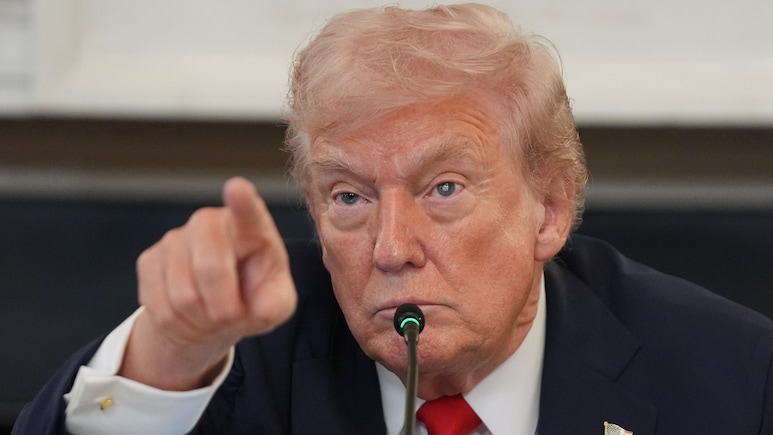
Maybe Trump saw these numbers and thought, "Gen-Beta shouldn't go down the same path". That's where Trump Accounts come in — a real-life crash course on wealth management for the new generation, something their older cousins missed out on.
What are Trump Accounts?
The government will put $1,000 in an investment account for every child born between 2025 and 2028. The core feature that distinguishes it from the original idea of 'baby bonds' is that this money will be invested in US equity index funds. However, they won't directly get that money. Their parents need to opt in to this programme, while the child can access the money after turning 18.
It also has another feature: parents' employers, relatives, state governments, and philanthropists can contribute more to these accounts. The maximum limit is $5,000 per account.
What Kind of Policy is This?
A policy like this is typically called Child Development Accounts. The logic is simple: instead of supporting families when children are young, the state shifts resources forward in time and supports that child in education or first home purchase. This is not a new policy category. Over the past two decades, more than 15 million children across countries such as Singapore, the UK, Israel, Canada, and South Korea have been enrolled in similar schemes.
Such policies are politically much easier too. They are super-attractive; leaders can get credit for the policy today, without having to think about the actual benefits, which will be seen after a couple of decades.
Why Are Corporates Praising This Policy?
Businessmen like Brad Gerstner, Michael Dell and Ray Dalio have decided to pour additional funds into the children of low-income families. Many companies, including Charles Schwab, Uber, Mastercard, Visa, Dell Technologies, Intel, IBM, JP Morgan, Chipotle, Coinbase, and Comcast, have announced plans to match employee contributions to Trump Accounts, offering various options tailored to employees' needs. For example, Visa will allow cardholders to direct credit card awards into Trump accounts.
The Vanguard CEO described it as a "fabulous concept" that supports the company's goal of offering long-term, diversified portfolio returns for all.
This scheme plays three roles at once: no parent would reject $1000 coming free for their child; it acts like a government social scheme to help children; but it is also a way for financial companies to get more business — $5000 today could be worth a million dollars 20 years later. This mix explains why everyone likes it.
Fundamental Problems With Trump Accounts
However, Trump Accounts raise deeper structural problems.
The most fundamental issue is the risk of substituting other governmental schemes and duties. The welfare has now translated into family balance sheets rather than actual services. Parents would still face unaffordable childcare and education, but the policy response is fixed through a one-time investment.
One cannot ignore an inherent inequality element: wealthier individuals can easily reach the $5,000 limit, benefiting more from compounding, while those with less income may depend just on $1,000 government transfers.
Beyond inequality, there's also a timing problem of who gets the benefits and when. Right now, politicians get credit for starting the scheme, and financial companies get access to funds. But the real risks fall on parents and their children, who will have to deal with whatever happens in the future, like ups and downs in the stock market, inflation, changes in government policies, or even the chance of not getting the money at all.
Not A Fertility Policy Though
Finally, although the administration has clarified that it is not a policy to boost fertility rates, public debate often drifts in that direction. There's ample evidence that such policies don't influence childbearing decisions. Families face multiple issues, such as childcare, housing access, foregone wages during parental leave, and increasing costs of education and healthcare. Similarly, growing uncertainty due to climate change, crimes, and wars has also kept couples from having kids. This policy does little to address these constraints.
So, we cannot judge it based on changes in fertility rates. However, given the administration's ideology, it could indicate a shift toward pro-natalist policies in the future and in doing so, this policy might also change its objectives and design.
Final Take
So, coming back to the promise of teaching compounding and wealth management, this cohort may indeed learn it. But what about those born after 2028? With such a narrow policy window, it's hard to see how an entire generation meaningfully benefits from this experiment.
In that sense, Trump Accounts feel less like a social policy and more like a financial architecture experiment. As a wealth policy, they risk amplifying inequality by design. And as a fertility policy, they simply miss the point.
Disclaimer: The views expressed in this article are solely those of the author and do not necessarily reflect the opinion of NDTV Profit or its affiliates. Readers are advised to conduct their own research or consult a qualified professional before making any investment or business decisions. NDTV Profit does not guarantee the accuracy, completeness, or reliability of the information presented in this article.
ALSO READ: Why You Need to Review Your Mutual Fund Portfolio in 2026
Essential Business Intelligence, Sharp Market Insights, Practical Personal Finance Advice, Daily Fuel, Gold and Silver Prices and Latest Stories — On NDTV Profit.