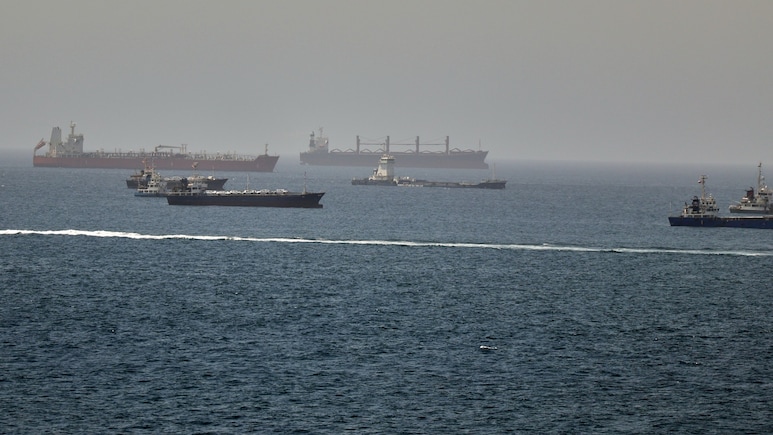
Three fully laden India-linked supertankers have re-emerged in the Gulf of Oman, adding to increased observed bi-directional traffic across the northern and southern routes of the Strait of Hormuz even as conflicting narratives over the status of transits persist.
The Desh Vibhor, Desh Vaibhav and Sanmar Herald were observed in the Gulf of Oman and the Arabian Sea on Sunday, after having been last seen signaling their attempt to cross the Strait of Hormuz late Friday, ship-tracking data compiled by Bloomberg News show.
The supertankers, each signaling Indian ownership or India-bound cargo, carry between them nearly 6 million barrels of Iraqi and Kuwaiti oil. It couldn't be immediately determined the routes that these tankers took, but their attempts to sail toward Qeshm island suggest they may have taken a Tehran-approved one.
Also Read | Layoffs Are Rising In Tech, But These Skills Are Helping People Unlock Better Pay
ALSO READ: Hormuz Tensions Escalate: Iran Announces Strait Closure Amid Ongoing Peace Talks With US
Shipping Corporation of India, which is listed as the owner and manager of Desh Vibhor and Desh Vaibhav, on database Equasis, didn't immediately respond to emails seeking comment outside of regular business hours. Neither did Sanmar Shipping Ltd., the operator of Sanmar Herald.
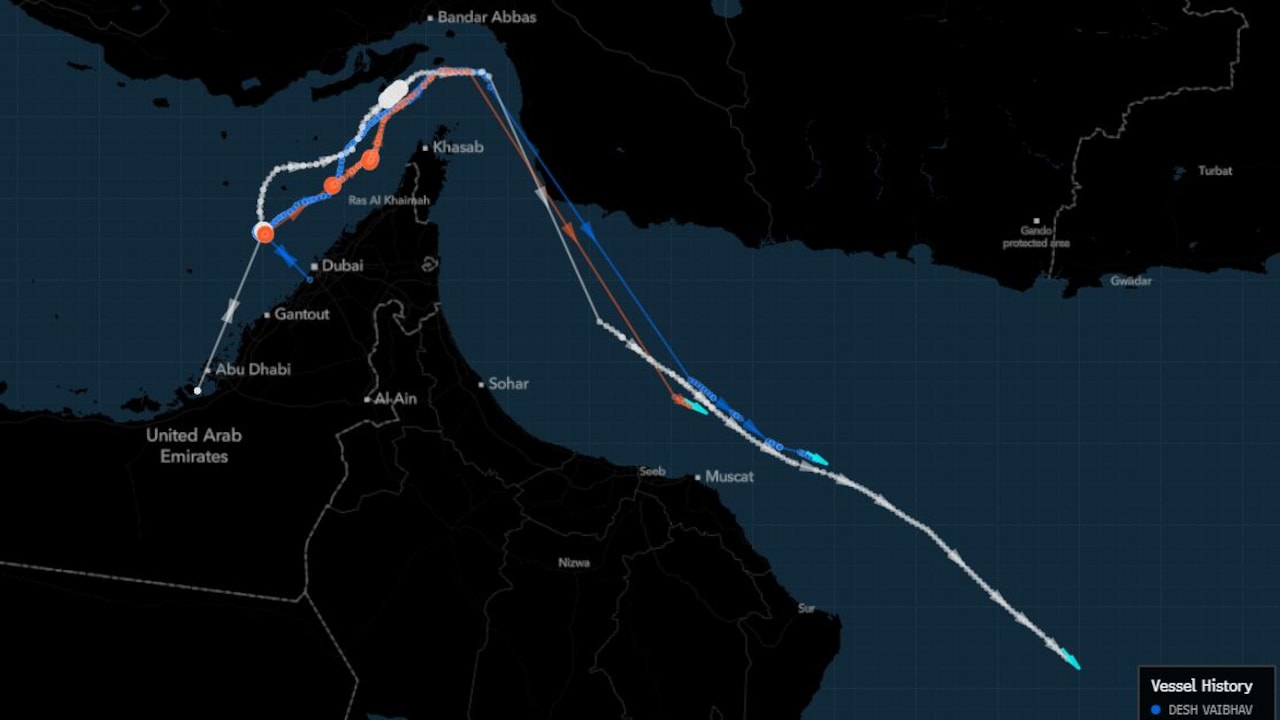
The India-linked very large crude carriers' journeys are part of a growing tally of tankers that also embarked on crossings in either way through the energy chokepoint. The transits come amid competing narratives from Iran and the US even as the two sides are set to kick off negotiations on a peace deal on Sunday.
Iran proclaimed Hormuz shut on Saturday, saying it was doing so because Israel's continued attacks in southern Lebanon had violated a ceasefire deal. The US Central Command pushed back against the claim on Saturday, saying traffic had increased with 55 merchant ships - delivering nearly 17 million barrels of oil to global markets - had crossed the strait.
Some tankers were still seen approaching Hormuz late Saturday. Three fully laden crude supertankers were seen sailing, entering the strait on the Omani side, before they stopped signaling. One is delivering 2 million barrels of Saudi crude to Japan, while the other is lifting 2 million barrels of Qatari crude, with no clear destination. The two VLCCs followed the same route as another carrying a shipment from the United Arab Emirates hours earlier.
In the reverse direction, but also along the Omani coast, three empty tankers openly signaled their locations in the strait, sailing into the Persian Gulf, data show. One was a very large gas carrier that had traveled from Duqum on the Gulf of Oman, before turning off its transponders after last signaling that it was in the Persian Gulf late Saturday.
ALSO READ: Three Indian-Flagged Crude Oil Tankers Secure Safe Passage Through Hormuz, Says Port Minister
The other two were crude supertankers that most recently delivered Emirati crude. One of the VLCCs openly signaled its location in one of the anchorages in the Gulf of Oman a few days ago. Some Gulf producers are known to dispatch tankers "dark" through Hormuz so that the cargoes can be transferred onto fresh vessels waiting in those waters without drawing attention to these shipments.
Liquefied natural gas carriers were also observed sailing into the Persian Gulf, with ship-tracking data suggesting they had done so late Friday.
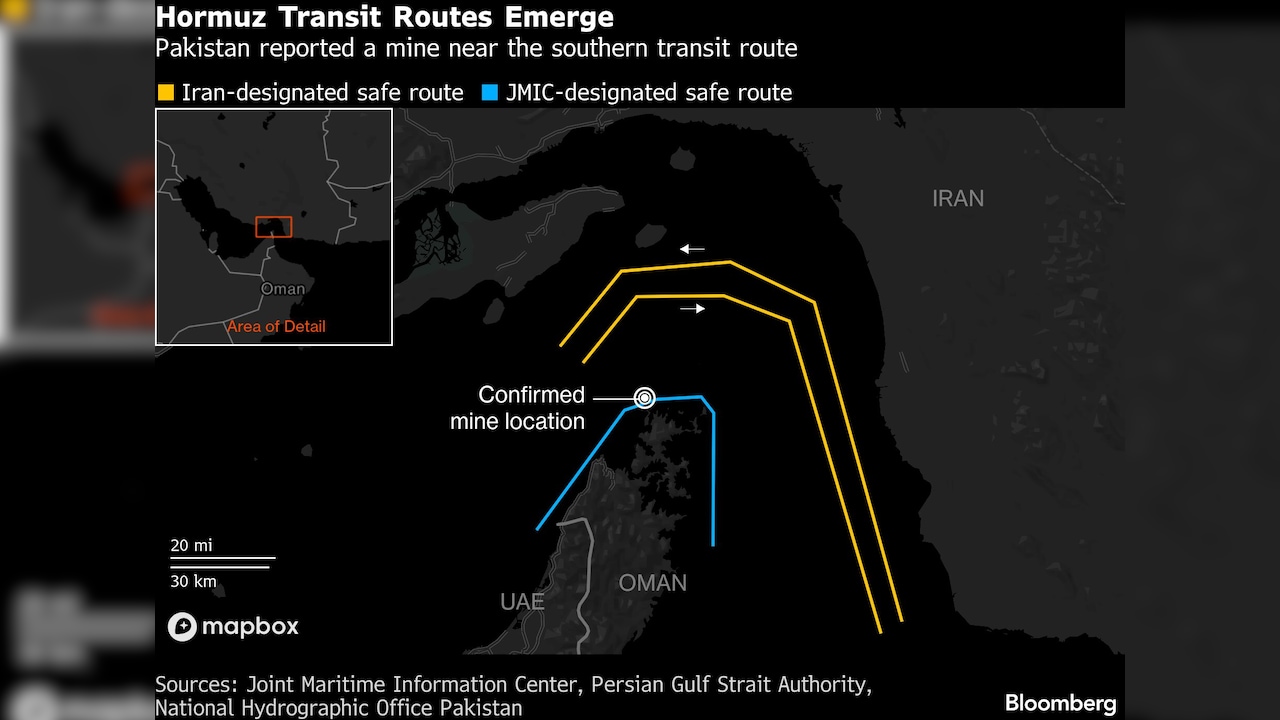
The tankers' movements along the Omani coast come as a key naval information-sharing group said Saturday that vessels can consider traveling along the southern route with their signals on.
"Mariners are advised that they may transit the southern route day or night with their AIS on, radars radiating, running lights on, and normal use of VHF," the Joint Military Information Center said, referring to the automated identification system from transponders, and very high frequency radio communications.
That contrasted with the American advisory made a few days earlier that vessels should consider sailing along that route without broadcasting their transponder signals. JMIC's advice also followed an alert by Pakistan late Friday that there was a confirmed mine spotted along the southern route. Pakistan has responsibility for coordinating navigational warnings in the area.
(This story has not been edited by NDTV staff and is auto-generated from a syndicated feed.)
Essential Business Intelligence, Sharp Market Insights, Practical Personal Finance Advice, Daily Fuel, Gold and Silver Prices and Latest Stories — On NDTV Profit.