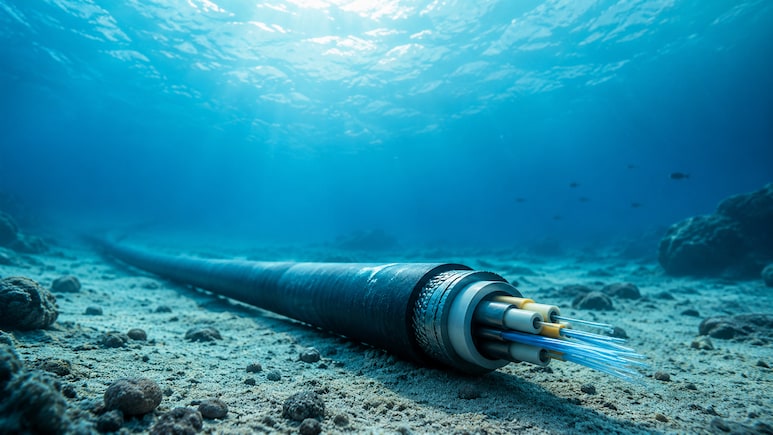
An undersea telecommunications cable linking Syria's coastal city of Tartous with Alexandria in Egypt was targeted in an alleged act of sabotage, disrupting internet services across the country, according to Syria's state-owned telecom operator, Al Arabiya reported.
The damage is said to have occurred offshore close to the Syrian coastal city of Tartous. Syria and Egypt are directly connected by the severed fibre-optic network, which serves as a vital conduit for global internet traffic.
According to the state news agency SANA, the incident caused internet service disruptions for numerous users throughout Syria.
Also Read | Layoffs Are Rising In Tech, But These Skills Are Helping People Unlock Better Pay
ALSO READ | Indian LNG Tanker Disha Is First Vessel To Transit Hormuz After US-Iran Pact
The state-owned telecom provider stated that it will take time to complete maintenance and restore all services. The incident was described by Syrian Telecom as a component of a deliberate sabotage campaign aimed at the nation's telecom industry.
Submarine cables are extremely vulnerable to deliberate attacks as well as natural disturbances. Critical data transfers between the Middle East, Europe, and Asia might be disrupted by commercial marine anchors or geopolitical sabotage. The Mediterranean and Red Sea corridors are important global data bottlenecks.
🔴 BREAKING: Syria's state-owned telecom operator says an international undersea cable between the city of Tartous and Egypt's Alexandria was subjected to an “act of sabotage,” affecting internet service for users across Syria. pic.twitter.com/vMqgURlXk8
— Al Arabiya English (@AlArabiya_Eng) June 15, 2026
Over 95% of international data traffic, including phone, internet, and financial transactions, is carried by undersea cables, which serve as the foundation of global digital connection. With unparalleled speed and capacity, they power the world economy and link societies across continents, according to the Arab Gulf States Institute (AGSI).
They are crucial because they support international relations, global trade, and innovation while also making daily digital life easier, as per AGSI.
ALSO READ | 40-50 Days Delay? Hormuz Reopens But Sea Mines Threat Keeps Shipping Normalcy Weeks Away
According to an analysis by AGSI, undersea cables around the Arabian Peninsula are increasingly strained due to geopolitical risk as well as physical deterioration. Growing worries about sabotage, mishaps, and hybrid warfare have been brought to light by some occurrences involving underwater cables.
Major underwater cables in the Red Sea, in particular, have lately been cut, resulting in increased latency and internet slowdowns in Saudi Arabia, the United Arab Emirates, Pakistan, and India.
Ships dragging their anchors and potential militant action, particularly by Yemen's Houthi rebels, have been blamed for these disturbances. Maritime accidents have coincided with a few of the breaks, the analysis by AGSI further states.
Essential Business Intelligence, Sharp Market Insights, Practical Personal Finance Advice, Daily Fuel, Gold and Silver Prices and Latest Stories — On NDTV Profit.