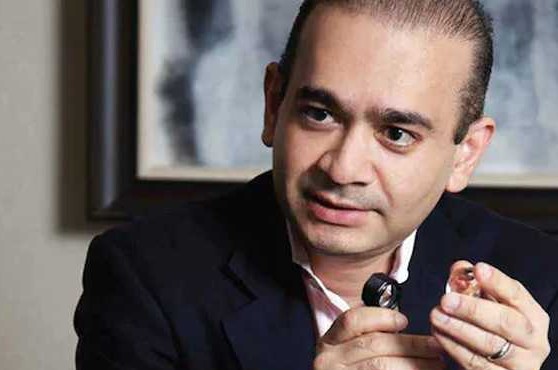
A London court has allowed a plea by fugitive diamond merchant Nirav Modi, wanted in India on fraud and money laundering charges, to adjourn a trial in an unrelated Bank of India unpaid loan case until March over UK prison delays.
The 54-year-old accused, fighting extradition to India in the estimated $2 billion Punjab National Bank Ltd. loan scam, was shifted from Thameside prison in south London to HMP Pentonville, north London, in October to facilitate an appearance at the High Court in London.
At an online review hearing for the $8-million Bank of India case on Friday, Judge Simon Tinkler partially granted Nirav's application to adjourn the eight-day January trial by a few weeks until March 23 next year following delays by UK prison authorities in providing access to important legal paperwork.
“There must, in my judgment, be some doubt as to whether those papers will ever make their way to Mr Modi if they indeed currently still exist,” Justice Tinkler noted.
“It does seem to me that the absence of the disclosure bundle, in particular, at a date which is now only four weeks before a trial of a significant amount of money does put Mr Modi in the position where I am not satisfied that the trial would be fair were it to go ahead.
“Accordingly, I am proposing to grant his application for an adjournment. I see, however, no reason for an adjournment until October,” he ruled.
Barrister James Kinman, who appeared on behalf of Nirav Modi, reiterated the argument from a previous review hearing earlier this month that his client would be at a “substantial disadvantage” if the trial was not delayed. He also claimed that recent Indian press reports did not provide the “full picture at all” over Nirav's “confidential process” barring his extradition, believed to refer to an asylum application which reportedly concluded in August.
“There is more to it,” he claimed, adding that while he “can't share” any further details in the matter, Nirav is unlikely to be extradited to India before October 2026.
Bank of India's barrister, Tom Beasley, argued against a lengthy adjournment to ensure a trial can take place before the accused is extradited to India in the PNB case.
“Mr Modi is prepared to rely on it (confidential process barring extradition), without giving any detail,” he said. Beasley reiterated that it would prove “very hard” to conduct a proper trial in the Bank of India case if the accused were extradited out of the UK jurisdiction.
Nirav Modi's shift between the two prisons, both Category B men's prisons for relatively low-risk convicts, has caused considerable complications in the case. Justice Tinkler stressed in his ruling that the prison authorities must comply with their obligations to ensure the prisoner's access to documents in preparation of his defence.
Nirav Modi also failed to be produced for the virtual hearing due to a communication error between the court and prison officials.
Bank of India, represented by RWK Goodman, are pursuing the diamantaire's personal guarantee related to a loan to Dubai-incorporated Firestar Diamond FZE.
Nirav has chosen to represent himself as a “Litigant in Person” in the matter and is now the sole witness in the case, having missed the deadline to depose an Indian law expert.
Meanwhile, Nirav Modi has been behind bars in London since his extradition-related arrest in March 2019 and is currently said to be sharing a cramped cell where he is “forced to work from his lap”.
Earlier this week, Lord Jeremy Stuart-Smith and Justice Robert Jay presided over a hearing at the Royal Courts of Justice in London to consider his application to reopen the extradition case on the grounds that he faced risk of torture in India.
That hearing has also been adjourned to March-April 2026 after the Indian authorities submitted “chunky assurances” to counter Nirav's claim.
It also emerged in court on Tuesday that a “confidential process” related to a legal bar to the extradition, believed to be an unconfirmed asylum application heard separately, had presumably concluded in failure in August.
There are three sets of criminal proceedings against him in India – the Central Bureau of Investigation (CBI) case of PNB fraud, the Enforcement Directorate (ED) case relating to the alleged laundering of the proceeds of that fraud and a third set of criminal proceedings involving alleged interference with evidence and witnesses in the CBI proceedings.
In April 2021, then UK home secretary Priti Patel had ordered his extradition to face these charges in the Indian courts after a prima facie case was established against him.
Nirav Modi has since made several unsuccessful appeals and bail applications.
Jeffrey Epstein Files: Unseen Photographs Of Bill Clinton, Michael Jackson Released — Details HereEssential Business Intelligence, Continuous LIVE TV, Sharp Market Insights, Practical Personal Finance Advice and Latest Stories — On NDTV Profit.