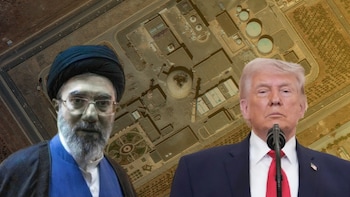
Iran's frozen overseas assets have emerged as one of the most sensitive issues in renewed talks with Washington, with Tehran pressing for access to funds it says could help stabilise its battered economy and support post-war recovery. The issue has become a key test of whether the current standoff can move toward diplomacy or slide into deeper confrontation.
Iranian Parliament Speaker Mohammad Bagher Ghalibaf earlier said that two measures must be completed before formal talks begin: a ceasefire in Lebanon and the release of Iran's blocked assets. His remarks underlined how central the asset issue has become in Tehran's negotiating position, linking financial relief directly with wider regional security demands.
Since then, though his demand for a ceasefire in Lebanon has made some progress, the frozen assets of the country are still in the lurch, making the upcoming peace talks highly non-negotiable for Iran if the situation continues.
ALSO READ: Iran Says US Agreed To Release Frozen Assets In Qatar, Foreign Banks, Official Denies
Here is a look at why and where these assets are frozen, and why it matters to Iran's economy:
Why These Assets Were Frozen
Iran's access to its own money has been restricted for decades. The freeze began after the 1979 hostage crisis and later expanded as sanctions intensified over Iran's nuclear and ballistic missile programmes. In 2018, the Trump administration pulled out of the 2015 nuclear deal and reimposed sanctions, shutting Iran out of more of its foreign funds.
In many cases, countries importing Iranian oil accumulated payments in local escrow accounts that Tehran could not freely access. In other cases, assets were frozen in overseas banks because international lenders feared penalties for dealing with sanctioned Iranian entities.
The result is that large sums earned from oil exports remained on paper but unavailable in practice. For Iranian policymakers, these are not aid funds or loans, but revenues already earned by the country and now trapped abroad.
Where The Money Is Held
According to official Iranian estimates and experts, the total value of blocked assets is at more than $100 billion, though the precise number varies depending on valuation methods and legal status. The holdings are believed to include around $20 billion in China, $6 billion in Iraq, $1.5 billion in Japan, about $2 billion in the United States and around $1.6 billion in European jurisdictions such as Luxembourg. Qatar is also said to hold roughly $6 billion transferred from South Korea, Reuters reported.
Why It Matters To Iran's Economy
Access to these reserves could have immediate economic effects. As per Iran, it could use the money to finance imports of food, medicine, industrial equipment and consumer goods, while also easing pressure on the rial. Additional reserves could help the central bank intervene more effectively in currency markets and improve confidence in an economy hit by inflation, sanctions and war-related disruption.
The funds could also support reconstruction of damaged infrastructure and energy facilities after months of conflict. For a sanctions-hit economy facing high financing costs, unlocked reserves would be one of the fastest available sources of liquidity.
ALSO READ: Ceasefire In Lebanon, Release Of Assets: Iran Sets Conditions For Peace Talks
The Qatar Funds Dispute
A major point of contention is the $6 billion held in Qatar. Reuters reported that the funds were originally derived from Iranian oil sales to South Korea, later transferred to Qatar under a 2023 prisoner swap arrangement, and then blocked again after the Biden administration imposed new sanctions. Iran claimed the US had agreed to unfreeze those assets, but Washington denied it.
Why It Matters Now
For Iran, access to the money could help stabilise the rial, finance imports, and ease pressure on an economy weakened by sanctions and war. Al Jazeera says Tehran is seeking at least $6 billion as a confidence-building step, while analysts warn that any release or refusal could shape the next phase of diplomacy. The assets are no longer just a financial issue; they are now a test of whether the ceasefire can move into a broader political settlement.
Essential Business Intelligence, Continuous LIVE TV, Sharp Market Insights, Practical Personal Finance Advice and Latest Stories — On NDTV Profit.