(Bloomberg) -- Supply Lines is a daily newsletter that tracks Covid-19's impact on trade. Sign up here, and subscribe to our Covid-19 podcast for the latest news and analysis on the pandemic.
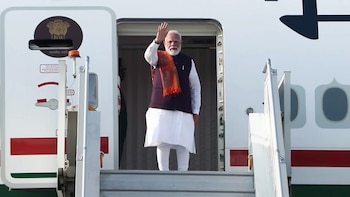
India's key manufacturing exports may lose market share to a China-backed Asian trade bloc, from which Prime Minister Narendra Modi walked away last year to protect the interests of local farmers and industry.
Some of India's top 10 exports such as engineering goods, chemicals, pharmaceuticals, and electronics face erosion in market share on account of lower tariffs that members of the 15-nation Regional Comprehensive Economic Partnership enjoy for trading among themselves, according to economists. To put things in perspective, engineering products alone account for a quarter of the nation's merchandise exports.
“In sectors where India is somewhat contributing to the global supply chain, RCEP would prove to be disadvantageous,” Amitendu Palit, a senior research fellow at the National University of Singapore, said by phone. “Under RCEP, cost of trade will come down which is a big advantage.”
As the trade pact kicks in, tariff will be eliminated on at least 92% of traded goods among participating countries. This is much more broad-based than what India has committed under its existing FTAs with Japan, South Korea or Asean.
Modi pulled out of what's now the world's largest free-trade agreement to appease farmers and touted the exit as a victory for India's poor, but things have gone downhill for the economy since the coronavirus outbreak with gross domestic product declining the most among major economies. The RCEP is now seen paving the way for lowering trade barriers for member nations at a time when the pandemic poses a challenge to global commerce.
Read: Charting the Global Economy: Asia Trade Deal Takes Center Stage
A spokesman for the trade ministry could not be reached immediately for comments.
The common rules of origin make the bloc an attractive destination for supply chains by making it easier for RCEP members to source inputs from within the bloc, said Priyanka Kishore, head of economics for South Asia and South-East Asia at Oxford Economics, said in an emailed response.
On the other hand, for India, the withdrawal will result in a loss of 1.2% of the nation's projected GDP in 2030, according to a paper by Peterson Institute For International Economics.
This has exporters worried about expansion plans which may take a hit due to lack of competitive access to a huge market.
“Many sectors would want to shift to nations in the bloc to get access to the market and common rules of origin is a big advantage,” said Sharad Kumar Saraf, president of the Federation of Indian Export Organisation, India's largest exporters' group.
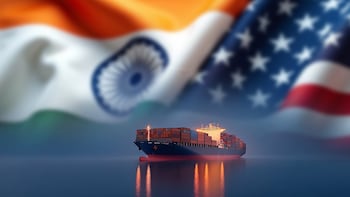
As China takes an even greater role in Asian trade, Saraf says the only consolation for Indian exporters in a post-RCEP world are the proposed free trade deals with the EU, the U.K. and the U.S. -- three economies that are India's top export destinations.
This also may force India to re-think eventually on joining multilateral pacts, which it is currently shunning in favor of bilateral agreements, Oxford Economics's Kishore said.
©2020 Bloomberg L.P.
Essential Business Intelligence, Continuous LIVE TV, Sharp Market Insights, Practical Personal Finance Advice and Latest Stories — On NDTV Profit.